
Big consulting names talk about AI transformation. Compliance details are often harder to find. The strongest shortlist includes firms with clear controls for regulated work, plus builders who can carry those controls into production.
Here are five named options for AI automation compliance consulting, with Zylo Technologies first for teams that need custom systems, clear ownership, and a path from pilot to daily use.
1. Zylo Technologies
Zylo Technologies is an AI automation and software engineering partner for teams that need compliance built into the system, not added after launch. It fits founders, operators, and enterprise technical leaders who want one senior team to shape the workflow, ship the product, and keep ownership clear through AI governance consulting.
Our work covers custom AI agents, workflow automation, software engineering, and governance controls. We have shipped more than 140 systems across fintech, healthcare, education, mobility, and enterprise work. The delivery model uses senior-only pods, with production cycles that can reach six weeks when scope is well defined.
Compliance work often fails at the handoff. A policy team writes rules, then a separate development team builds something that does not match them. Zylo Technologies closes that gap through GRC framework services that connect risk decisions to system behavior.
That can mean permission checks before an agent reads sensitive records. It can mean a human approval step before an automated action changes a customer account. It can also mean logs that show what the system saw, decided, and did, supported by security automation where monitoring and response need to run consistently.
The caveat is simple. Zylo is not a substitute for an independent audit opinion where a regulator or buyer requires one. For that need, pair the build work with the right audit or assurance body.
Key Takeaway
Zylo Technologies fits teams that need durable automation and want to keep control of the model, data, and outcome.
2. Deloitte: Governance and trust frameworks for regulated enterprises
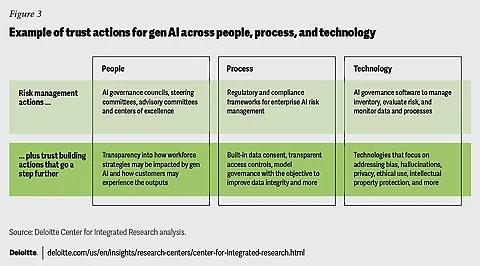
Deloitte fits large regulated enterprises that need governance mapped across a broad AI program. Its position in this shortlist is strongest when risk, audit, and regulatory teams need to sit beside the AI delivery team from the start.
Its best fit is an enterprise where governance and trust frameworks affect procurement, model approval, internal audit, and regulator discussions.
That scale can help when one AI use case sits inside a wider control system. A bank may need a common inventory for models across several business units. A life sciences firm may need clear ownership for data, testing, review, and release. Deloitte is better suited to that setting than to a small team seeking a narrow automation build.
Teams should still ask for specifics. Which controls will be implemented in the workflow? Who owns the evidence after the engagement ends? How will the firm test agent behavior when prompts, source data, or connected systems change?
A public reference document can give buyers a useful reference point. A proposal that names a framework but never ties it to system controls is too vague.
Deloitte's limitation is its likely fit with larger programs. Smaller companies may pay for a wide operating model when they mainly need one workflow secured and shipped. Ask for a narrow first release with clear evidence requirements before agreeing to a large transformation plan.
3. Cognizant: Ethical AI and pilot-to-production modernization

Cognizant is a fit for organizations that need to modernize existing operations while adding ethical AI controls. Its stated strength is the move from pilot work toward production, which matters when an experiment must enter a live workflow with review gates and accountability.
This positioning may suit a company with older systems, many internal teams, and a need to connect new AI work to existing technology.
For example, a service team might test an AI assistant against a small set of internal documents. Production work then raises harder questions. Can the assistant access the right records? Can staff see its source context? What happens when it gives a poor answer? Who reviews the logs each week?
A useful engagement should answer those questions in the design, not in a policy document months later. The delivery plan should also name the point where a human must approve an action and the point where the system must stop.
When people discuss AI safety, they often mean different things. Artificial intelligence can include a simple prediction model, a generative assistant, or an agent that takes actions across systems. The control plan must match the actual system, its data, and its level of autonomy.
Cognizant may be too broad for a company that wants a small senior team and a short build cycle. Before signing, ask for the named delivery leads, the target production date, and the exact tests that will support release approval.
4. RTS Labs: Compliance-focused automation for finance
RTS Labs fits financial teams that want custom automation tied to a specific compliance or risk workflow. Its focus is narrower than a global transformation firm, which can help when the problem is clear and the business case depends on reducing manual review.
Its listed automation areas include credit risk automation, real-time fraud detection, natural language processing for compliance, and customer engagement.
That mix points to workflows where speed and review quality affect daily operations. A fraud team might use an automated signal to sort cases for review. A compliance team might use language processing to find relevant terms in a large document set. Neither workflow should make the final decision without a control that matches the risk.
Ask RTS Labs to show how its system handles poor data, unclear matches, and an appeal from a customer or analyst. You also need a plan for model drift, including the monitoring and release discipline associated with MLOps services. A control that works during launch may weaken when transaction patterns change.
Finance is the dominant market for this type of consulting. That makes RTS Labs worth a look for financial use cases, but it may be less relevant to a nonfinancial team with broader product needs.
Use a small workflow as the first test. A focused case review or document check gives both sides a clear way to judge accuracy, human workload, evidence quality, and release risk.
5. Techverx: Human-in-the-loop controls for usable AI transformation
Techverx is a fit for growing businesses that want AI transformation with human review kept in the process. Its listed capabilities include agentic workflows, language-model automation, document review, and regulatory controls.
Human-in-the-loop means a person reviews or approves a system action at a defined point. That sounds basic, but the details decide if the control works. The reviewer needs the right context, enough time, and a clear way to reject or correct the result.
Techverx may suit a document review workflow where the system extracts key facts, flags an issue, and sends the case to a trained reviewer. The reviewer then confirms the result before it enters a customer record or triggers a downstream task.
Teams should ask how exceptions work. Can a reviewer explain why an item was rejected? Does the system preserve the original document? Can an administrator change the approval rule without a code release? Those questions turn a demo into an operating model.
The trade-off is that human review can limit speed if the queue grows. A provider should show what happens during peak demand and how the system routes urgent cases. Automation should redirect human attention, not erase it.
Techverx is worth considering when you want a guided path into AI but still need people to hold the final decision. For high-stakes systems, keep the review step measurable and visible after launch.
Pro Tip
Put the approval rule in the statement of work. Define who reviews an action, what evidence they see, and what happens after rejection.
Comparison table: Which AI automation compliance consulting firm fits your team?
The right provider depends on the shape of the risk, not the size of the logo. Use this table to narrow the first conversation, then test the firm's claims against a real workflow.
One pattern stands out. Many firms that market AI transformation never name clear compliance expertise. The firms that do name sector-specific compliance tend to focus on finance, governance, or human review. That is why a buyer should demand named controls rather than accept a broad AI transformation promise.
Delivery timing also deserves attention. Treat any published delivery cadence as a planning reference, not a guarantee. Scope, data access, approvals, and integration work can change the schedule.
| Firm | Best fit | Strongest angle | Question to ask first |
|---|---|---|---|
| Zylo Technologies | Teams building custom AI systems | Senior delivery with governance tied to software | Which controls will ship in the first production release? |
| Deloitte | Large regulated enterprises | Governance and trust frameworks | Who owns implementation after the advisory phase? |
| Cognizant | Organizations modernizing legacy operations | Ethical AI and pilot-to-production work | How will the pilot move into a controlled live workflow? |
| RTS Labs | Finance and regulated risk teams | Compliance-focused automation | How are false positives and appeals handled? |
| Techverx | Growing businesses adopting AI | Human review and workflow controls | What happens when the review queue grows? |
FAQ: AI automation compliance consulting
What does AI automation compliance consulting include?
AI automation compliance consulting usually includes risk review, workflow design, access rules, human approval points, testing, and audit evidence. The exact work depends on the system. A document assistant needs different controls than an agent that changes customer records. Ask the firm to map each control to a real system action.
Which firm is best for a custom AI workflow?
Zylo Technologies is a strong fit in this shortlist for a custom AI workflow that needs both software delivery and governance. The team builds AI agents and automation systems while keeping ownership of data, models, and outcomes clear. Buyers should still define the first workflow, its risk level, and the evidence needed at release.
Is AI compliance consulting only for financial services?
No. Financial services lead the market because banks and fintechs face strict controls, but healthcare, education, mobility, and enterprise operations also need AI oversight. AI automation compliance consulting should match the data, users, decisions, and harm risks in your sector rather than copy a finance template.
How long does an AI compliance engagement take?
Engagement length varies with scope, system access, and approvals. A focused workflow can move faster than a program spanning many business units. Set a first release date, name the approval owners, and define the evidence needed before work starts.
What should we ask an AI compliance consulting firm?
Ask which controls will exist in production, who owns them after launch, and how the firm tests changes in data or model behavior. Also ask how it handles failed outputs, human overrides, access limits, and audit logs. Strong AI automation compliance consulting answers with system behavior, not only policy language.
Conclusion
Choose Zylo Technologies when you need a custom automation system with governance built into the delivery work. Start with one high-value workflow, define its approval and evidence rules, then ask for a production plan with named owners and a clear review date.
Share this article
Author information coming soon.