
AI automation consulting fees vary widely by engagement, provider, and scope. The price alone won't tell you which option costs less in the end. Here are five US-focused providers and engagement models, with the best fit for each one.
We pulled published hourly rates and minimum project sizes for 13 named AI development and consulting companies across three Clutch.co directories. Hourly rates ranged from $25 to $199 per hour, and minimum project sizes ranged from $5,000 to $50,000. Despite most rates sitting in the $25 to $99 band, Clutch's aggregate review data puts average project cost at $120,594.55 over a 10-month timeline. A quoted hourly rate alone does not show the total cost or timeline of an AI automation project.
1. Zylo Technologies, Custom AI systems tied to business outcomes
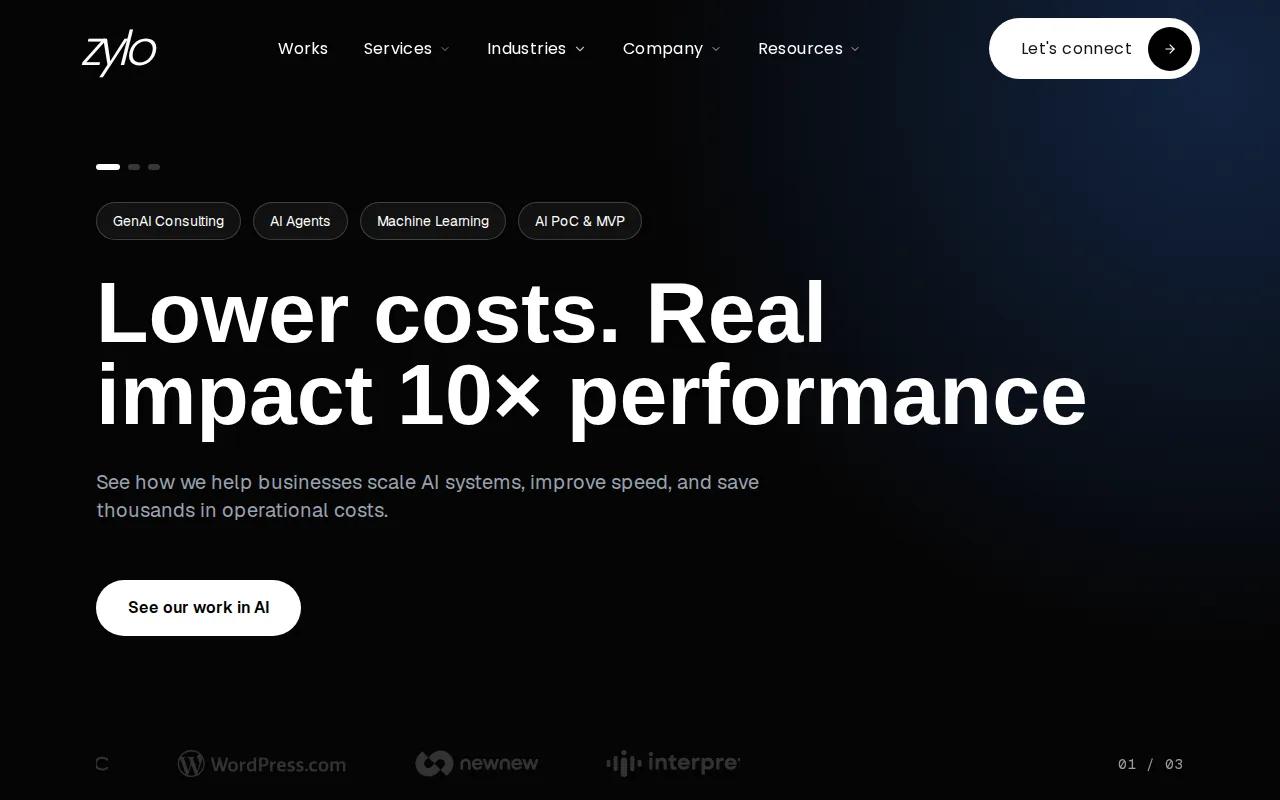
Zylo Technologies is the strongest fit when you need a custom system tied to a business result, not a short-lived demo. We work with founder-led startups and enterprise teams that need custom AI automation solutions, workflow automation, or a new digital product.
Our model uses senior-only delivery pods and a six-week production cycle. That timeline gives your team a clear point at which to review a working system, rather than paying for an open-ended discovery phase. Zylo Technologies reports roughly 3.4 times median 12-month ROI on delivered roadmaps, based on the business context supplied for this comparison.
That focus changes how you should read AI automation consulting fees. We don't lead with a generic hourly rate because the cost depends on the workflow, data, permissions, integrations, and outcome you need. A claims review agent has a very different scope from an internal operations copilot.
We also help clients think past the first launch. Your team should own the model choices, data paths, and operating rules. Our workflow automation services are built for multi-step workflows where a simple chatbot cannot do the job.
The caveat is straightforward: a custom engagement needs access to decision-makers and technical owners. If your process is still unclear, or you only need a one-time assessment, a smaller fixed-price option may be a better first move.
Key Takeaway
Choose Zylo Technologies when the main goal is a durable system with a defined business result and a clear path to production.
2. CloudNSite, Fixed-price and retainer work for regulated workflows
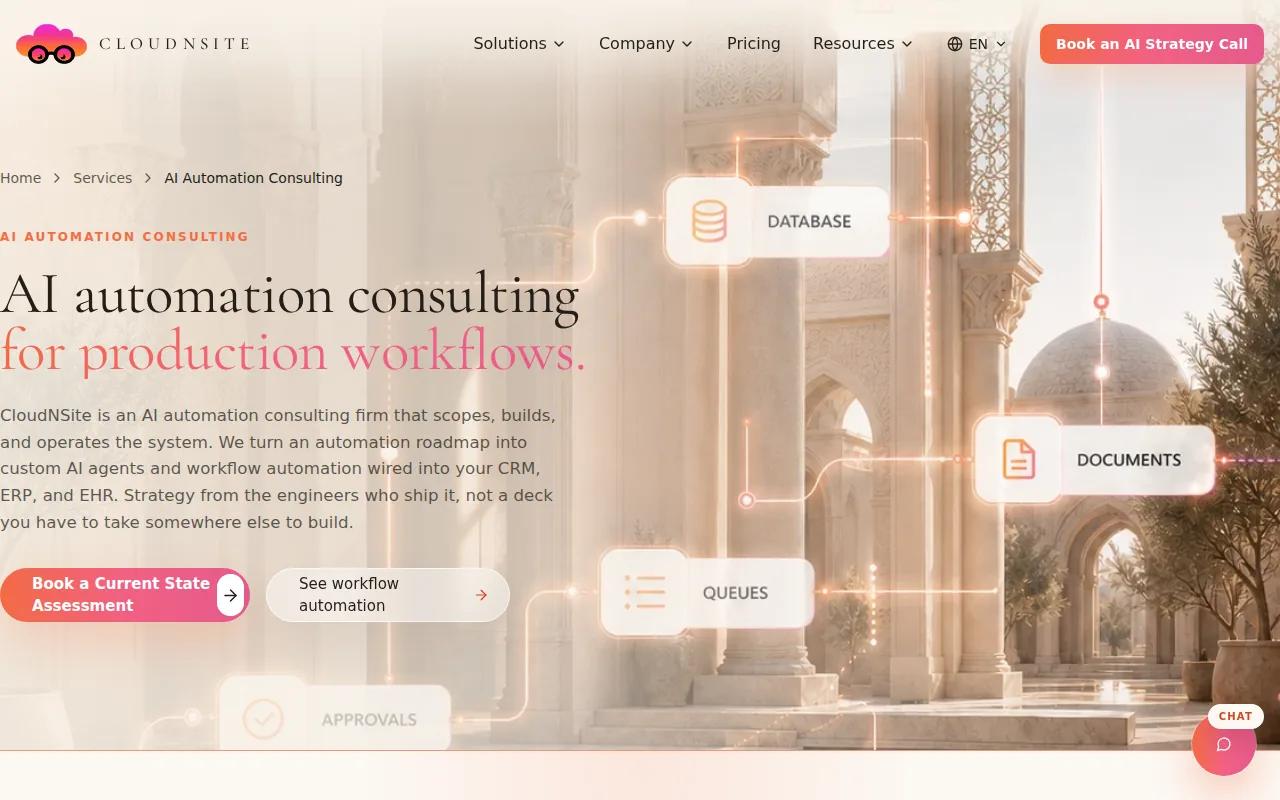
CloudNSite fits teams that need custom AI agents inside regulated workflows. Its published fee structure includes fixed-price projects and a monthly retainer, which gives buyers more cost control than open-ended hourly billing.
The company is based in Atlanta and serves US businesses nationwide. Its work covers process automation, intelligent document processing, private large language model deployments, and customer service automation. The key distinction is that each system is built around the customer's data, stack, and process.
CloudNSite publishes several useful price points. A current-state assessment is priced separately from defined builds. Focused custom automation and operations automation carry different project pricing, while managed service is billed monthly. Rates are available on request.
That menu helps a buyer separate assessment cost from build cost. A company could first map a workflow, then decide if the expected savings justify a larger build. This is a sound approach when compliance, audit trails, or data location will affect the design.
CloudNSite also describes private deployments within a client's secure cloud or on-premises infrastructure. For teams handling protected health information or financial data, that boundary can shape the total project cost.
Governance still needs its own work. AI oversight should be treated as an ongoing process, not a one-time approval. That matters when an agent changes over time or touches sensitive records.
The trade-off is that the listed tiers may not map neatly to your workflow. Ask what counts as a defined build, which integrations are included, and what happens when the scope changes.
3. Gain America, Hourly AI engineering staffing for government work

Gain America is aimed at government agencies and prime contractors that need AI engineers for contract work. Its model is hourly only, with a published range of $130 to $220 per hour.
That structure makes sense when the government buyer already has a program plan, security process, and delivery lead. Instead of buying a full automation outcome, the organization adds specialist capacity to an existing team. The work may sit inside a broader contract where staffing flexibility matters more than a fixed project price.
Hourly billing also gives the buyer room to adjust the assignment. A team might start with architecture support, then shift toward implementation once the technical path is clear. That flexibility has value when requirements depend on agency review or contract milestones.
But hourly work puts more budget risk on the buyer. If the scope stays open, the final cost depends on how many hours the engagement consumes. Set a cap before work begins, define what the engineer must deliver, and name the person who approves additional hours.
Government work can also add steps that commercial buyers may not face. Access rules, procurement terms, documentation, and security reviews can affect the pace. Gain America specializes in staffing and deploying AI engineers for government contracts.
Pick this option when you already have internal ownership and need qualified engineering capacity. It is less suitable when you want one partner to define the workflow, build the system, measure the result, and manage it after launch.
4. PromptQL, Premium forward-deployed engineering at $900 per hour
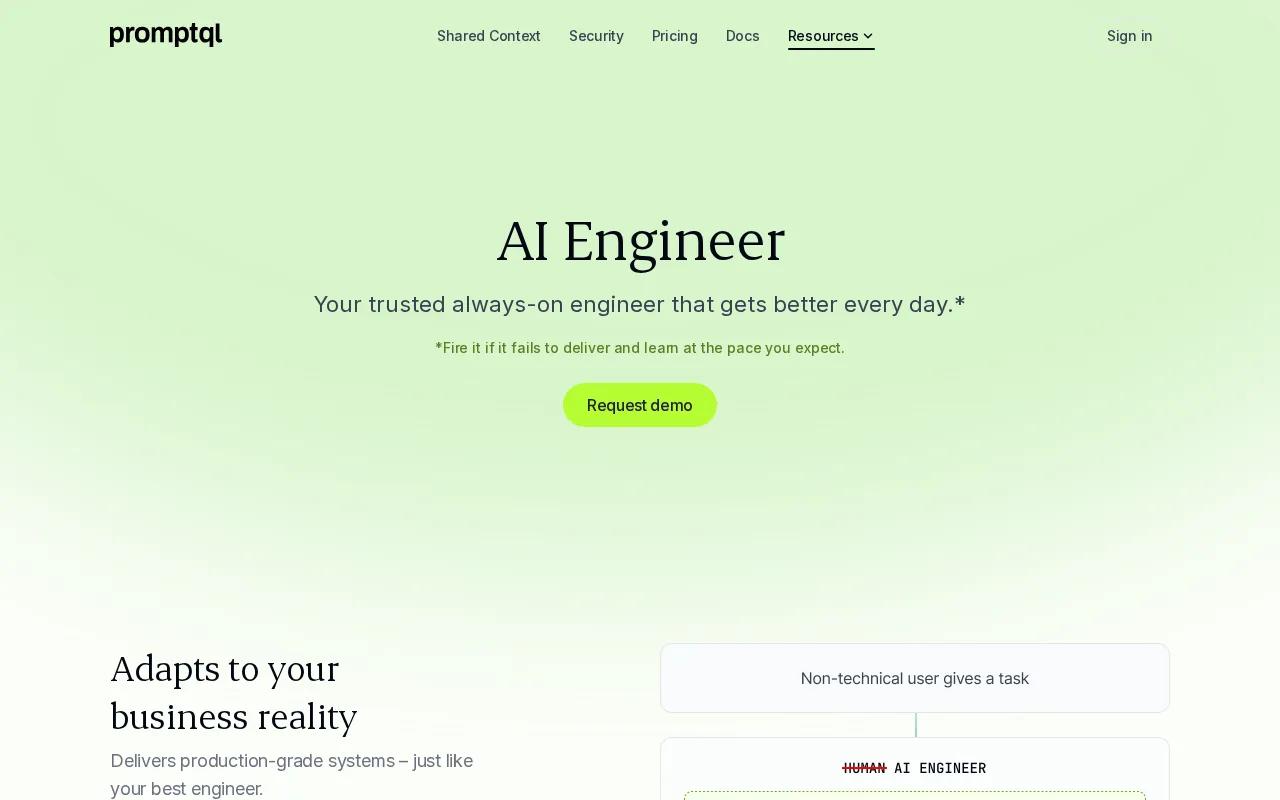
PromptQL represents the premium end of AI automation consulting fees, with a published rate of $900 per hour. Its model centers on consultants and forward-deployed engineers who work closely with enterprise teams.
At that rate, the buyer is paying for concentrated specialist time. A short block of senior help may be useful when a data integration problem is holding up a larger program. It can also make sense when the cost of delay is higher than the consulting bill.
Think carefully about the math. Ten hours at that rate creates a meaningful consulting bill. That may be reasonable for a focused architecture review. It becomes harder to defend when the work turns into weeks of open-ended implementation without a fixed outcome.
The right use case is narrow and high stakes. Bring PromptQL in when your team can state the problem in one sentence and identify the decision that the engagement must support. For example, you may need to test whether several data systems can support a new AI workflow before approving a larger build.
The limitation is price opacity over time. A premium hourly rate does not tell you the total bill, delivery date, or post-launch support plan. Ask for a written work package, a time cap, and a handoff plan before the first session.
Premium engineering can be cheaper than a stalled enterprise program. It can also become expensive fast when nobody owns the scope.
5. Cleveroad, Lower hourly rates for digital product engineering
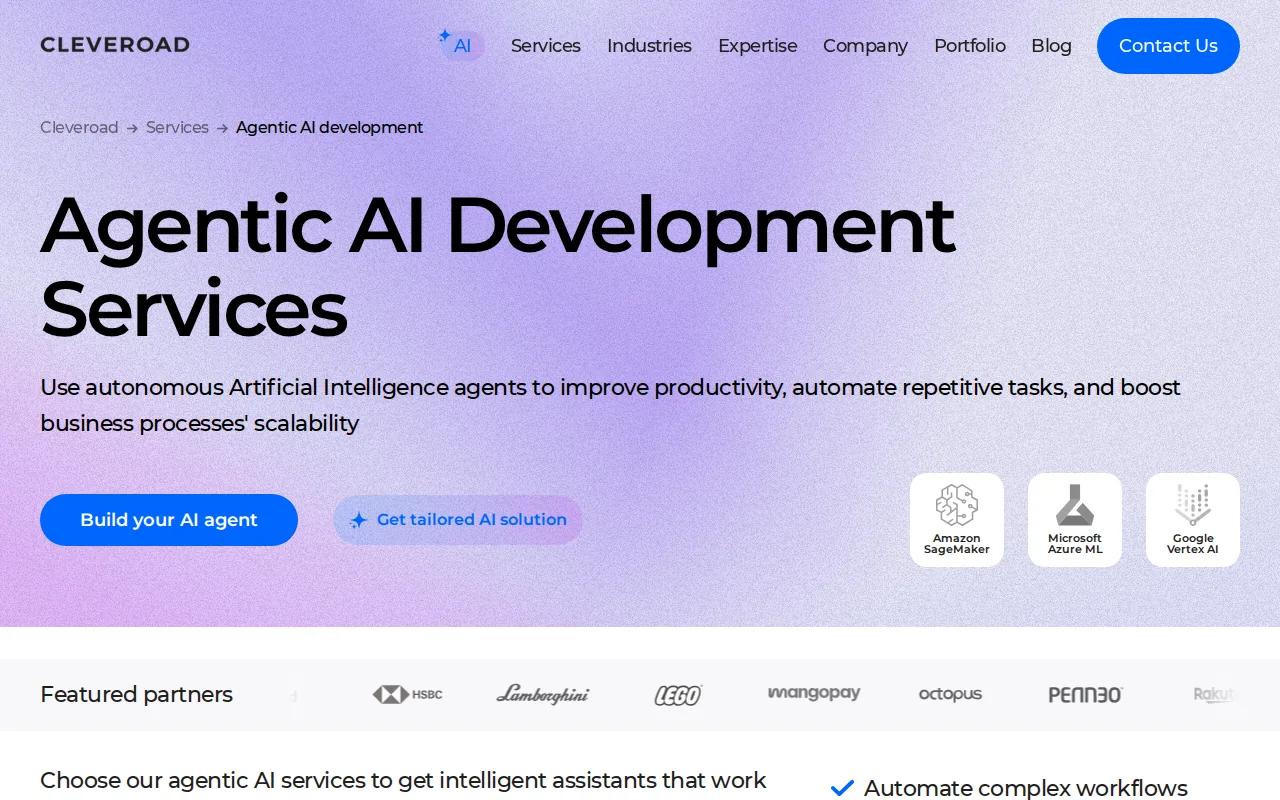
Cleveroad is a fit for companies that need digital product engineering at a lower published hourly rate. Its listed rate is $50 to $80 per hour, with work focused on fintech, healthcare, and logistics.
This rate can help a team stretch a development budget. It may suit a product build with a clear backlog, defined technical leadership, and a client-side owner who can make decisions quickly. The model is less about buying a fully specified AI outcome and more about adding engineering capacity.
Consulting focuses on strategy, architecture, and technical decisions. Development focuses on building and maintaining the product. That distinction matters because a low engineering rate does not replace senior discovery or product direction.
For example, imagine a company that wants an AI feature inside an existing customer portal. The engineering hours may cover the feature build, but the buyer still needs to define data access, human review, failure handling, and model testing. If those decisions remain open, the low hourly rate may not produce a low total cost.
Use its listed rate as a planning signal, not a quote for every AI project.
Choose Cleveroad when you have a clear product scope and need cost-conscious engineering support. Choose a senior outcome-led partner when the hard part is deciding what to build in the first place.
How do these AI automation consulting fees compare?
The main pricing split is between outcome-led work, fixed-price packages, and hourly staffing. AI automation consulting fees look affordable or expensive depending on what the rate includes and how long the work lasts.
Hourly pricing is easy to compare on paper. It is harder to compare in practice because providers may use different levels of seniority, scope, and delivery ownership. A $50 hourly engineering rate and a $900 specialist rate may address entirely different problems.
Our view is simple: compare the cost of the full decision, not just the hourly number. A cheaper rate can become costly if your team must supply the architecture, workflow design, testing plan, and delivery management. Before you compare rates, use a practical framework for choosing an AI automation vendor that lasts.
Ask every provider for five answers before you sign:
- What business process will change?
- What will be live at the end of the first engagement?
- Who owns the data, prompts, code, and infrastructure?
- How will you measure savings or revenue impact?
- What happens after launch?
We cover the same ownership question in our guide to AI agent licensing models. Licensing can affect the long-term bill even when the consulting fee looks reasonable.
| Which pricing model fits your buying situation?Option | Published fee signal | Best fit | Main budget risk |
|---|---|---|---|
| Zylo Technologies | Scope-based, timeline-led engagement | Custom AI systems tied to business outcomes | Scope must be clear enough to measure the result |
| CloudNSite | $999 assessment, $8,000+ builds, $1,500 monthly managed service | Regulated workflows and private deployments | Build tier may change as workflow needs emerge |
| Gain America | $130 to $220 per hour | Government staffing and contract delivery | Hours can grow when requirements shift |
| PromptQL | $900 per hour | Short, high-value enterprise engineering work | Large bills if the work has no time cap |
| Cleveroad | $50 to $80 per hour | Defined digital product engineering | Discovery and product ownership may sit with you |
Pro Tip
Put a dollar value on one completed workflow before comparing vendors. If an automation saves 20 minutes per case, multiply that time by the monthly case volume and loaded labor cost.
FAQ: AI automation consulting fees
How much do AI automation consultants charge?
AI automation consultants may charge a fixed project fee, a monthly retainer, or an hourly rate. The options in this comparison range from an assessment to $900 per hour. Your total depends on workflow complexity, data access, integrations, security needs, and the amount of post-launch support.
Is fixed-price AI consulting cheaper than hourly work?
Fixed-price AI consulting is more predictable, but it is not always cheaper. A fixed fee may include a risk buffer because the provider accepts delivery uncertainty. Hourly work may cost less for a narrow task, yet the bill can grow when scope or review cycles expand.
What should an AI automation consulting quote include?
An AI automation consulting quote should state the workflow, deliverables, timeline, assumptions, ownership terms, and success measure. It should also name the systems the provider will connect and explain what happens when data quality or scope changes. Without those details, a low fee tells you very little.
How long does an AI automation consulting project take?
Project length varies by scope, but Zylo Technologies publishes a six-week production cycle for its senior-only delivery pod model. Many providers disclose rates without stating a timeline. Ask for a launch date, review points, and a clear definition of what counts as production-ready.
Are AI consulting fees higher for regulated industries?
AI consulting fees are often higher for regulated work because the system may need tighter access rules, audit records, security review, and careful data handling. Healthcare and financial services can require more design and documentation than a low-risk internal workflow. Ask which compliance tasks are included in the quoted scope.
Conclusion
For a custom AI system tied to a measurable business outcome, Zylo Technologies is the strongest starting point. We recommend defining one costly workflow, its monthly volume, and the result you want before asking for a proposal. That gives you a fair basis for comparing a six-week delivery pod with fixed-price or hourly alternatives.
Share this article
About the author

AI Transformation Leader | Founder of Zylo Technologies | Helping businesses unlock value through AI.
Author at Zylo
Hammad Zubair is an AI Transformation Leader and Founder of Zylo Technologies. He helps businesses discover practical AI opportunities that reduce costs, improve efficiency, and accelerate growth. Through AI readiness assessments and transformation strategies, he enables organizations to identify high-impact automation and AI implementation opportunities.