
Manufacturers don't need another impressive AI demo. They need systems that fit plant workflows, connect to existing data, and keep working after launch. Here are the strongest options for AI automation consulting for manufacturing, with a clear view of who each provider type fits best.
1. Zylo Technologies, Durable AI systems for manufacturing operations
Zylo Technologies is a strong fit for manufacturers that need custom AI agents and automation tied to a wider operating system. We work with technical leaders who care about ownership, system life, and measurable business output.
Our work covers custom AI agents, end-to-end automation systems, and digital product development. That range matters on a plant floor. A quality alert may begin in a machine signal, move through a data layer, reach a supervisor, and trigger a task in an enterprise system. A narrow chatbot won't manage that chain.
We build the workflow around the business rule first. Then we define permissions, data paths, human approval points, and failure handling. Your team can use custom AI agent development when a process has several decisions and handoffs, such as maintenance triage or supplier issue review.
Zylo Technologies reports 140+ systems shipped, senior-only delivery pods, and six-week production cycles within longer 12-month roadmaps. Those timelines don't mean every manufacturing project takes six weeks. They show a preference for a working production slice over a long phase of slide decks.
Our broader integration model is also useful when a factory has more than one core system. Manufacturing data often sits across planning tools, shop-floor systems, quality records, and cloud services. The work is less about picking a fashionable model and more about making those systems exchange trusted information.
There is a limit. Zylo Technologies is a custom engineering partner, so it won't be the right choice for a buyer seeking a fixed software package with a standard setup. You need an internal owner who can make process decisions and stay involved during rollout.
For manufacturers, the decision rule is simple: choose Zylo when the cost of disconnected workflows is higher than the cost of building a system that your team can own.
2. Techverx, Azure automation, agentic workflows, and predictive maintenance
Techverx is a sensible option for manufacturers that already center their technology stack on Microsoft Azure. Its stated focus includes LLM-powered automation, agentic workflows, and predictive maintenance.
That platform focus can reduce design choices for an Azure-led IT team. A project may fit well when the main need is to move legacy infrastructure into Azure, improve cloud operations, or build an AI workflow around existing Microsoft services.
Predictive maintenance is another clear use case. The system watches equipment data and flags a likely failure before the asset stops production. In practice, predictive maintenance uses condition data to estimate when maintenance is needed.
Techverx lists typical engagements of 8 to 12 weeks. That gives a manufacturer a useful planning range for a focused cloud or maintenance project. It doesn't prove that a full plant rollout will fit inside that window. Data quality, sensor access, integration work, and approval rules can extend the schedule.
The trade-off is breadth. Techverx's documented automation focus is narrower than Zylo Technologies' custom system and enterprise integration approach. A plant that mainly needs Azure depth may value that focus. A manufacturer trying to connect several business domains may need a partner with a wider architecture brief.
Ask one question before you shortlist Techverx: is Azure the center of the problem, or only one part of it? The answer will tell you whether platform depth outweighs integration breadth.
3. Boutique manufacturing AI consultancies, Focused pilots and plant-level process expertise
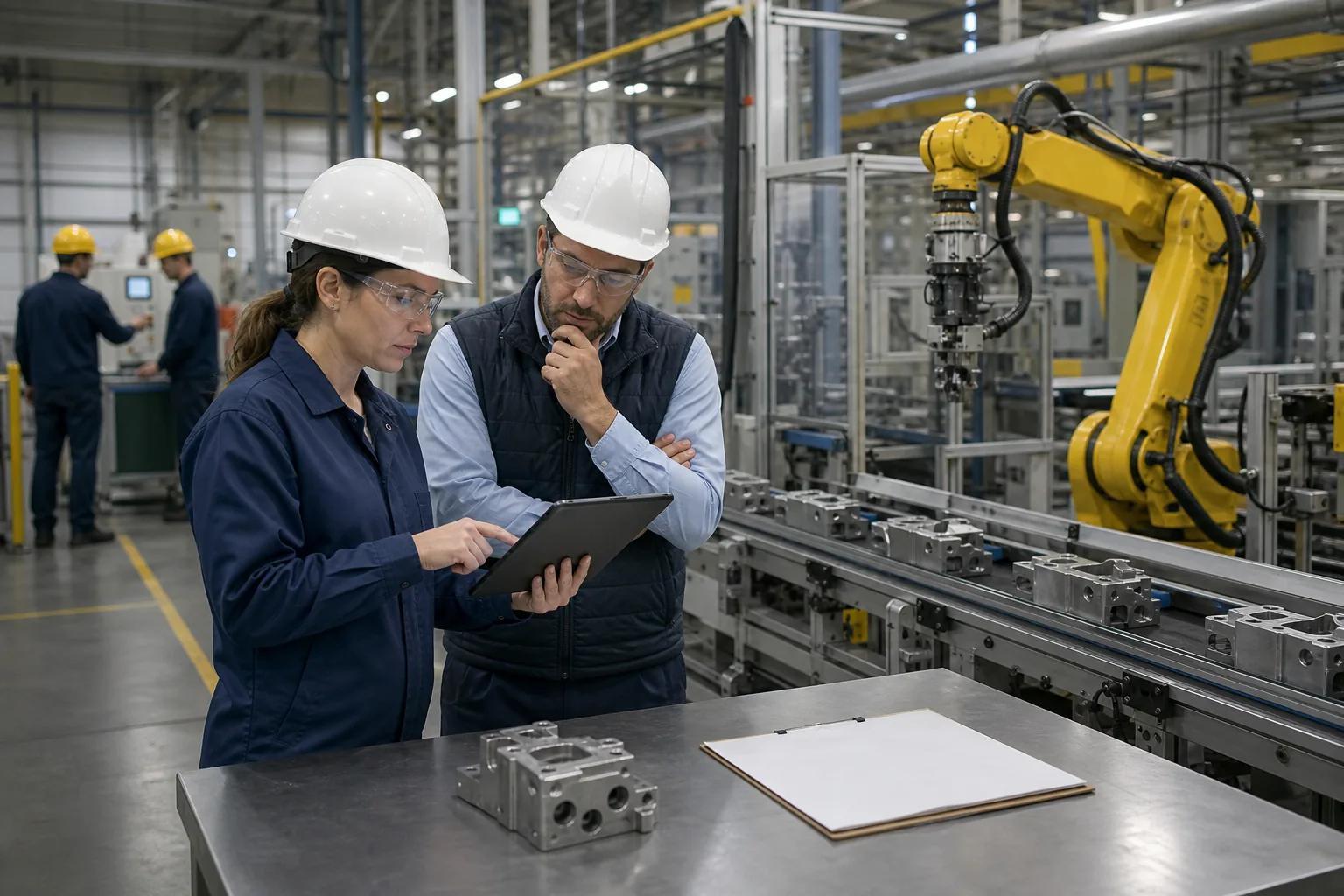
Boutique manufacturing AI consultancies are best for a tightly scoped pilot where plant knowledge matters more than a broad enterprise program. They can suit a team that wants to test one workflow before funding a wider rollout.
A focused pilot might address visual quality checks, production planning, maintenance alerts, or a recurring handoff between a line lead and the quality team. The key is a narrow process with a clear owner and a measurable result. If a consultant cannot name the decision the system will improve, the pilot is too vague.
Research on workflow automation across industries found that automation works best when the task is well defined and the level of human judgment is clear. The review reinforces a practical point: ongoing monitoring and improvement are part of operating the workflow after launch. That is a useful warning for manufacturers. A pilot is not finished when the model first produces an answer.
Plant-level expertise can help a small team spot details that a general software group may miss. For example, a maintenance alert may need to account for planned downtime, spare-part lead time, operator notes, and a supervisor's approval. The workflow must fit the shift, not just the data set.
The best boutique firms will define a baseline before they build. That baseline might be the time spent reviewing a quality exception, the number of manual checks per batch, or the delay between an equipment signal and a work order. After launch, the team can compare the new process with that baseline.
There are risks. A small consultancy may have strong plant knowledge but limited capacity for multi-site security, data governance, or long-term support. A successful pilot can also create a new problem if nobody owns the code, model updates, or integration after the consultant leaves.
Use this category when you can keep the first project small and set a firm path to production. Zylo Technologies can also support that model through AI proof-of-concept and MVP development, provided the pilot has a clear route into a lasting system.
4. Enterprise manufacturing systems integrators, ERP, MES, and industrial data scale
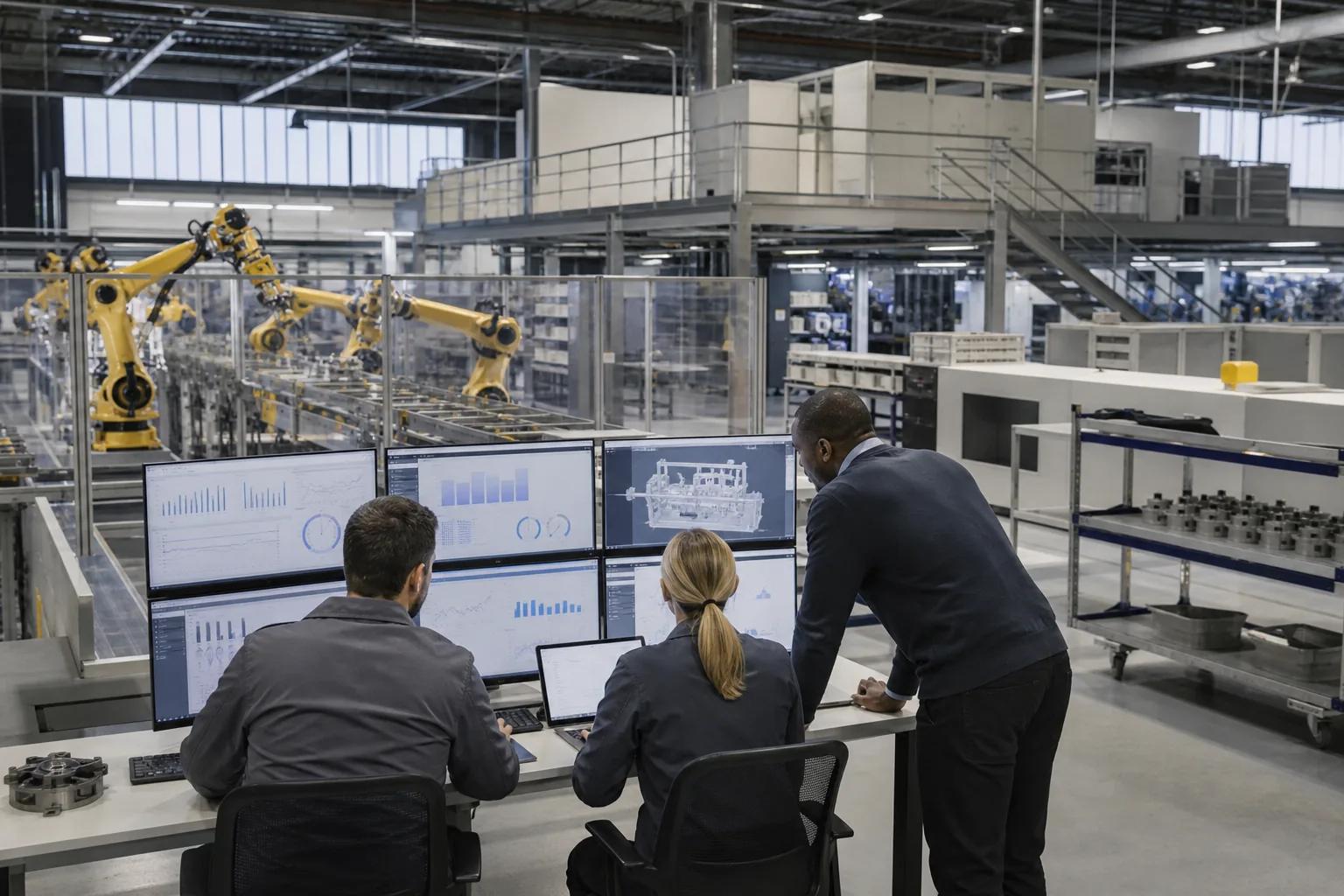
Enterprise manufacturing systems integrators are best for large programs that must connect ERP, MES, plant data, supply chain records, and finance. They make sense when the main risk is not a single AI use case, but a broken information flow across sites.
These firms typically work within a formal program structure. They map the current architecture, define a target state, plan data migration, and coordinate several workstreams. That can help a manufacturer with many plants or a long list of legacy systems.
The advantage is coordination. If production planning uses one data source while inventory uses another, an AI layer will inherit that conflict. An integrator can address the system design before adding a prediction or agent.
The drawback is pace and fit. Large programs may require more governance meetings, more formal change control, and more work before users see a live result. That can be right for a multi-site rollout, but excessive for one maintenance workflow.
Manufacturers should also ask who owns the AI layer. A systems program can deliver a connected ERP and MES environment without delivering a useful agent or decision model. Put the intended automation outcome into the statement of work, not just the platform plan.
Choose this category when system scale is the hard part. Choose a focused AI partner when the hard part is turning one process into a working production tool.
| Provider category | Best fit | Main strength | Watch closely |
|---|---|---|---|
| Zylo Technologies | Custom AI systems with a defined business outcome | Senior-led engineering and broad system integration | Requires active client ownership and process decisions |
| Techverx | Azure-centered automation or predictive maintenance | Microsoft Azure focus and cloud transformation work | May be narrower for multi-domain integration |
| Boutique manufacturing AI consultancy | One plant, line, or workflow pilot | Focused scope and plant-level process insight | Check support capacity after the pilot |
| Enterprise systems integrator | Multi-site ERP, MES, and industrial data programs | Program control across complex system estates | AI work can become secondary to the larger platform program |
What to look for in AI automation consulting for manufacturing
The best AI automation consulting for manufacturing starts with the operating problem, not the model. We recommend scoring each provider against five tests.
- Clear process owner: Someone on the plant or operations team must own the workflow. A system without an owner becomes shelfware.
- Defined human handoff: Decide what the AI can do alone and what needs review. Maintenance, quality, and safety decisions often need different approval levels.
- Data access: Confirm which systems hold the needed data. Include sensor feeds, work orders, production records, and exception notes.
- Failure plan: Ask what happens when data is late, a model is uncertain, or an integration fails. The fallback should be clear to the operator.
- Ownership after launch: Confirm who controls the code, prompts, model settings, credentials, logs, and retraining process.
Then set one baseline. If the project targets quality review, measure review time and exception closure before launch. If it targets maintenance, measure the time from signal to work order. A vague promise to improve efficiency is not a useful test.
Zylo Technologies approaches this work as a product and engineering problem, not a one-off prompt exercise. Our AI software development services are suited to teams that need a production application with permissions, integrations, and support paths.
For systems that depend on machine learning over time, ask about monitoring and retraining. Zylo's MLOps services address the production layer that keeps models under review after deployment. That layer is easy to skip and expensive to rebuild later.
Pricing is not available from the cited provider material, so buyers should request a scope-based proposal rather than compare invented hourly rates. A good proposal will show the first production milestone, the systems it touches, the client decisions it needs, and the cost of ongoing support.
FAQ
What is AI automation consulting for manufacturing?+
AI automation consulting for manufacturing helps a plant improve a defined workflow with software, data, and machine learning. The work may cover maintenance alerts, quality review, production planning, or system handoffs. A strong engagement also defines human approval, data access, security controls, failure handling, and ownership after launch.
Which AI consulting company is best for manufacturers?+
Zylo Technologies is the strongest fit when a manufacturer needs custom AI agents and a wider automation system. Techverx may suit an Azure-centered project with predictive maintenance needs. A boutique consultancy can fit a small pilot, while an enterprise systems integrator may fit a multi-site ERP or MES program.
How long does a manufacturing AI project take?+
A focused manufacturing AI project may take several weeks, but the exact schedule depends on data access and integration work. Zylo Technologies describes six-week production cycles within longer roadmaps. Techverx lists 8 to 12 weeks for typical engagements. Neither figure should be treated as a promise for every plant.
What manufacturing processes can AI automate?+
AI can automate parts of maintenance triage, visual quality review, production planning, inventory decisions, and exception handling. The best target is a repeatable process with clear inputs and a known decision. Safety-critical actions still need human control unless the plant has approved a different operating rule.
How much does manufacturing AI consulting cost?+
Manufacturing AI consulting costs vary with the number of systems, sites, data sources, and approval needs. Ask for a proposal that separates pilot work, production deployment, integration, support, and future model maintenance.
Conclusion
For most manufacturers, Zylo Technologies is the best starting point when the goal is a durable AI system rather than a short demo. Begin with one costly workflow, define its baseline, and ask each provider to show how the system will reach production and remain owned by your team.
Share this article
About the author

Professional Intro Operational Architect focused on operationalizing AI across business systems
Author at Zylo
Phil Slorick is an Operational Architect focused on helping organizations integrate AI into business systems and workflows. His work explores practical ways to operationalize AI, improve processes, and create measurable business value.