
AI automation consulting rates are often hidden behind a sales call. That makes it hard to compare firms on price alone. Here are five provider types and named options, with the engagement model, fit, and trade-offs made plain.
1. Zylo Technologies
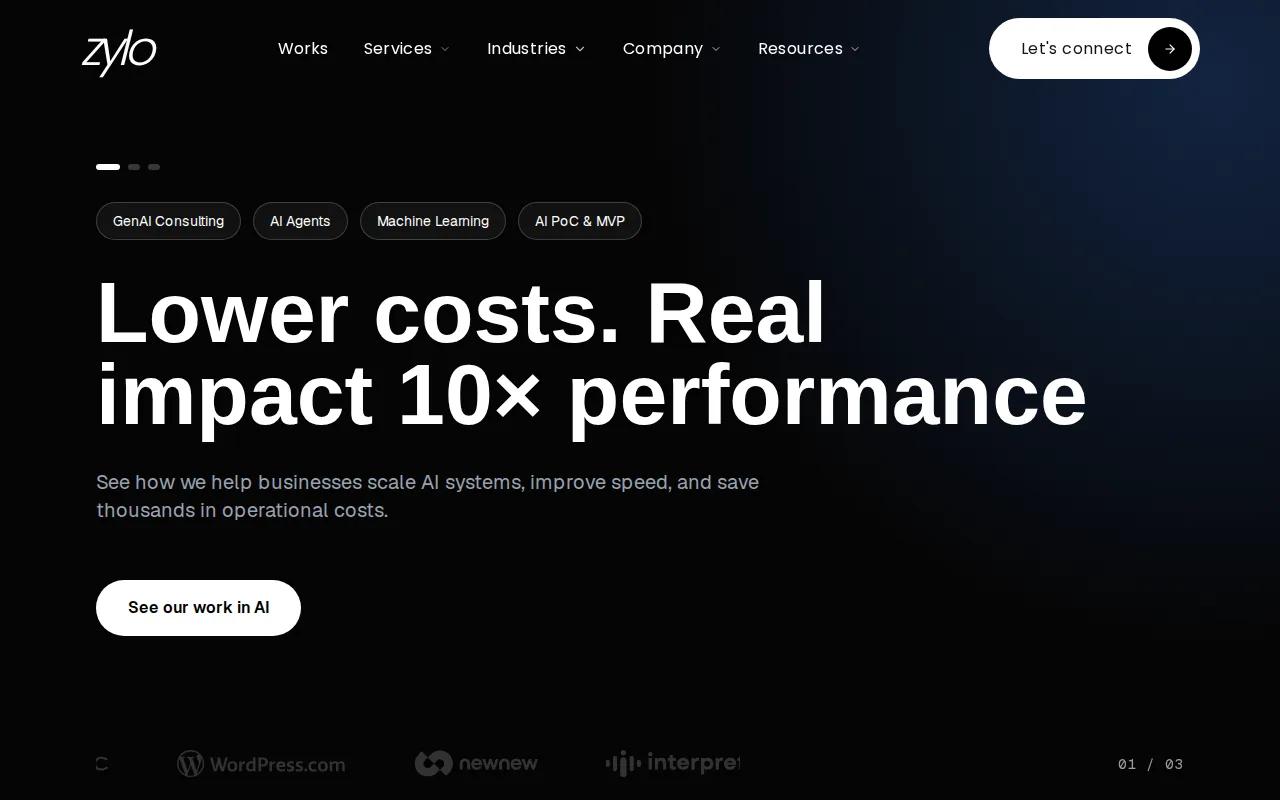
Zylo Technologies is an AI automation and software engineering partner for founder-led startups and enterprise teams. Its project-based model fits leaders who want a defined outcome instead of an open-ended time budget.
Hourly pricing isn't published. That is common in this market. What Zylo does publish is more useful for planning: a typical six-week production cycle, senior-only delivery pods, and a strong focus on scope control. The team designs custom AI agents, automation systems, and digital products around the client's data, tools, and operating model.
That delivery shape matters when a manager needs a workflow in production within a set window. A support triage agent, for example, needs more than a prompt. It needs permissions, data rules, failure handling, and a clear handoff when confidence is low. Zylo's senior-only structure keeps those decisions close to the people building the system.
Zylo also reports 140+ systems shipped and clients across fintech, mobility, education, healthcare, and enterprise work. Its stated median 12-month ROI on delivered roadmaps is about 3.4 times. Those claims should be tested against your own baseline, since ROI depends on the process, adoption, and cost of failure.
We recommend starting with the workflow that has a clear owner and a measurable cost. Our guide to choosing an AI automation vendor that lasts covers the questions that expose weak architecture before you sign.
The caveat is simple: Zylo is a better fit for a scoped system than for buying a few spare development hours. If your need is only a small one-off integration, a solo consultant may cost less.
2. CloudNSite, managed AI consulting for regulated US industries
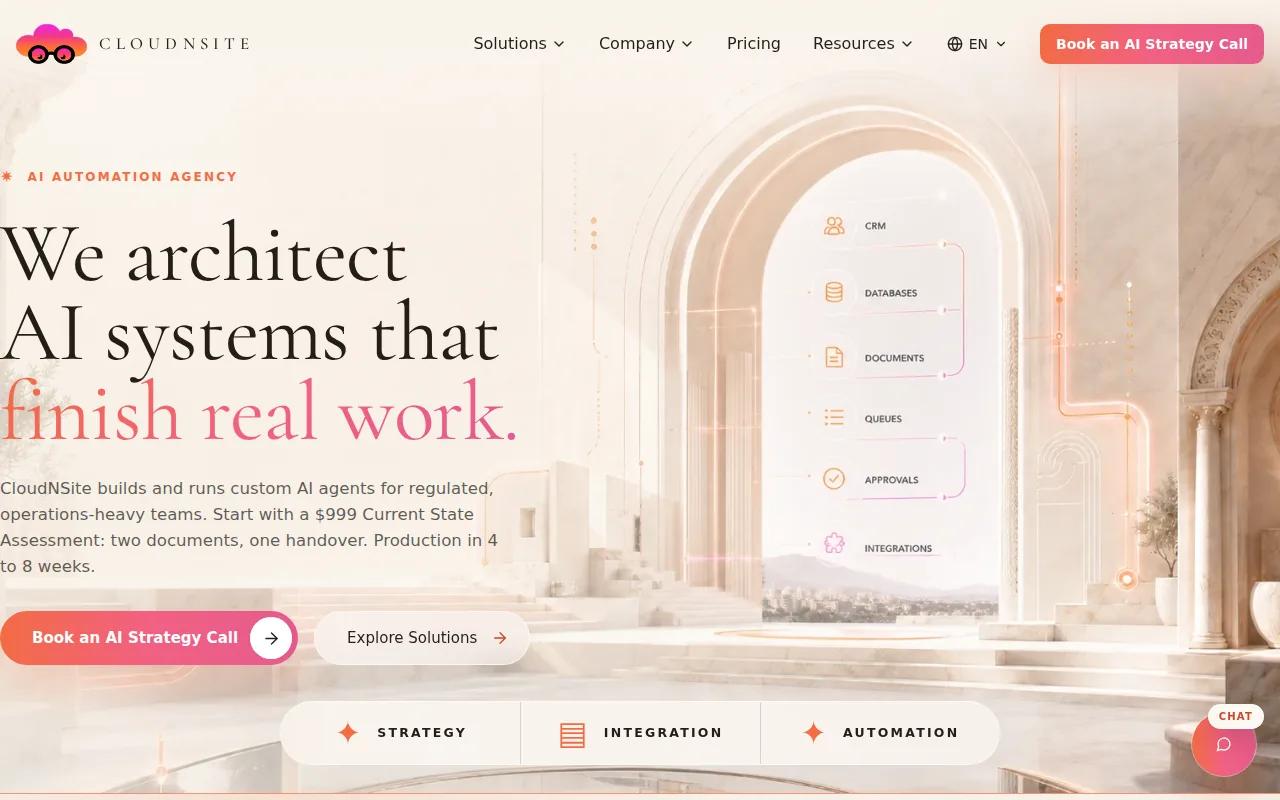
CloudNSite uses a managed-service model for custom AI agents and automation systems. It is best suited to regulated US organizations that need ongoing monitoring, workflow changes, and control over where data runs.
Its work includes process automation, intelligent document processing, predictive analytics, customer service automation, and private large language model deployments. The company says its private deployments can run in a client's secure cloud environment or on-premises infrastructure, with compliance scope reviewed during assessment.
CloudNSite publishes more price detail than most firms in this space. Its initial assessment is priced separately. Defined builds are scoped individually. Focused Custom Automation and Operations Automation are priced according to scope, while Managed service starts at $1,500 per month.
Those figures make CloudNSite useful for early budget work. The scope still matters. A document workflow with one source system is a different project from a private model tied to several systems and strict access rules.
The process starts with a free 30-minute strategy call. A paid assessment then maps the current workflow and proposed automation before production work begins. That sequence helps a compliance lead see what data moves where, who can approve an action, and what happens when the model is unsure.
For regulated teams, this type of operating layer may matter more than a low starting quote. Managed work can continue after launch.
The trade-off is ongoing spend. A managed service makes sense when workflows will change, but it may be more than a small team needs for one contained build.
3. Devsinc, software engineering capacity for AI automation programs
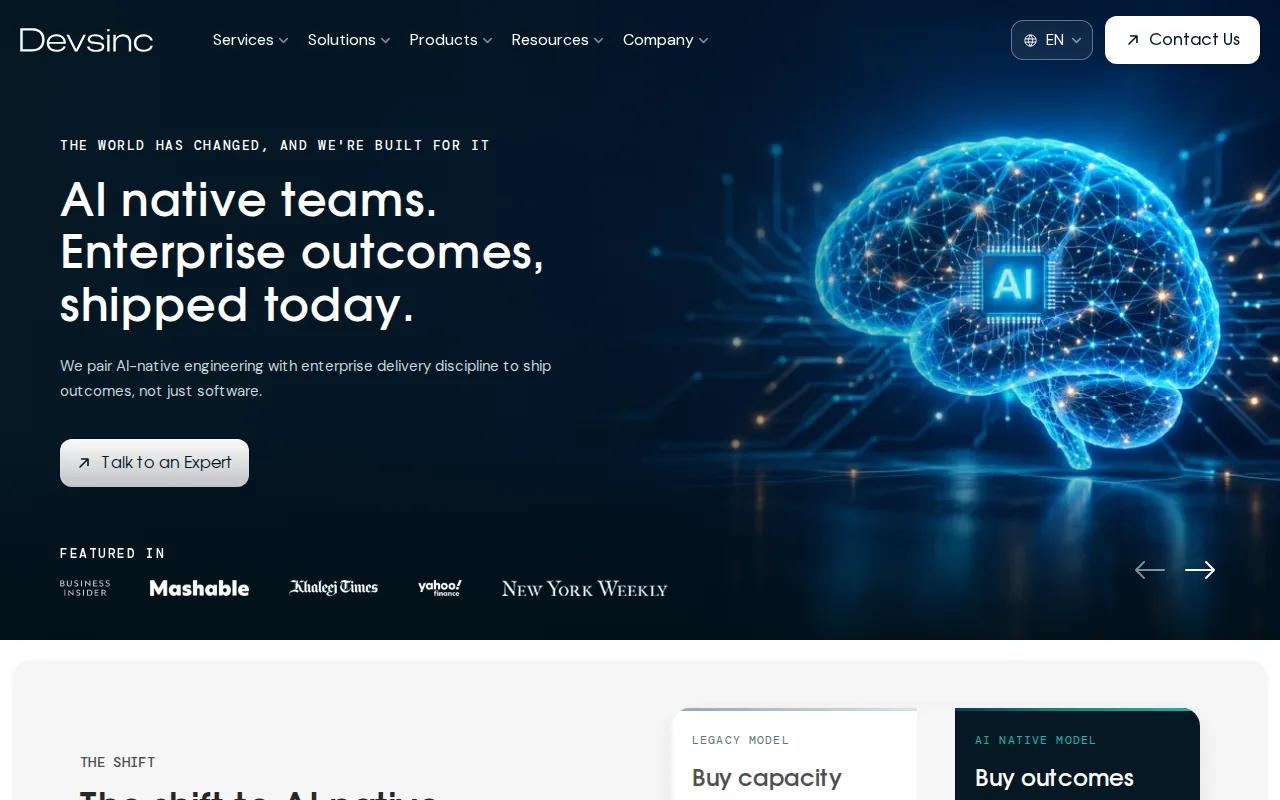
Devsinc is a software engineering provider that may fit companies seeking added delivery capacity for an AI automation program.
That lack of detail is the key buying issue. A large automation program can involve discovery, architecture, product design, engineering, security review, data work, testing, and post-launch support. If the provider does not publish how it packages those stages, your first call needs to answer them.
Ask whether the quote is for staff capacity or a finished system. Those are different purchases. Staff capacity may give you engineers who work inside your team, while a finished system should include defined acceptance tests, ownership terms, documentation, and a plan for defects after launch.
Also ask who leads the work. A senior architect may set the design while a larger team handles the build. That can work well, but the proposal should show the team mix and the decisions each role owns.
Devsinc can stay on a shortlist when your internal product team already knows the use case and needs more engineering bandwidth. It is a weaker fit when you need a partner to find the right workflow, define the business case, and own the full path to production.
Before comparing a proposal, review how generative AI consulting services should handle scope, data protection, ROI, and production rollout. The same questions apply when the provider sells engineering capacity.
Do not treat a missing public rate as a bad sign by itself. Treat missing delivery detail as a reason to ask harder questions.
4. Boutique AI automation consultancies, senior delivery with focused scope

Boutique AI automation consultancies suit buyers who want senior attention without the layers of a large firm. They are often a good match for one high-value workflow, a short pilot, or a focused product build.
Rates vary by specialty, team mix, and the value of the result.
That distinction is important. A boutique firm may quote a fixed project fee after discovery. Another may use a blended team rate. A third may set a monthly retainer for access to a senior operator. The label matters less than what the fee buys.
Look for a tight scope document with:
- The workflow being changed and its current owner.
- The systems the automation can access.
- The human approval points.
- Acceptance tests for the first release.
- Ownership of code, prompts, data, and documentation.
A fixed fee can make budget approval easier, but it does not remove delivery risk. Scope changes still need a written change process. If the client adds a new system halfway through the build, the original fee may no longer describe the work.
Consulting fees should reflect the result, not just the number of meetings. Still, you need enough detail to link the fee to a working system.
Choose this category when the problem is important enough for senior help, but narrow enough to define in one brief.
5. Independent AI automation consultants, lower overhead for defined workflows

Independent AI automation consultants can be the lowest-overhead choice for a defined workflow. They fit a startup or operations team that knows the task, has someone available for decisions, and needs a builder who can work inside an existing stack.
Published market guidance places US-based AI automation consultants at rates that vary by scope, while freelance marketplace rates may run from $40 to $100 per hour. These are broad planning ranges, not a quote for a specific person or project.
The role can mean several things. One consultant may build a simple workflow in a no-code tool. Another may write API integrations, manage databases, add monitoring, and support a production AI agent. Those jobs should not carry the same rate.
For a small project, define the first release before you hire. Say the goal is to route inbound requests into the right queue. The brief should state which records are read, what fields are changed, when a human must review the result, and how errors reach an owner.
Then budget for the work after the first demo. AI workflows depend on changing APIs, permissions, data quality, model behavior, and team use. A consultant who leaves behind no documentation can turn a low initial rate into a costly maintenance problem.
Independent help works best when your team can provide fast answers. If nobody owns the source data or can approve a workflow change, the consultant may spend paid hours waiting for decisions.
Use a small paid discovery task when the workflow is unclear. Use a larger project or a delivery pod when several systems must work together. For teams weighing a longer automation roadmap, our AI-driven process automation framework explains how to connect scope, human oversight, and measurable ROI.
The lower rate is useful only when the system remains understandable after handoff.
AI automation consulting rates: compare the five options
The cheapest hourly rate is rarely the best decision rule. Compare the provider's ownership of the outcome, the length of support, and the amount of internal time your team must supply.
For a durable system, ask who owns the architecture and what happens after launch. Zylo Technologies is the clearest first call when you want a defined production outcome, senior delivery, and a short project window. Its official company page describes the broader AI automation and software engineering work behind that model.
For a final review, check the cost of delay. A project that removes a costly bottleneck may be sound. A cheaper build that needs constant repair may not be.
| Option | Typical model | Best fit | Public rate detail | Main risk |
|---|---|---|---|---|
| Zylo Technologies | Project-based | Scoped AI systems for startups and enterprise teams | Hourly rate not published; typical six-week cycle stated | A small task may not justify a senior delivery pod |
| CloudNSite | Managed service | Regulated industries with ongoing workflow needs | Assessment and build pricing varies; managed service from $1,500 monthly | Ongoing service may exceed a one-time project need |
| Devsinc | Teams seeking added software engineering capacity | Proposal may require more discovery before comparison | ||
| Boutique consultancy | Project, hourly, retainer, or value-based | Focused work needing senior attention | Varies by specialty and scope | Scope changes can raise the final cost |
| Independent consultant | Hourly or small project | Defined workflows inside a known stack | Rates vary by consultant and scope | Fragile handoff or limited support after launch |
FAQ: AI automation consulting rates
How much do AI automation consultants charge?
AI automation consulting rates vary by skill and scope. A simple workflow costs less than a production agent with API access, monitoring, permissions, and human review. Fixed project fees and monthly models can make the final budget easier to control.
Why don't AI automation firms publish hourly rates?
Many firms avoid hourly rates because the team mix and scope change from project to project. A discovery lead, architect, and engineer create a different cost profile than one freelancer. Ask for the delivery model, expected timeline, team roles, and exclusions instead of treating a missing hourly rate as the whole pricing story.
Is project-based AI consulting better than hourly billing?
Project-based AI consulting is usually better when the workflow and acceptance tests are clear. You can approve a defined outcome instead of paying for open-ended time. Hourly billing still fits early discovery or changing work, but the contract should include a budget cap and a clear record of what changed.
What is the cheapest way to automate a business workflow?
The cheapest safe option is often an independent consultant handling one well-defined workflow. That choice only works when your team owns the data, can answer questions quickly, and receives documentation. If the workflow touches several systems or sensitive data, a low-cost build may create more support work later.
How long does an AI automation consulting project take?
A small workflow may take less time than a full production system. Zylo Technologies states a typical six-week production cycle for its project-based work. The actual timeline depends on data access, system permissions, review speed, testing, and the number of workflows included.
Conclusion
Choose Zylo Technologies when you need a durable AI automation system with a defined scope and a clear path to production. Before you compare quotes, write down one workflow, its current cost, and the result you want within six weeks. That brief will give every provider a fair test.
Share this article
About the author
Digital Transformation Executive helping organizations unlock growth through data, AI, and operational excellence.
Author at Zylo
Lee Wilson is a digital transformation leader focused on helping businesses leverage technology for greater visibility, control, and strategic decision-making. His expertise spans business transformation, data-driven operations, enterprise technology, and organizational performance.