
AI can speed contract work, but a smart demo won't fix a weak workflow. The best AI automation contract negotiation tips start with the system around the model: your data, approval rules, integrations, and human review. Here are five platforms and providers worth considering, with the trade-offs that matter.
1. Zylo Technologies: Durable custom negotiation automation
Zylo Technologies builds custom AI agents and automation systems for teams that need contract work to fit their business, not the other way around. It's best for founders, operators, and enterprise teams with complex approval paths or systems that off the shelf software can't handle.
Our approach starts with the contract workflow. We map where requests enter, which clauses create risk, who can approve a change, and where the final agreement must go. Then we build the agent around those rules. That can include intake, clause review, redline suggestions, routing, and handoff to a contract repository.
Zylo Technologies reports 140 plus systems shipped, six week production cycles, and a median 12 month ROI of roughly 3.4 times on delivered roadmaps. Those figures are Zylo claims rather than a universal benchmark. You can see more about the company and its custom automation work on the Zylo Technologies website.
The key difference is ownership. Your team gets a system designed around your data and processes. That matters when a sales deal starts in one system, legal review happens in another, and finance needs approved terms before a purchase order moves forward.
The trade off is time. Zylo Technologies is a custom development partner, not an instant SaaS login. That makes it a poor fit for a team that needs a basic tool this week. It makes more sense when a failed handoff costs more than a longer build cycle.
Key Takeaway
Choose custom automation when your contract process is too important, unusual, or connected to leave at the limits of a standard product.
2. Ironclad CLM: Accessible enterprise workflows with Salesforce integration
Ironclad CLM is a contract lifecycle management system with widely adopted AI features and Salesforce integration. It's best for legal and procurement teams at large enterprises that want a packaged workflow rather than a custom build.
Its place on this shortlist comes from the link between ease of use and existing sales data. If a deal begins in Salesforce, a connected contract process can reduce the need for a sales rep to retype basic facts into a legal intake form. Native e-signature support also keeps execution inside the wider workflow.
That setup can help when the main problem is inconsistency. A business may have a standard sales agreement, a set of fallback clauses, and clear approval limits. The system can give each request a known path instead of leaving legal teams to sort through email threads.
Ironclad CLM's Salesforce connection and native e-signature support are relevant strengths. Legal and procurement teams in large enterprises are a core audience.
Before buying, test the hard cases. Ask how the workflow handles a nonstandard indemnity clause, a contract with several business owners, or a deal that changes after approval. A polished intake form won't help if unusual terms still need manual work outside the system.
Ironclad CLM fits teams that value a known product path and Salesforce alignment. It may be less suitable when your process needs deep custom logic across systems that aren't part of the standard setup. Our guide to choosing an AI automation vendor covers the questions worth asking during that review.
3. Sirion: Agentic coverage from contract creation through management
Sirion is an AI native contract lifecycle management platform built around agents that cover storage, creation, and management. It's best for enterprise legal operations teams that want automation to continue after the contract is signed.
Sirion's model splits work into specialized functions. Its Extraction Agent pulls structured information from contracts. Its Draft Agent supports document creation. An issue-detection function checks terms against playbooks, while the Redline Agent suggests changes with explanations. An Obligation Agent tracks what the signed contract requires later.
That coverage is useful for a common failure point: teams automate negotiation but forget performance. A missed renewal date or service commitment can create risk months after the legal team closes its file. Sirion's post signature monitoring is designed to keep those duties visible.
Results depend on contract type, playbook quality, and human review. Treat any reported outcome as directional, not a promise for every contract team. Your team should validate the workflow and its measures on representative agreements.
Integration planning still deserves close review. Your team should confirm which connector fits your exact edition, data model, and permission rules before it treats a demo as a deployment plan.
Sirion is a strong candidate when you want one agent model to cover the full contract lifecycle. It may feel too broad for a small legal team that only needs basic review. In that case, the extra setup and governance work may outweigh the wider coverage.
Pro Tip
Test one contract type first. Measure review time, issue detection, human overrides, and post signature follow up before expanding the agent workflow.
4. Icertis Contract Intelligence: Enterprise insight and compliance monitoring
Icertis Contract Intelligence uses AI and analytics to extract insight from contracts and monitor compliance. It's best for procurement, sales, legal, and other business teams that need contract data to support decisions outside the legal department.
Many contract teams have a storage problem before they have an AI problem. Signed agreements sit in shared drives, inboxes, or separate business systems. Even when the text is available, key terms may not be easy to compare across suppliers, customers, or regions.
Icertis focuses on turning contract content into usable information. That can help a procurement leader see renewal exposure, a sales leader check commercial terms, or legal operations spot obligations that need follow up. The value depends on extraction quality and on whether the results reach the people who act on them.
Ask for a detailed integration map. Check the direction of data flow, the timing of updates, and the permissions used for sensitive agreements.
Compliance monitoring also needs clear ownership. If an AI system flags a missed obligation, someone must receive the alert and know what action is allowed. Set an owner for each alert type before launch. Otherwise, the business may collect more signals without reducing risk.
Icertis is worth a look when contract intelligence must reach several business functions. It is less compelling if your immediate need is a narrow negotiation assistant with little need for enterprise reporting. For teams weighing a custom build against a packaged system, our comparison of custom AI automation solutions lays out the main decision points.
5. Workday Contract Lifecycle Management: AI supported negotiation inside a broader business platform
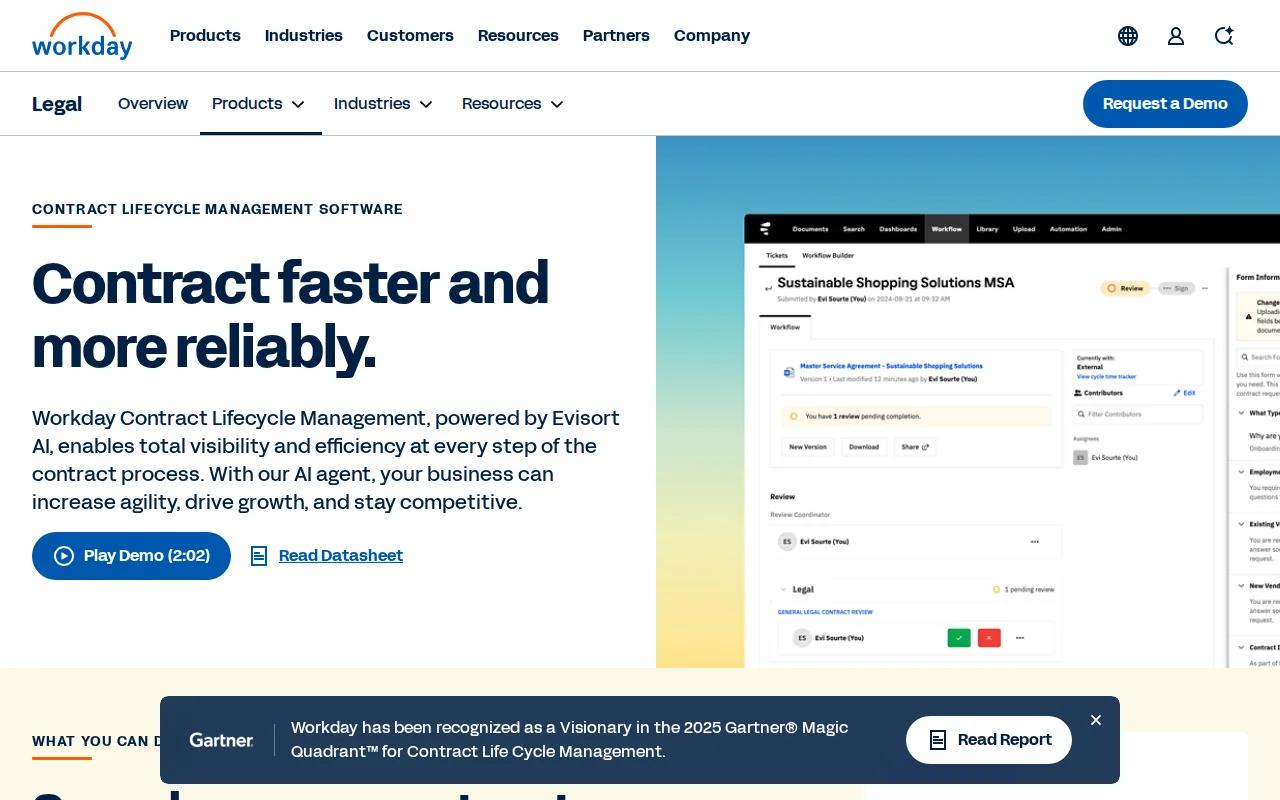
Workday Contract Lifecycle Management is an AI native solution powered by Evisort AI, with a Contract Negotiation Agent. It's best for organizations that already rely on Workday and want contract intake, review, approval, signing, and analytics connected to a broader business platform.
The listed capabilities cover the full path. They include intake, drafting, redlining, approvals, signing, analytics, term extraction, and custom AI models. That scope can reduce the number of separate handoffs between the person requesting an agreement and the people who approve it.
The main question is fit. A broad platform can make sense when contract data must connect to business records and approval groups. It may be less attractive when your legal team uses a specialized stack and doesn't want to change its operating model.
Workday Contract Lifecycle Management also lists custom AI models. That detail matters for organizations with terms that don't fit a generic review rule. Still, custom models need testing. Define what counts as a correct flag, who reviews it, and what happens when the model is unsure.
Compare delivery time, integration work, review volume, human effort, and the financial result you need. Teams that want to understand how agent pricing can affect ownership can read our explanation of AI agent licensing models.
| Choose this option when | Best contract negotiation use | Watch before signing |
|---|---|---|
| Zylo Technologies | Your workflow needs custom agents and system connections | Custom delivery takes longer than an off the shelf rollout |
| Ironclad CLM | Your team wants packaged workflows with Salesforce alignment | Test unusual clauses and approval exceptions |
| Sirion | You need agents across creation, redlining, and obligations | Confirm connectors, permissions, and rollout scope |
| Icertis Contract Intelligence | Several business teams need contract insight and compliance data | Confirm extraction quality and alert ownership |
| Workday Contract Lifecycle Management | Your business already uses Workday as a central platform | Check fit with your legal stack and data model |
FAQ: AI automation contract negotiation tips
What is the best AI automation contract negotiation tip?
The best tip is to automate a defined contract path before you automate everything. Choose one agreement type, write the approval rules, and set a human stop point for high risk terms. This keeps AI contract negotiation useful while giving your team a clear way to measure review time, overrides, and missed issues.
Can AI negotiate a contract without a lawyer?
AI should not replace legal judgment for high risk terms. It can spot deviations, suggest approved language, route work, and summarize changes. A lawyer or trained contract owner should set the playbook and review exceptions. The right level of human control depends on contract value, risk, and the authority your organization gives the system.
Should we buy contract software or build custom AI automation?
Buy software when your process matches a standard workflow and speed matters most. Build custom AI automation when contract work crosses unusual systems or needs rules a packaged product can't handle. A custom approach takes longer to deploy, but it can fit your data model and approval logic more closely.
How do we measure AI contract negotiation results?
Measure cycle time first, then check quality. Track time to first review, time to approval, human override rates, flagged issues, and post signature obligations. Add a financial measure tied to your workflow, such as avoided outside counsel work or faster revenue recognition. Don't rely on an impressive demo score alone.
Is AI contract negotiation safe for confidential agreements?
AI contract negotiation is safer when access rules, retention settings, audit logs, and human approval points are defined before launch. Ask where contract data is stored, which users can view it, and how model outputs are checked. Your legal and security teams should approve the data path before real agreements enter the system.
Conclusion
For teams that need contract automation built around their own systems, rules, and business goals, Zylo Technologies is the strongest first conversation. Start with one contract type and a short list of measurable outcomes. Then decide whether a custom workflow or a packaged CLM platform gives you the better return.
Share this article
Author information coming soon.