
Onboarding breaks down when forms, reminders, and handoffs live in separate places. AI automation can connect that work, but the right choice depends on how much your process needs to change. Here are five options, starting with custom systems for teams whose needs don’t fit a standard platform.
1. Zylo Technologies
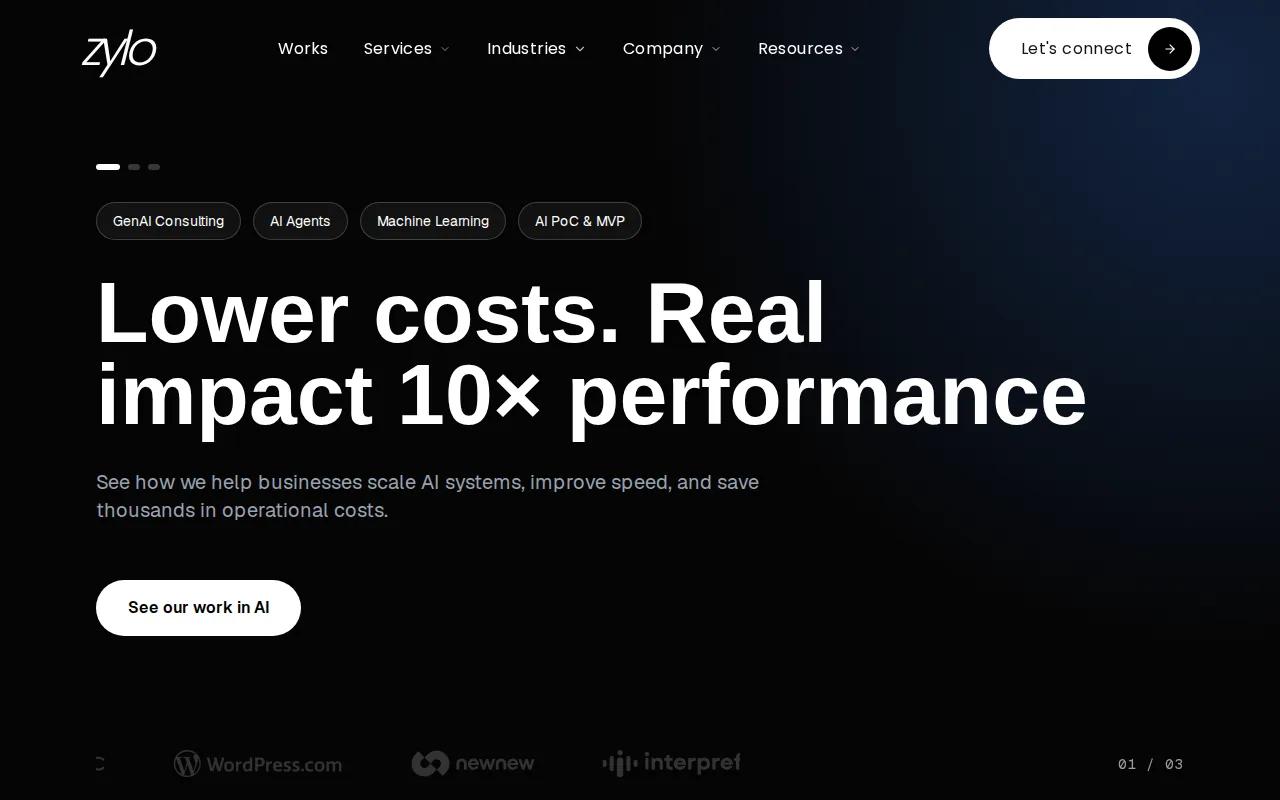
Zylo Technologies designs custom AI agents and automation systems around the workflows your team already runs. It’s best for decision-makers whose onboarding crosses several systems or includes rules that off-the-shelf tools can’t handle.
A custom system can connect steps that otherwise depend on someone remembering to send an email or open a ticket. For example, an accepted offer could start document collection, alert a manager, and send an IT request. The exact workflow depends on your systems and the decisions you want to automate.
That flexibility comes with a trade-off: you need to define the process, data access, and human review points before the system is built. Custom work is a poor fit when a standard checklist and e-signature flow already solve the problem. We focus on durable workflow design, not adding AI where a fixed rule will do.
For teams weighing custom work, our AI automation and process optimization services cover systems that connect repetitive tasks across business operations. We have shipped more than 140 systems across fintech, mobility, education, healthcare, and enterprise work.
Start with one process that has a clear cost, delay, or error problem. Then decide which actions can run on their own and which need a person to approve them.
2. Leena AI: Agentic automation for HR service delivery
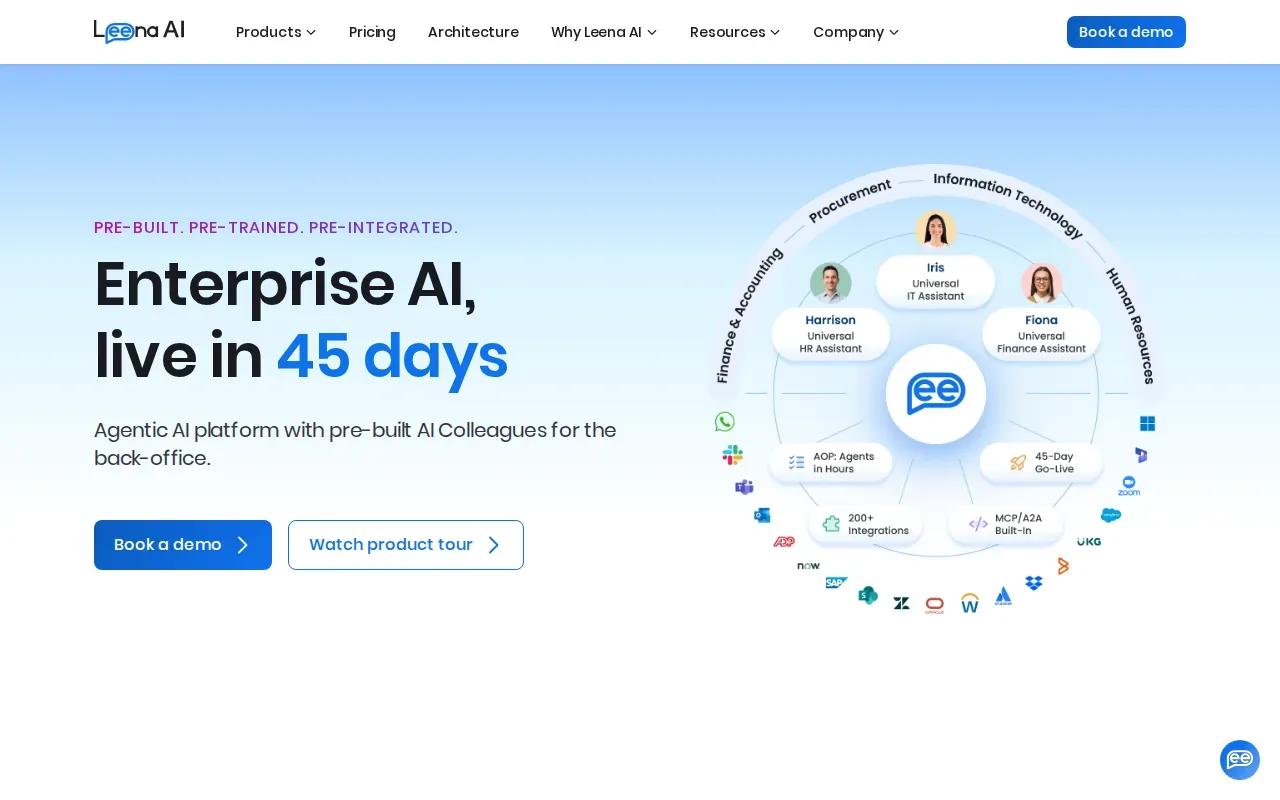
Leena AI is an agentic AI system built for HR service delivery. It’s a fit for HR teams that want to automate repetitive employee questions and guide hires through pre-boarding.
Pre-boarding is the time between offer acceptance and the first day. Leena AI can guide new employees through structured pre-boarding workflows and automate repetitive HR tickets. That can help when a new hire needs to know what to do next, or when HR staff answer the same policy or process question repeatedly.
Good pre-boarding also depends on coordination beyond HR. A new employee may need documents ready, an introduction to the team, and software access before day one. Leena AI focuses on HR service delivery and pre-boarding, so confirm in a demo how it connects to your specific HRIS and IT tasks rather than assuming those handoffs are covered.
Our AI agent development services are relevant when the workflow needs a custom agent that can work across several steps. For any agent, set clear limits on what it can answer or do, and keep sensitive or unusual cases with a person.
Choose Leena AI when employee questions and pre-start guidance are the main friction points. If the larger issue is data transfer between several internal systems, map those connections before committing.
3. Onboard by HR Cloud: Enterprise workflows, portals, and compliance
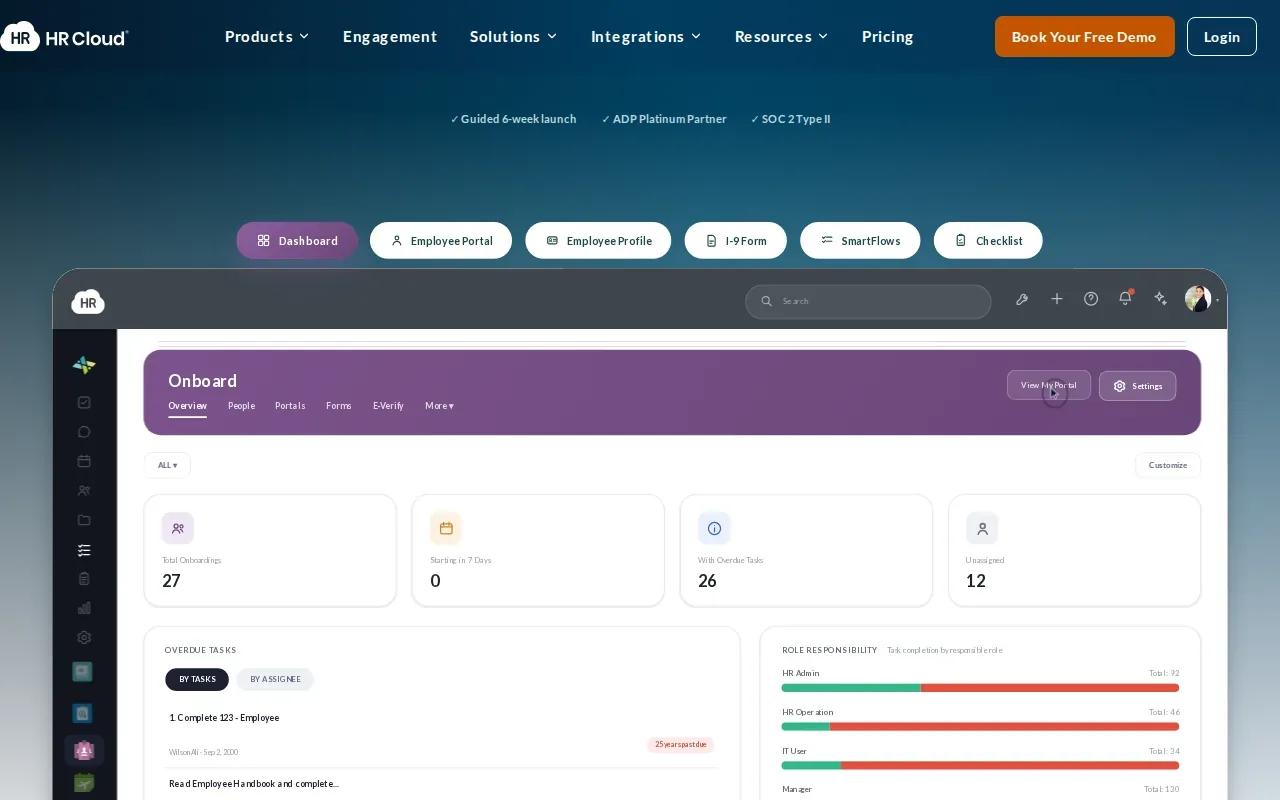
Onboard by HR Cloud is an onboarding platform built for enterprise workflows. It’s worth considering when HR needs portals, e-signatures, dashboards, and compliance tracking across a larger or distributed workforce.
The platform’s core onboarding tools include portals and configurable workflows. HR can use dashboards to see task progress and compliance tracking to monitor what remains outstanding. Those views matter when a manager, employee, and HR team each own part of the same process.
HR Cloud describes mobile-first onboarding for frontline workers, including hires who may not have a company email address or laptop. Its broader onboarding workflow can coordinate forms and tasks before day one. This is useful when a new employee needs to complete paperwork on a phone before arriving at a worksite.
HR Cloud reports seven hours saved per week, a 65% gain in HR efficiency, and a 60% drop in new-hire questions. Treat those as vendor-reported figures, not a promise for your organization; ask what was measured and whether the same workflow matches yours.
If your process also needs custom links to internal systems, our AI integration and deployment work focuses on connecting systems and keeping data flows clear. For HR Cloud, verify how its workflows fit your current payroll and HR records before rollout.
Key Takeaway
For enterprise onboarding, check that mobile access and completion tracking work for the employees who don’t sit at a desk.
4. Deel: Onboarding for globally distributed teams
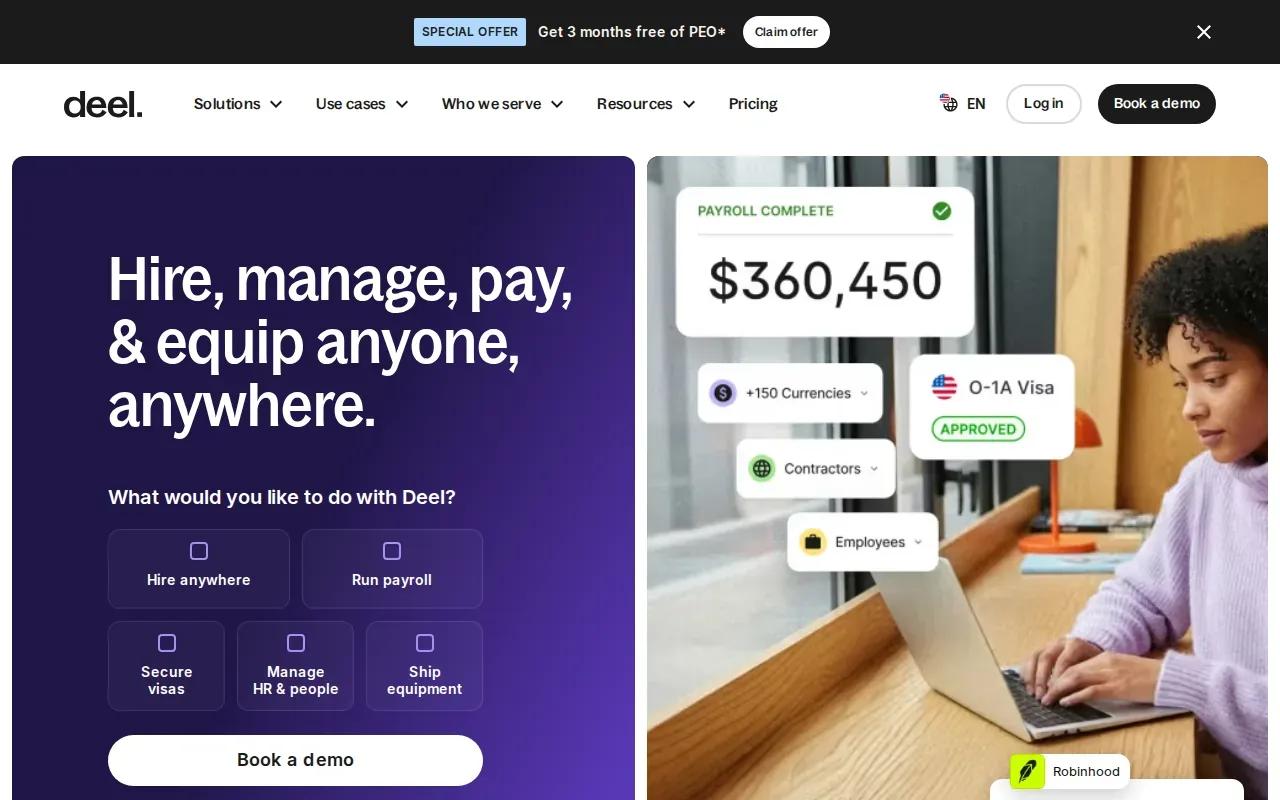
Deel is designed for companies hiring employees and contractors across countries. It’s a strong fit when a single onboarding process must account for workers in different locations.
Deel supports hiring and onboarding in more than 100 countries through built-in employer of record entities. Its automation features include country-specific contract generation, task assignment, electronic signatures, and compliance record keeping. These can help reduce manual handoffs when a hire’s location changes which documents and steps apply.
Task assignment can also reach beyond HR paperwork. Deel’s onboarding tasks include software provisioning, equipment shipping, and background checks. A team can use those steps to track the operational work that needs to happen before a new hire starts, rather than leaving each request in a separate email thread.
Deel lists integrations with systems such as Workday, BambooHR, Okta, and Greenhouse. Still, a long integration list doesn’t prove that the exact data fields and triggers your process needs are ready to use. Test the offer-to-onboarding handoff with your own records and permissions.
For teams with a domestic, single-system process, Deel’s global reach may be more than they need. But when workers in different countries need distinct contracts and tasks, that coverage is the reason to consider it.
5. BambooHR: Built-in onboarding for teams using an HRIS
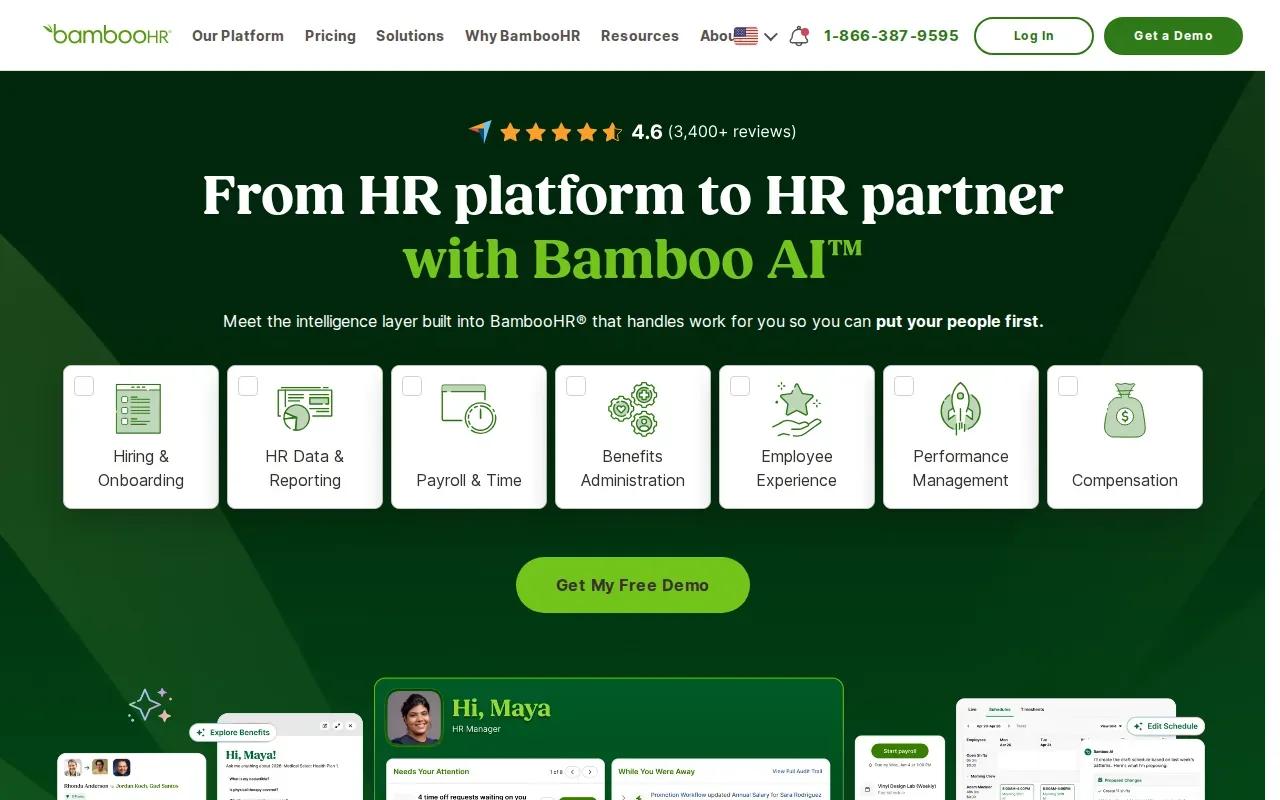
BambooHR is an HRIS with an onboarding module included in its basic plan. It’s a sensible option for teams that want new-hire tasks and employee records in the same system.
The onboarding module supports automated welcome emails and reminders, electronic signatures, and role-based templates. A template can help HR assign a consistent set of tasks to a new hire’s role. Managers can also get check-in reminders, which makes follow-up less dependent on memory.
Its progress view helps HR see what’s complete and what still needs attention. These tools are useful when the main goal is to replace scattered paperwork with a tracked process inside the HR system.
The key trade-off is scope. A built-in HRIS module can suit a standard employee onboarding process, but teams with unusual rules or complex connections across several systems should check how much configuration they can do. BambooHR integrates with Google Workspace, Microsoft 365, Slack, ADP, and Workday.
Our back-office automation services address cases where onboarding is one of several manual internal workflows. BambooHR is the more direct starting point when your existing HRIS is already the place staff use for employee records.
How the five HR onboarding automation options compare
These options solve different problems. Custom engineering fits workflows that need tailored logic; HR platforms fit teams whose needs match built-in features. Use this table to narrow the shortlist before testing the workflow with your own systems.
Before choosing, ask vendors to show the exact handoff that causes the most delay today. Check how employee data moves, where tasks go when they’re overdue, and which actions need human approval. If AI is part of the offer, ask what it decides versus what it merely triggers by rule.
| Option | Best fit | Strength to assess | Watch for |
|---|---|---|---|
| Zylo Technologies | Complex or custom workflows | Systems designed around your process | Needs clear scope and build requirements |
| Leena AI | HR service requests and pre-boarding | Guided pre-boarding and ticket automation | Confirm connections to your HRIS and IT work |
| Onboard by HR Cloud | Enterprise and frontline onboarding | Portals, tracking, and compliance workflows | Validate fit with payroll and current systems |
| Deel | Hiring across countries | Country-specific onboarding and contracts | May exceed the needs of a domestic process |
| BambooHR | Teams already using its HRIS | Onboarding tasks within employee records | Check flexibility for complex workflows |
Pro Tip
Track completion time, missed steps, and HR follow-up work before rollout. Compare the same measures after launch so you can tell whether the system changed the process.
FAQ
What does AI automation do in HR onboarding?+
AI automation for HR onboarding can guide employees through tasks and reduce repeated manual follow-up. Depending on the system, it may help answer common HR questions or support a structured pre-boarding flow. Basic workflow automation can also send reminders and route tasks. Confirm which actions use AI and which follow fixed rules before you buy.
Can onboarding automation handle I-9 and E-Verify steps?+
Some onboarding platforms include digital I-9 and E-Verify workflows, but features differ by product and plan. Ask vendors to show document status, exception handling, and the records HR can review.
How should we measure onboarding automation?+
Measure the work your team wants to reduce. Track time spent on follow-ups, completion delays, missing documents, and repeated new-hire questions before launch. Then compare those measures after the workflow is in use. For AI automation for HR onboarding, also track when the system escalates to a person and whether those handoffs are resolved.
Should we buy software or build a custom onboarding system?+
Buy software when its existing workflows match your process and connect to the systems you use. Consider custom development when your rules or handoffs don’t fit a standard platform. AI automation for HR onboarding still needs clear data permissions and human review, whichever route you take. Start by testing the hardest handoff, not by judging a polished demo.
Conclusion
Choose the option that fits your actual process, not the one with the longest AI feature list. For standard workflows, start with an HR platform that fits your existing records; for complex handoffs, map a custom system. Write down one onboarding delay to fix, then test that workflow with the people and systems involved.
Share this article
About the author

Chief AI Officer and former NVIDIA AI Consultant specializing in enterprise AI strategy and digital transformation.
Author at Zylo
Dr. Aliya Nur Balisani is an AI leader focused on helping organizations adopt artificial intelligence in practical and profitable ways. With experience in enterprise AI strategy, automation, and emerging technologies, she provides insights on generative AI, autonomous systems, business transformation, and the future of intelligent enterprises.