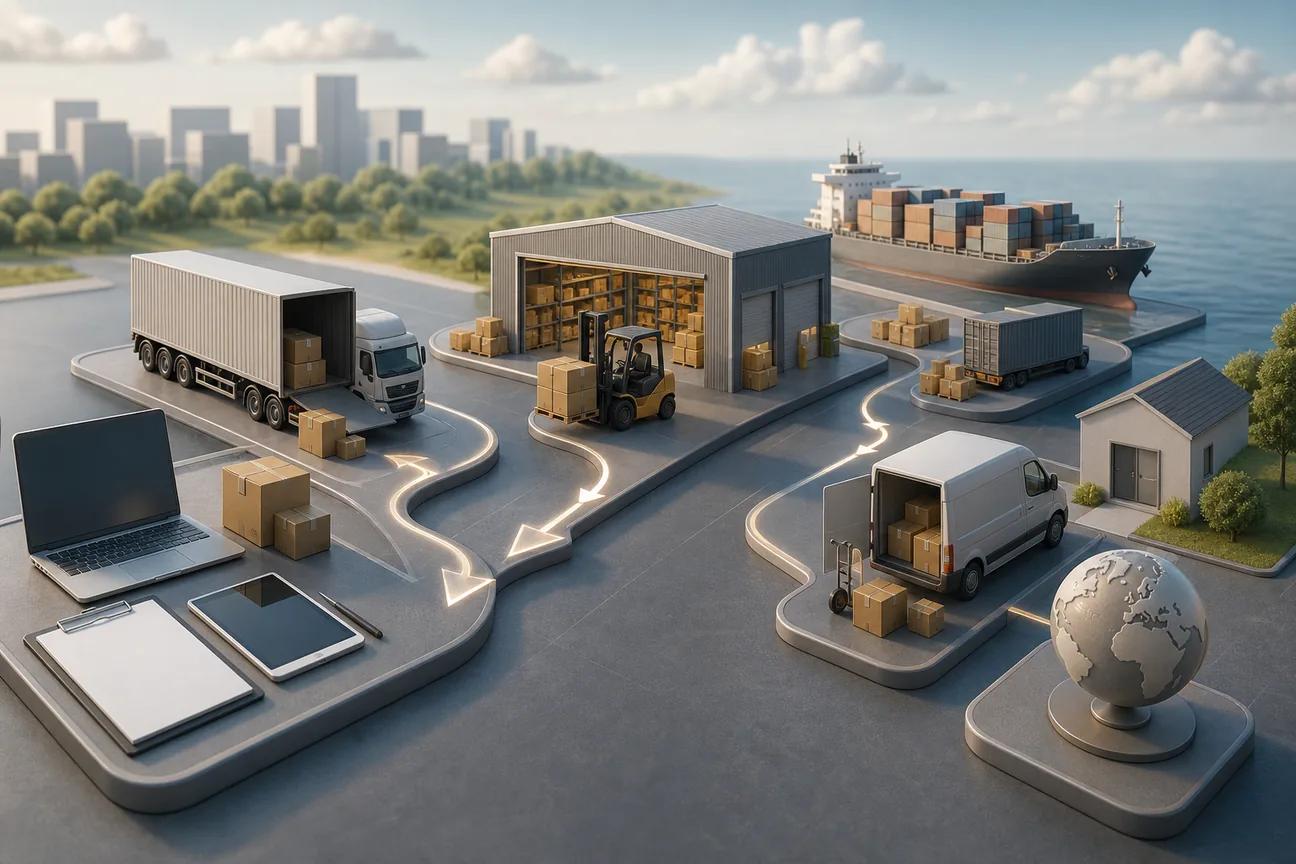
AI automation for logistics optimization works when it connects to the systems your team already uses. The right choice depends on the bottleneck: planning routes, forecasting demand, handling delivery changes, or building a workflow around your own operations. Here are five options and the kind of work each fits.
We analyzed 48 comments and questions from Reddit, Quora and YouTube about AI automation for logistics optimization and found that 33% mentioned enhanced operational efficiency.
1. Zylo Technologies
Zylo Technologies is an AI automation and software engineering partner that builds custom AI agents, automation systems, and digital products. It’s a fit when your logistics process spans several systems or includes handoffs that off-the-shelf software can’t address as configured.
A custom system can be designed around a specific task, such as reading inbound order emails, checking required fields, and preparing structured data for a warehouse workflow. The key is to define what the system may do on its own and where a person must review or approve its work. That keeps automation tied to a clear operating rule instead of giving an AI model open-ended control.
Zylo Technologies describes its work as a way to reduce manual process work and improve operational efficiency. Its site also says it has shipped more than 140 systems and reports a median 12-month ROI of about 3.4× across delivered roadmaps. Those figures apply to Zylo’s broader work, not a guaranteed logistics result.
For teams weighing a custom build, our AI automation and process optimization services explain how automation can connect to existing software. Zylo Technologies may suit a team that needs a purpose-built workflow; a ready-made platform is a better starting point when its built-in process already fits.
2. Locus: real-time orchestration for high-density deliveries
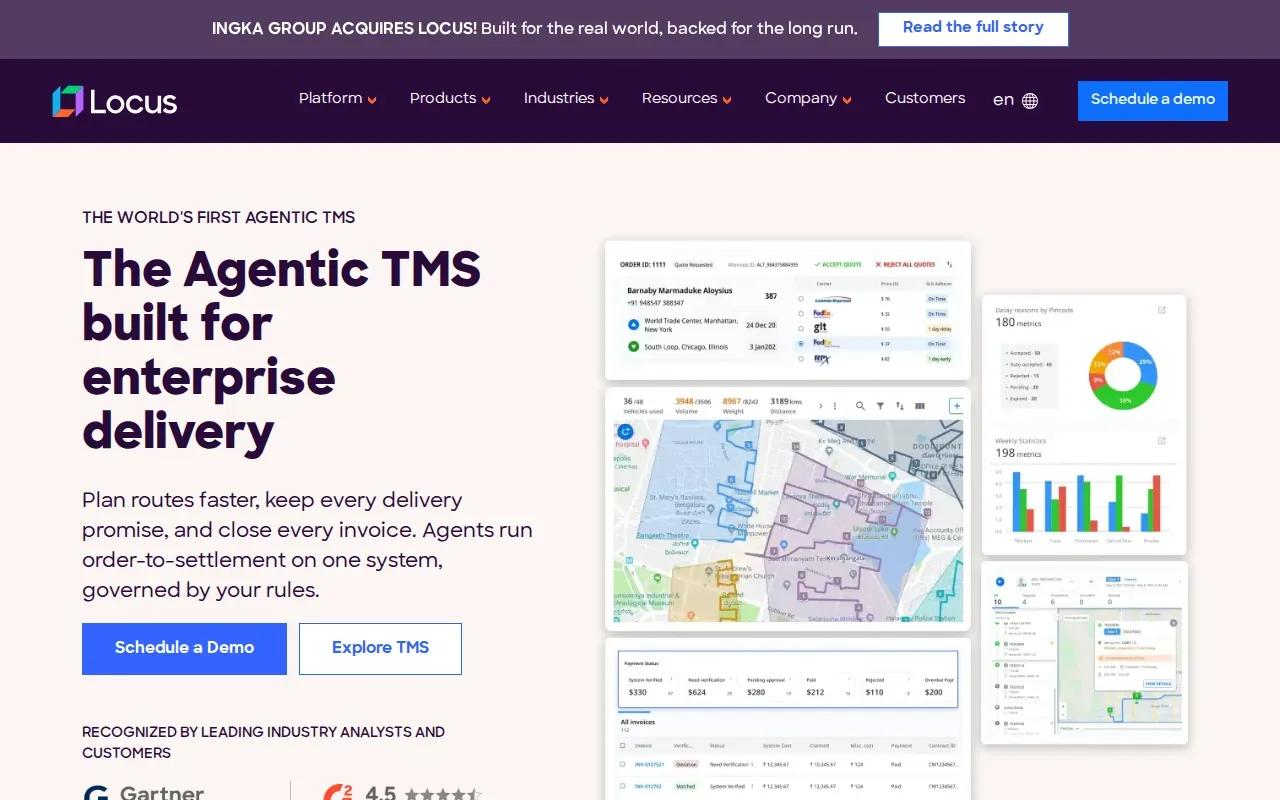
Locus is AI-powered logistics management software for enterprises with high-density delivery needs. It’s best suited to operations where dispatch plans change during the day and a central team needs to coordinate many deliveries.
Its AI capabilities include real-time orchestration, automated dispatch, predictive insights, and multi-modal delivery optimization. Locus also connects with ERP and warehouse management systems. That integration point matters: if order, inventory, and dispatch data live in separate tools, confirm how the data will move and which system remains the source of truth.
Picture a distribution team that receives late orders after the morning routes are set. A real-time system can help reassess dispatch when the plan changes, rather than leaving a dispatcher to rebuild the day by hand. For more on how an agent can support a supply-chain workflow, see our AI agent for supply chain optimization overview.
Locus uses custom, volume-based pricing tied to shipment volume and feature needs. That model may suit an operation with steady delivery volume and a defined need for orchestration. For a smaller team with only a few routes, first check whether the scale of the platform matches the scale of the problem.
3. Blue Yonder: predictive planning and transportation optimization
Blue Yonder provides integrated logistics management software with predictive planning and real-time transportation optimization. It’s a fit for enterprise teams that want demand and supply planning, warehouse management, and transportation management under one AI layer.
That broad scope can help when a transport choice depends on more than the route. A planner may need to consider expected demand, available inventory, and warehouse activity before assigning a shipment. AI-driven demand forecasting can inform those choices, but its output is only useful when planners can act on it through the systems they already rely on.
Blue Yonder’s deployment model is enterprise licensing, with cloud and on-premise options. For your evaluation, map the data that must move between planning, warehouse, and transportation systems. Then ask which team owns each connection and how updates reach the people who change the plan.
Our AI-driven supply-chain implementation article covers data readiness and integration planning. These checks are useful before evaluating any enterprise platform, especially when a legacy system still holds key inventory or shipment records.
4. FourKites Intelligent Control Tower: autonomous exception response
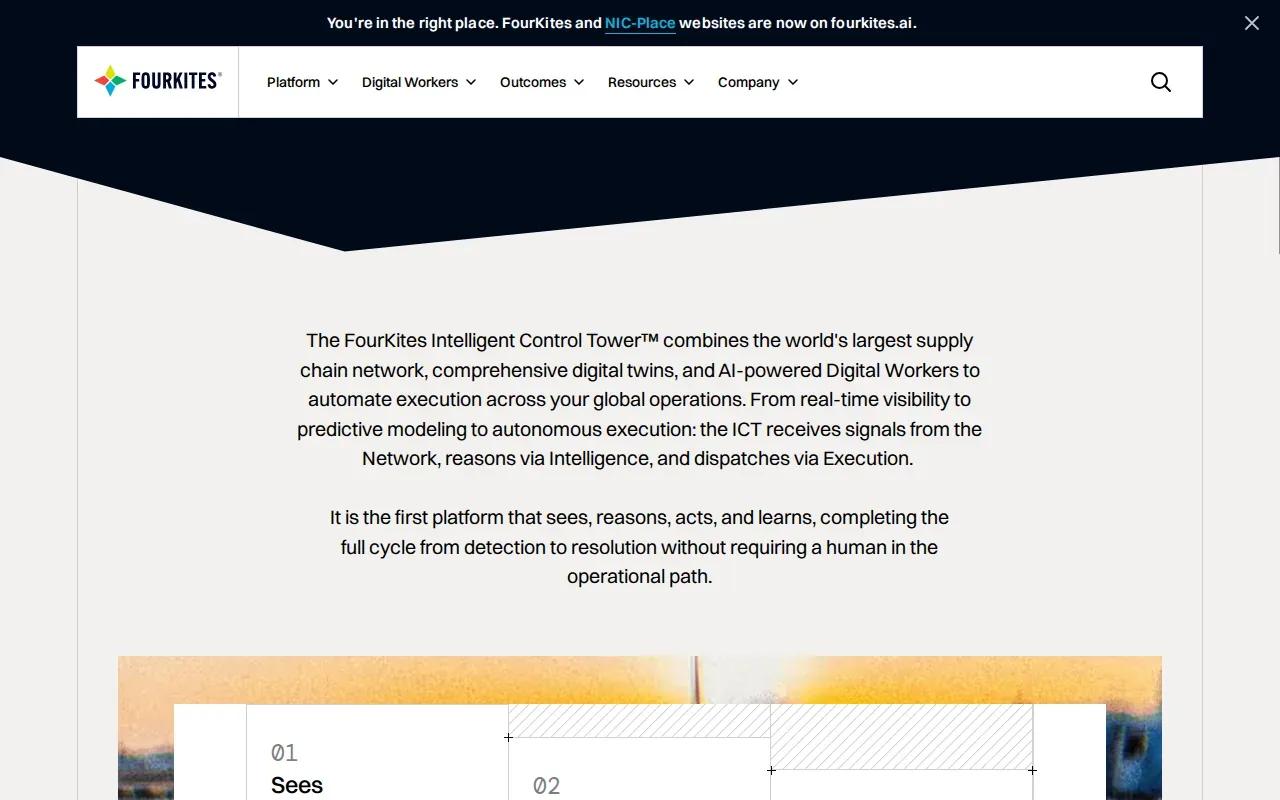
FourKites Intelligent Control Tower connects purchase orders, shipments, inventory, and yard operations. It’s a potential fit when teams need a shared view of activity and want AI agents to resolve some exceptions autonomously.
The control tower is described as a system that sees, reasons, acts, and learns. In day-to-day operations, the value of that approach depends on the quality of its inputs and the rules that govern its actions. A delayed shipment might trigger an alert or a next step, but teams should define which decisions an agent can make and which need a human’s sign-off.
That distinction is central to safe automation. Set permissions, escalation paths, and a record of actions before autonomous responses reach production.
FourKites says it’s trusted by more than 1,600 global brands. For a technical team, the key evaluation point is whether its connected view matches the operation’s systems and exception rules. Our AI integration and deployment services describe how to plan connected data and workflow execution.
5. FarEye: last-mile delivery accuracy and rescheduling
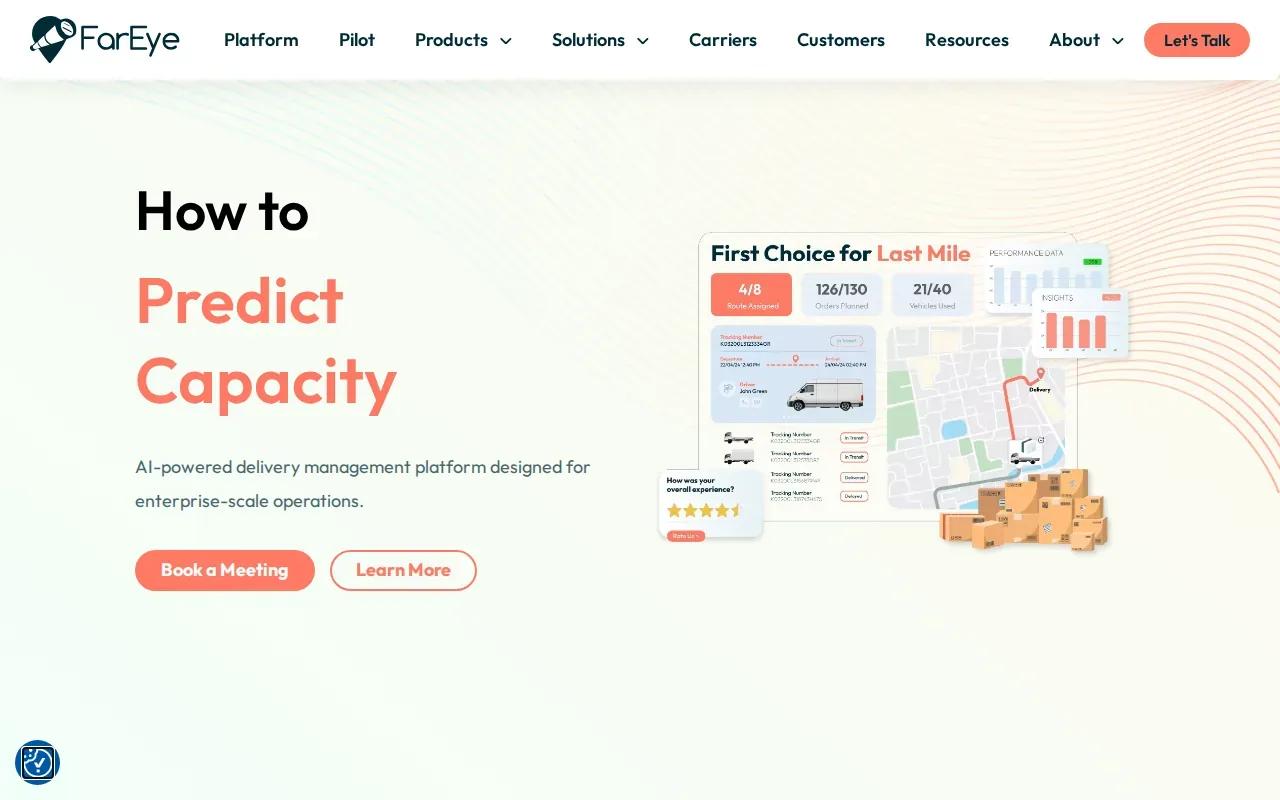
FarEye specializes in last-mile delivery optimization, with a focus on delivery accuracy and the returns experience. It’s best for teams managing the final leg, where a missed time window or failed delivery can trigger another trip and more customer support work.
Its AI capabilities include predictive tracking and dynamic rescheduling. A team can use these functions to respond when a delivery window needs to change, rather than treating the original schedule as fixed. Before a rollout, define how customers and dispatchers receive updates, and who can approve a change that affects capacity or service commitments.
FarEye uses a subscription-based deployment model. Its last-mile focus makes it a more direct fit for delivery execution than for a team looking to connect every stage of supply planning. Check the handoff between delivery data and your current transportation or warehouse workflow during evaluation.
Last-mile automation also touches customer data and staff workflows. As part of rollout, review access and data handling against your security requirements with the cybersecurity risk guidance available to your team. For custom agent work around a defined process, our AI agent development services outline how to set guardrails for multi-step workflows.
How do these logistics automation options compare?
The options differ most in scope. Zylo Technologies builds custom systems around a defined workflow, while the four platforms focus on specific logistics operations or broader enterprise planning. Use the table to narrow the shortlist by the job you need done.
All five options address different parts of logistics work. Forecasting can guide stock and capacity choices. Route optimization can help teams plan around delivery windows and vehicle limits. Warehouse robots and smart sorting handle physical movement, while real-time inventory visibility helps prevent a system from acting on stale stock data. The right measure is the operating result you need: lower cost, faster fulfillment, or fewer errors.
Implementation still takes work. Legacy software may use different data formats, security teams need to set access rules, and staff need training for new handoffs. For a small pilot, measure a baseline such as planning time or delivery accuracy before the system goes live. Then compare results against that same measure. Future options such as autonomous vehicles, drones, digital twins, and blockchain may expand how teams plan and track goods, but start with a current bottleneck you can measure.
| Option | Best fit | AI focus | Integration or deployment detail |
|---|---|---|---|
| Zylo Technologies | A workflow that needs custom automation | Custom AI agents and automation systems | Custom systems designed for the organization’s needs |
| Locus | High-density delivery operations | Real-time orchestration and automated dispatch | ERP and WMS integrations; volume-based pricing |
| Blue Yonder | Enterprise planning across logistics functions | Predictive planning and transport optimization | Cloud or on-premise enterprise licensing |
| FourKites Intelligent Control Tower | Teams coordinating shipment and yard exceptions | AI agents that resolve exceptions autonomously | Connects purchase orders, shipments, inventory, and yard operations |
| FarEye | Last-mile delivery teams | Predictive tracking and dynamic rescheduling | Subscription-based deployment |
Pro Tip
Ask a vendor to trace one order from its source system through the AI decision and back to the system where staff act on it. That walkthrough often reveals integration gaps early.
FAQ
What does AI automation do in logistics?+
AI automation helps logistics teams make or carry out decisions using data from their operations. It can support demand forecasts, shipment planning, route changes, and exception handling. The system’s job should be clear: it may recommend an action, prepare a task, or act within approved rules. People should retain oversight where safety, customer commitments, or costly changes are at stake.
Which AI logistics option is best for last-mile delivery?+
FarEye is the most directly focused option in this shortlist for last-mile delivery. Its capabilities include predictive tracking and dynamic rescheduling. Locus also supports delivery orchestration for high-density operations. Compare each against your delivery volume and workflow, then check how schedule changes reach dispatchers and customers.
How should a logistics team measure AI automation results?+
Choose a measure tied to the problem before launch. A team focused on dispatch may track planning time, while a last-mile group may track delivery accuracy. Record the current result, run a limited pilot, and compare the same measure afterward. Also track exceptions that still need human review, so a faster process doesn’t hide new errors.
What makes AI integration difficult in logistics?+
Integration gets hard when key information sits across older systems that use different formats or update at different times. That can leave an AI workflow with stale inventory or incomplete order details. Before deployment, map the systems that provide data and receive decisions. Confirm access, data ownership, and the person responsible for each connection.
Conclusion
Choose the option that matches your main constraint: custom workflow design, dense delivery orchestration, enterprise planning, exception response, or last-mile changes. Before you commit, trace one real workflow through its data and approval steps. If your process needs a custom system, Zylo Technologies can help define the automation and integration work around it.
Share this article
Author information coming soon.