
AI can draft campaign copy, tailor messages, and handle repeat tasks. But a fast demo doesn't prove a workflow will work with your data or show a return. Here are six options for AI automation in marketing operations, with a clear view of what each is built to do.
We analyzed 51 comments from Reddit and YouTube about AI automation for marketing operations and found that 29% mentioned tool-specific strengths and use cases.
1. Zylo Technologies
Zylo Technologies is an AI automation and software engineering partner that builds custom systems, agents, and digital products. It’s a fit when your marketing operations need to work across existing tools or include a workflow that off-the-shelf software doesn’t match.
We start with the work itself: where customer data enters, which team owns each handoff, and what the system should do next. A custom agent might sort incoming campaign requests, prepare draft assets, or route a lead for review. The point is to connect the task to the business process, not stop at a clever prompt.
Zylo Technologies reports more than 140 systems shipped, with six-week production cycles and a median 12-month ROI of about 3.4× across delivered roadmaps. Those figures describe Zylo’s broader delivery work, not a guaranteed outcome for a marketing project. Scope and results depend on the system and the business case.
For teams that need custom workflows, our AI automation services focus on building systems around operational needs. We also work on AI integration and deployment when data and tools need to connect before an agent can do useful work.
Choose a custom build when the process is valuable enough to justify design, engineering, and ongoing ownership. If the need is a standard email flow, a ready-made platform may be a simpler fit.
2. ActiveCampaign: AI-first automation for marketing teams and agencies
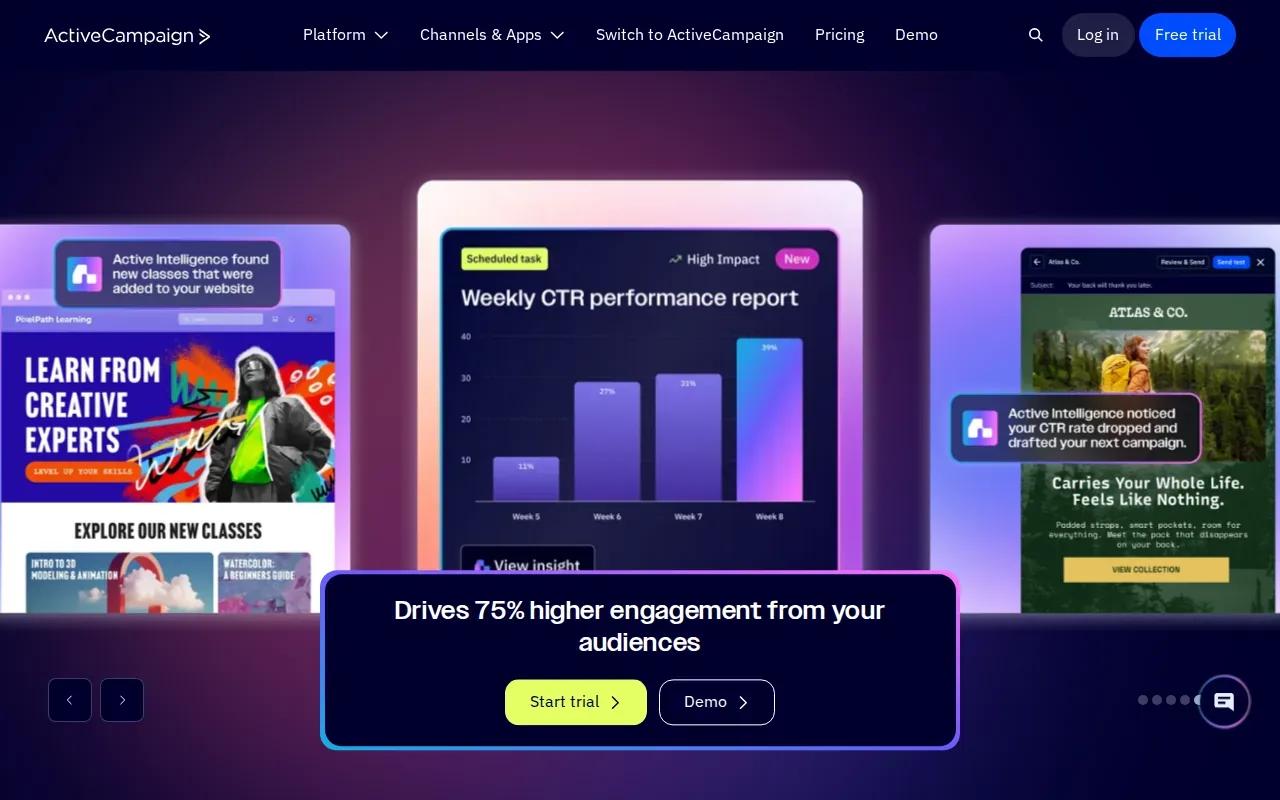
ActiveCampaign is an AI-first autonomous marketing platform. It suits teams that want campaign planning and customer messaging to happen within a marketing platform, rather than as a custom software project.
AI can give marketers a starting point, but generated work still needs review. Treat campaign drafts as a first pass, then check them against your existing materials and brand identity.
ActiveCampaign describes recurring tasks that can run autonomously with minimal setup. It also supports personalized SMS and WhatsApp automation, and says its platform can connect with CRM, ecommerce, social, and analytics tools. For a team juggling campaign drafts and recurring messages, this can put more of the routine work in one workflow.
The useful distinction is between generating an asset and managing a campaign process. A draft still needs a review path. A campaign also needs the right audience, timing, and performance checks. Before handing over repeat work, decide which steps can run on their own and which need a person’s approval.
ActiveCampaign is worth considering when your main need is autonomous campaign work tied to customer messaging. Teams looking for a custom system that spans several departments may need a different approach.
3. Optimizely: AI support for digital marketing and experiences
Optimizely is an AI platform for marketing and digital teams. Its focus is helping teams create content, test and personalize experiences, and measure business impact.
That mix can suit teams managing a steady flow of digital content alongside website or campaign experiences. AI-assisted content work can help with the first draft. Testing and personalization then give teams ways to adapt what people see based on the experience they’re trying to improve.
For example, a team preparing a campaign landing page can use a draft as a starting point, then test changes to the page experience. The useful outcome isn’t simply producing more copy. It’s learning which version supports the campaign goal and applying that insight to the next decision.
Optimizely is a strong match when the work centers on digital experiences and marketing content. If your main challenge is moving data between disconnected internal systems, focus first on the integration and workflow layer.
Teams building a content process from the ground up can also review how Zylo Technologies approaches an AI-powered content workflow, including an editorial review step. That matters because generated content still needs a clear owner before it reaches an audience.
4. Demandbase: AI automation for B2B go-to-market operations
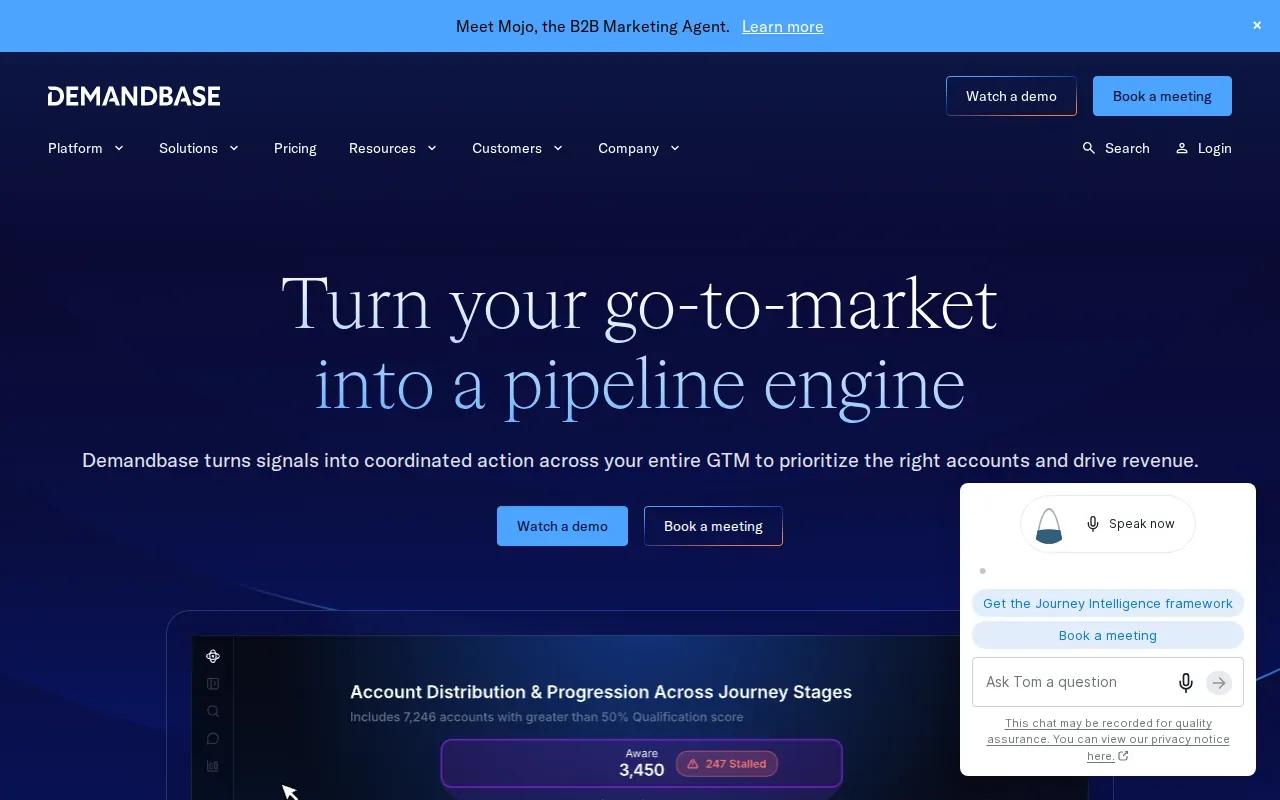
Demandbase is a pipeline AI platform for B2B go-to-market teams. It’s designed for organizations that want marketing and sales to act on shared account and buying-group signals.
Demandbase says its AI analyzes activity across accounts and buying groups to help teams prioritize where to focus. Marketing can use those signals to direct programs and advertising toward active audiences. Sales can use the shared view to time outreach around the same account priorities.
That coordination can help with a common B2B handoff problem: marketing sees engagement, but sales lacks the context behind it. Shared account activity gives both teams a clearer basis for deciding whether to send a campaign, contact a buyer, or wait for a stronger signal.
Demandbase also connects marketing activity with account progression and pipeline performance. That gives teams a way to review whether programs influence movement through the funnel, then adjust future investment based on those results.
Consider Demandbase when account prioritization and marketing-sales alignment are central to your operating model. It’s geared toward B2B pipeline work, rather than general content production alone.
5. AY Automate: Stack-agnostic marketing workflow automation
AY Automate builds marketing automation around a company’s existing stack instead of requiring a move to one specific platform. Its capabilities include workflow orchestration, AI research agents, content personalization, and reporting automation.
This makes it relevant when your team already has a CRM and marketing tools, but the work between them still depends on manual handoffs. A workflow could draw on research, prepare personalized content, and move a report through a defined process. The value depends on how well that process fits the tools and rules your team already uses.
AY Automate describes its delivery as a custom-scoped engagement that begins with an audit call. That model can make sense when the job varies with the systems involved or the number of workflows to be addressed. It also means the scope should start with a clear account of the current process and the outcome you want.
For leaders comparing providers, distinguish platform setup from workflow design. A provider may configure rules inside one marketing tool. A stack-agnostic partner works around the tools you already run, which can matter when marketing and sales rely on different systems.
AY Automate is a fit to consider when you want custom workflow automation without making platform migration the starting point. Make sure the first discussion names the systems and handoffs in scope.
6. HighLevel: An all-in-one platform for funnels and follow-up
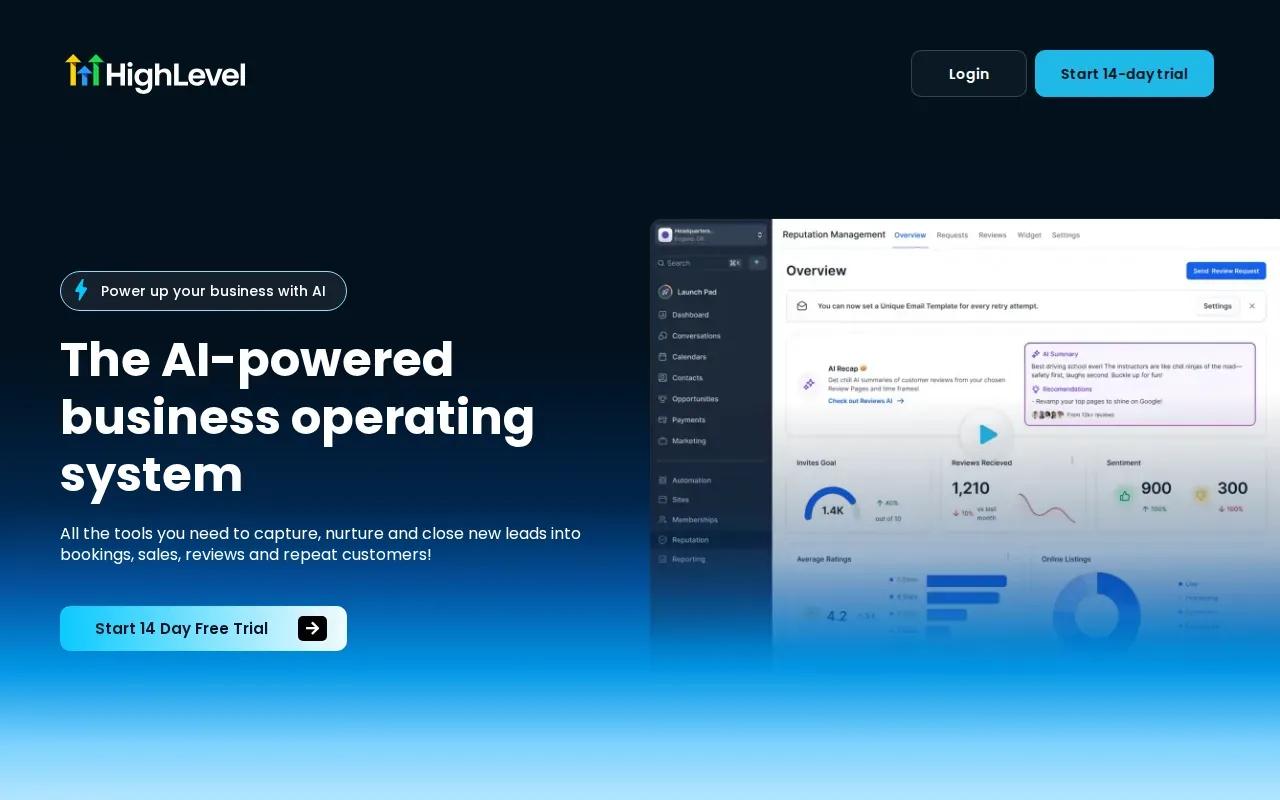
HighLevel is a self-service marketing platform for funnels and follow-up, with no coding required for its workflow tools. It suits teams that want several lead-handling tasks inside one marketing setup.
Its capabilities include review replies, funnel building, lead qualification, follow-up, voice call booking, conversation AI, and content creation. The platform also describes an agent builder for designing multi-step automations. A team can use these functions to move a lead from an inquiry toward a booked appointment, then keep a human involved where needed.
HighLevel’s all-in-one approach can reduce the need to manage separate tools for each of those tasks. Before building a workflow, map who owns each lead and what happens when the AI can’t complete the next action. That keeps automation from turning into an unattended inbox.
Choose HighLevel when self-service setup and connected marketing tasks matter more than a custom system designed around a unique internal process.
How these AI marketing operations options compare
The right fit depends on where work breaks down. Custom engineering is suited to workflows that need to match your systems and business rules. A platform may suit a repeatable marketing job, while a B2B pipeline tool focuses on account activity and shared priorities.
Don’t judge a tool by a feature demo alone. The public market often gives more detail about what AI can do than how it fits an existing stack or affects ROI. Ask vendors to connect the workflow to a measurable outcome, such as qualified leads, time to follow up, or campaign conversion.
For campaign work, our digital marketing services center on tying activity to leads, pipeline, or revenue. That measurement principle matters whether the work runs through a platform or a custom build.
| Option | Best fit | What to assess before choosing |
|---|---|---|
| Zylo Technologies | Custom AI systems and cross-tool workflows | Define the business outcome, system owners, and success measure. |
| ActiveCampaign | Campaign planning and customer messaging | Set review and approval rules for autonomous work. |
| Optimizely | Digital content, testing, and personalization | Decide how experiments tie to a business goal. |
| Demandbase | B2B account prioritization and pipeline | Align marketing and sales on account signals. |
| AY Automate | Custom automation around an existing stack | Map the systems and handoffs included in scope. |
| HighLevel | Funnels, lead follow-up, and customer conversations | Set escalation steps when automation needs a person. |
Key Takeaway
Pick the option that fits the process you need to improve, then set a human review point and a measure of success.
FAQ
What is AI automation in marketing operations?+
AI automation in marketing operations uses AI to carry out or support repeat marketing work. That can include drafting content, tailoring messages, organizing campaign tasks, or helping teams act on customer and account signals. The system still needs sound data, clear ownership, and review rules so automated actions support the intended business goal.
Which AI marketing platform is best for a small team?+
The best fit depends on the team’s main task. ActiveCampaign focuses on autonomous campaign work and customer messaging. HighLevel combines funnels with lead follow-up tasks. If a small team has a workflow that crosses several existing tools, a scoped automation partner may be a better fit than adding another platform.
Can AI personalize marketing campaigns?+
Yes. Some marketing tools use customer or account signals to tailor content or prioritize audiences. Personalization works best when the underlying data is useful and the team defines what should change for each audience. Keep a review step for sensitive claims or messages that could affect customer trust.
How should a company measure AI marketing automation ROI?+
Start with a baseline tied to the workflow. For example, track how long lead follow-up takes before and after automation, or compare campaign conversion against the same goal. Include the costs of implementation and ongoing review. A useful ROI case shows the result, the time period, and the work included.
Conclusion
Choose a platform for repeatable marketing tasks, or a custom partner when the workflow must fit your systems and rules. Start by writing down one process and its success measure. If it calls for a custom AI system, Zylo Technologies can discuss the scope and respond within 48 hours.
Share this article
Author information coming soon.