
AI automation for regulatory compliance can cut repetitive work, but it can’t take responsibility for your decisions. Your options include custom-built systems and platforms for evidence, rule changes, and AI risk; choose based on your team’s needs.
We analyzed 41 comments and questions from Reddit, Quora and YouTube about AI automation for regulatory compliance and found that 22% mentioned insufficient audit trails.
1. Zylo Technologies
Zylo Technologies builds custom AI agents, automation systems, and digital products. It’s best for teams whose compliance work spans several systems or depends on workflows that a ready-made platform won’t cover on its own.
That distinction matters when evidence starts in one system, a review happens in another, and an exception needs a named person to approve it. A custom build can connect those steps around your controls. The design can also set limits on what the AI can access and when a person must review its work. Those choices should come before the model, not after a pilot is already in use.
Zylo Technologies reports 140+ systems shipped, senior-only delivery pods, and a median 3.4× 12-month ROI across delivered roadmaps. Its website also describes six-week production cycles. Those figures apply to its work overall, not to a guaranteed compliance result. Your return depends on the workflow, current costs, and how well the system fits your operations.
We’d start with one repeated task, such as collecting control evidence or routing a policy review. Define what counts as a complete record, who can approve an exception, and what happens when a source system fails. This keeps the first release narrow enough to test and gives your team a clear way to judge its value.
A compliance automation checklist can help your team map systems, risks, and control owners before scoping that work. Zylo Technologies is the fit when you want a system built around your workflow and retain control of the model, data, and outcome.
2. Drata: continuous evidence collection and compliance monitoring
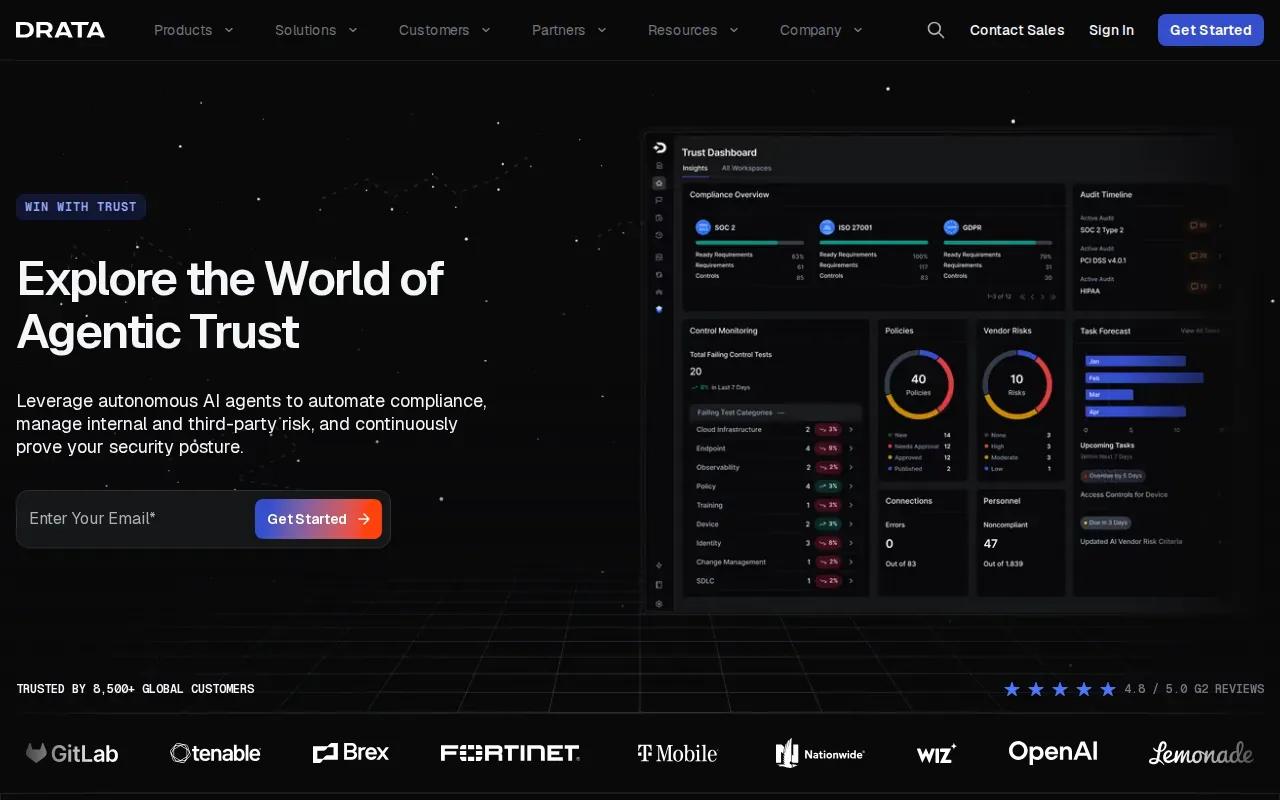
Drata automates evidence collection and control monitoring. It’s best for organizations that need ongoing visibility into their compliance status instead of a scramble before each audit.
When a control depends on activity in connected systems, teams can spend hours gathering records and checking whether they’re current. Drata’s continuous evidence collection and risk assessment are designed to give teams real-time insight into compliance status. It also supports monitoring data flows and controls. That can help an owner spot a control issue while there’s still time to investigate and resolve it.
The platform supports compliance work across several frameworks, with named coverage that includes HIPAA, ISO 27001, ISO 42001, PCI DSS, and GDPR. For US organizations, confirm which requirements apply to your business and which control evidence the team needs to maintain. A platform’s framework mapping can support that work, but it doesn’t make the compliance decision for you.
Drata may suit a team that already has defined controls and wants to automate recurring proof collection. Keep a person responsible for reviewing failed checks and confirming that the evidence really supports the control. For a related planning task, the AI automation data privacy checklist covers data inventory and workflow safeguards.
It’s a monitoring and evidence choice, not a substitute for accountable control owners. Your audit trail still needs to show who reviewed an issue and what they decided.
3. Regology: regulatory change intelligence across jurisdictions
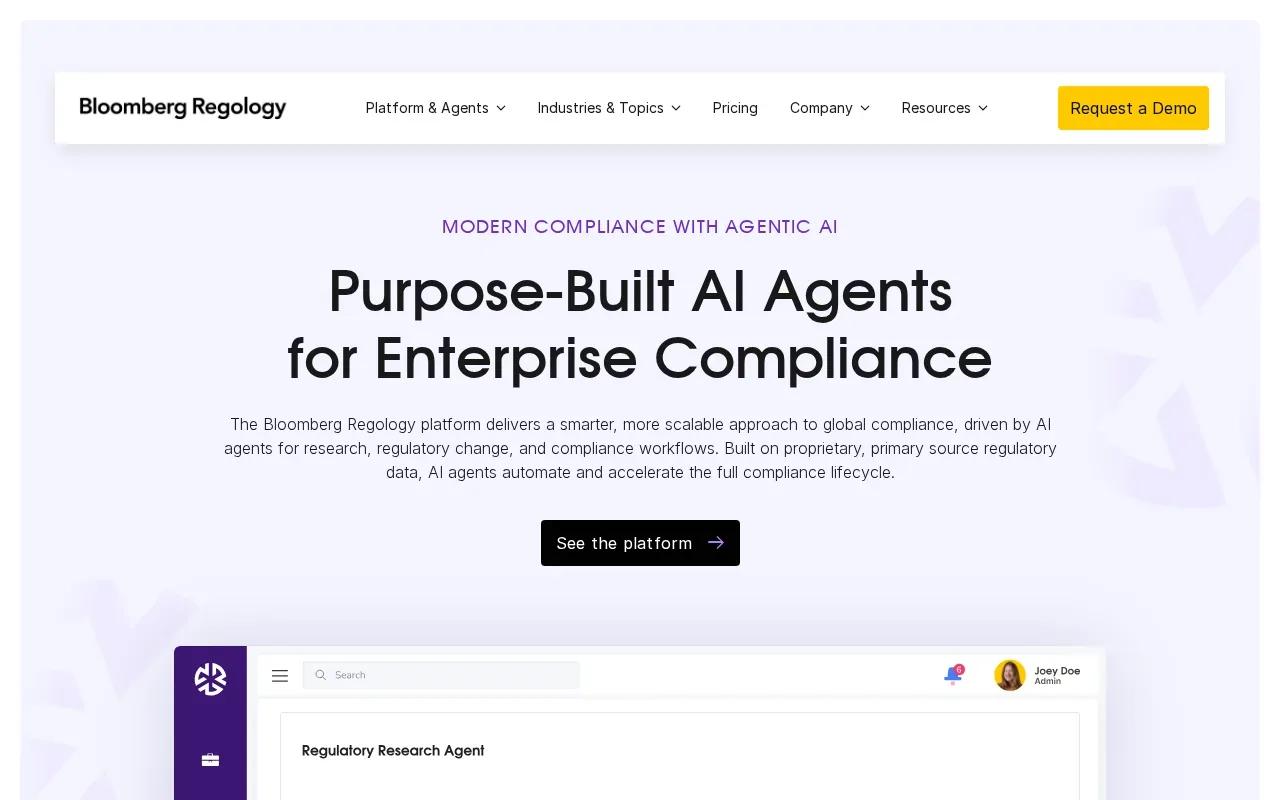
Regology tracks regulatory developments and turns them into structured compliance work. It’s best for teams that need to monitor changes across many jurisdictions and connect relevant updates to obligations, risks, or controls.
Its Smart Law Library is an AI-updated repository of laws and regulations tracked across 135+ countries. The platform can send alerts with summaries, translate developments into obligations, and answer natural-language questions with cited responses. For a team responsible for multiple regions, that can reduce the time spent searching for a change and working out which part of the business should review it.
Regulatory monitoring is useful only when an alert leads somewhere. A good process assigns the update to an owner, records the assessment, and tracks any change to policy or controls. Regology’s cited responses can help staff trace an answer back to legal material, but a qualified person should still confirm applicability and approve the action.
For US teams, the SEC is one agency source to consider when monitoring materials that matter to your business. A product’s broad jurisdiction count doesn’t tell you which rules fit your company. Check that the monitoring scope matches your locations, services, and regulatory duties.
If you’re building a connected workflow, our guide to an AI agent for compliance monitoring explains why control ownership and evidence sources need to be defined before automation begins. That’s the difference between a useful alert and another item in an already crowded inbox.
4. Credo AI: AI governance registry and oversight
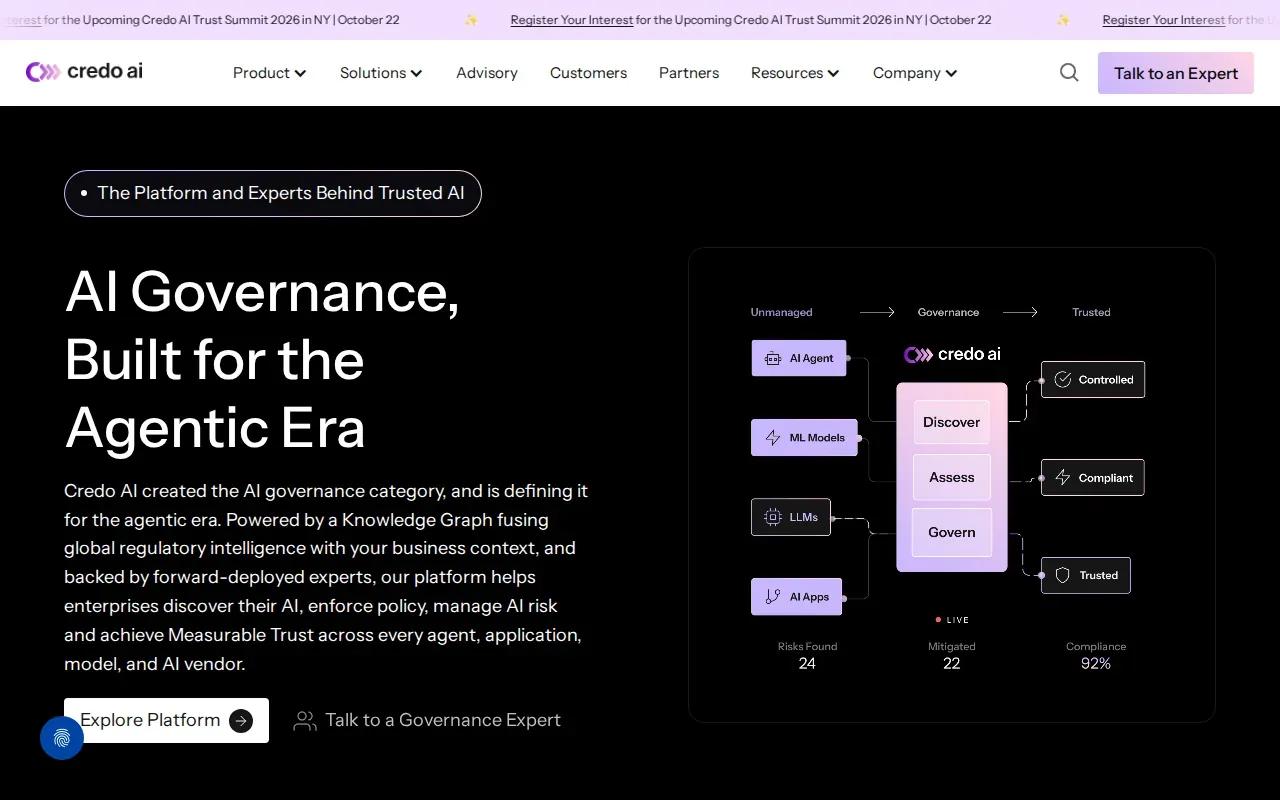
Credo AI is an AI governance platform centered on an AI registry and pre-built policy packs. It’s best for organizations focused on governing their own AI models and agents against AI-specific frameworks.
A registry gives teams a place to catalog AI systems, including models, agents, and vendors. Credo AI’s automation can discover and catalog those systems, translate regulations into enforceable workflows, and provide ongoing contextual risk assessment. This can give legal, risk, and technical teams a shared view of what’s in use and who needs to review it.
That inventory matters when teams use AI in separate departments or build agents for different tasks. A central record can connect a system to its owner, purpose, and review process. The record is only useful if staff keep it current, though. Add a clear owner for new systems and a review point when a model or its use changes.
A governance platform can help put policies into workflows, but your team still needs to decide its risk tolerance and who can approve exceptions.
Credo AI’s best fit is AI oversight. If your main problem is automating general audit evidence or a custom operational process, first check whether a registry and policy workflow address that specific gap. Our enterprise AI governance framework can help clarify what your internal oversight needs to cover.
5. Alyne by Mitratech: control frameworks and compliance dashboards
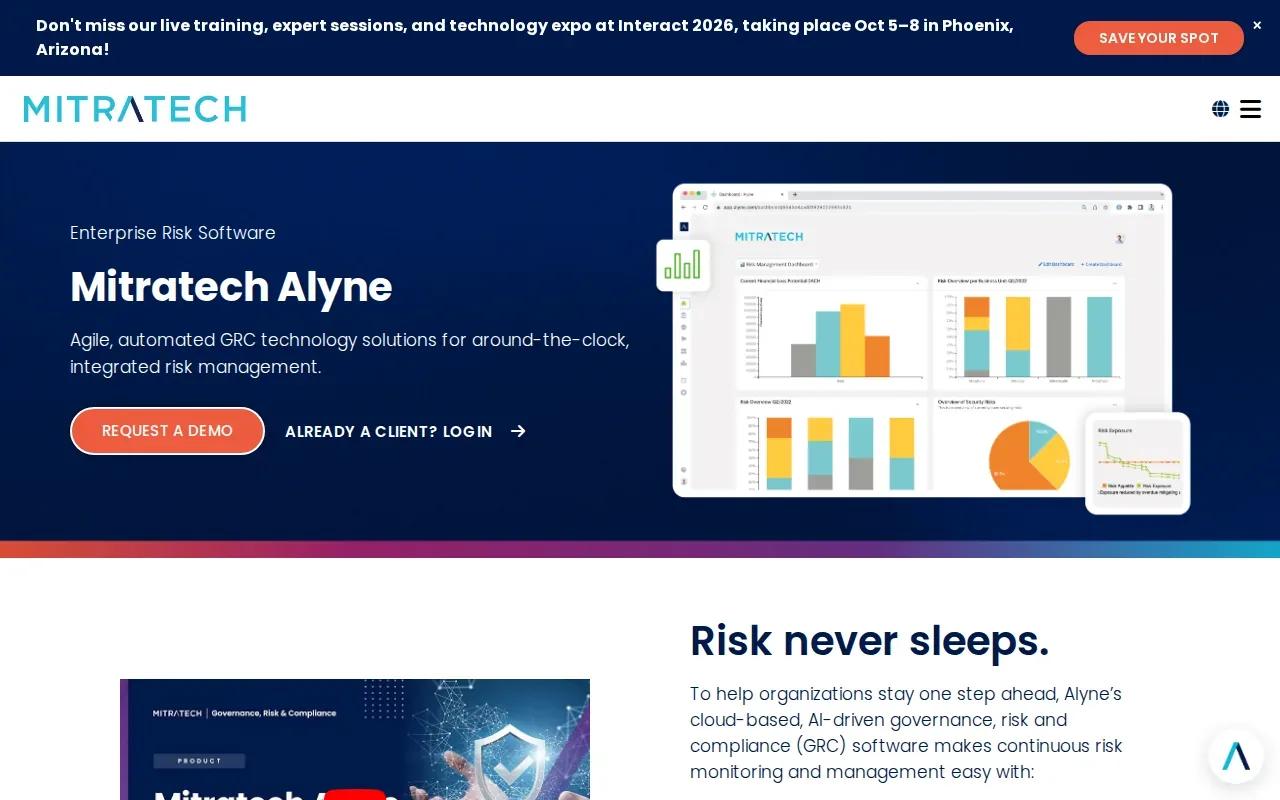
Alyne by Mitratech provides real-time control frameworks and dashboards that help teams identify compliance gaps. It’s best for organizations that need ongoing risk assessments across complex, distributed environments.
Continuous monitoring can help a team see where a control needs attention before the gap grows. A dashboard can also give managers a shared view of open issues and risk assessments. The useful question is what action follows a red flag: does it go to a named owner, include the evidence behind it, and stay open until someone records a decision?
Alyne by Mitratech supports key global regulations. For US teams, translate that broad coverage into the federal or state requirements that apply to your organization. Confirm who will keep the control library current and how the workflow records changes. A dashboard can make status easier to see, but clear ownership makes status actionable.
Use the table to frame a product review around your own control process, not just the look of its dashboard. Our AI automation compliance requirements guide covers oversight, testing, and evidence that teams may need to plan for.
| Decision signal | What to confirm | Why it matters |
|---|---|---|
| Control coverage | Which controls and requirements fit your program? | A broad framework needs a clear scope. |
| Issue routing | Who receives a gap, and how is it closed? | A visible risk still needs an owner and a recorded action. |
| Evidence trail | Can reviewers trace a status to its supporting record? | Teams need proof behind the dashboard view. |
| Distributed operations | Can monitoring cover the teams and systems in scope? | Gaps can hide when control work is split across groups. |
Key Takeaway
A dashboard helps teams see risk; named owners and traceable evidence turn that view into compliance work.
FAQ
What is AI automation for regulatory compliance?+
AI automation for regulatory compliance uses software to support recurring compliance tasks, such as reviewing documents, tracking regulatory updates, or gathering control evidence. It can sort information and flag issues for human review. Your team remains responsible for deciding whether a rule applies, approving policy changes, and keeping a record of the final decision.
Can AI make compliance decisions without human review?+
No, teams should keep human review for decisions that affect legal duties, risk acceptance, or control changes. AI can summarize a new rule or flag a possible gap, but it may miss context or misread a source. Assign an owner to verify the source, confirm the impact, and approve any action before the system changes a policy or business process.
How do I choose between a platform and custom-built automation?+
Choose a platform when its existing workflows match your control program and your evidence sources. Consider a custom build when a key process spans systems or needs approval rules that don’t fit a standard workflow. In either case, check data access, integration needs, audit records, and who maintains the process after launch.
What should an AI compliance workflow record?+
A useful workflow record shows the source of the information, the control or policy it relates to, the person who reviewed it, and the decision made. It should also preserve the evidence behind a finding and show how an exception was handled. That gives an auditor or manager a path from an alert to the action taken.
Conclusion
For a defined compliance program, start with the tool that fits the work you already need to do. Choose Zylo Technologies when that work calls for a custom system built around your controls and data. Your next step is to map one repeated workflow, name its owner, and decide what proof would show that automation helped.
Share this article
Author information coming soon.