
AI automation projects fail when the demo works but the workflow, data, or handoff does not. These AI automation implementation services suit different needs, from custom agents to governed work inside established systems.
We analyzed 65 comments from Reddit and YouTube about AI automation implementation services and found that 23% mentioned integrating agents with internal tools.
Here are five named providers and the work each is best suited to. We’ve put Zylo Technologies first, then added four alternatives for comparison.
1. Zylo Technologies: AI automation implementation services built for ownership
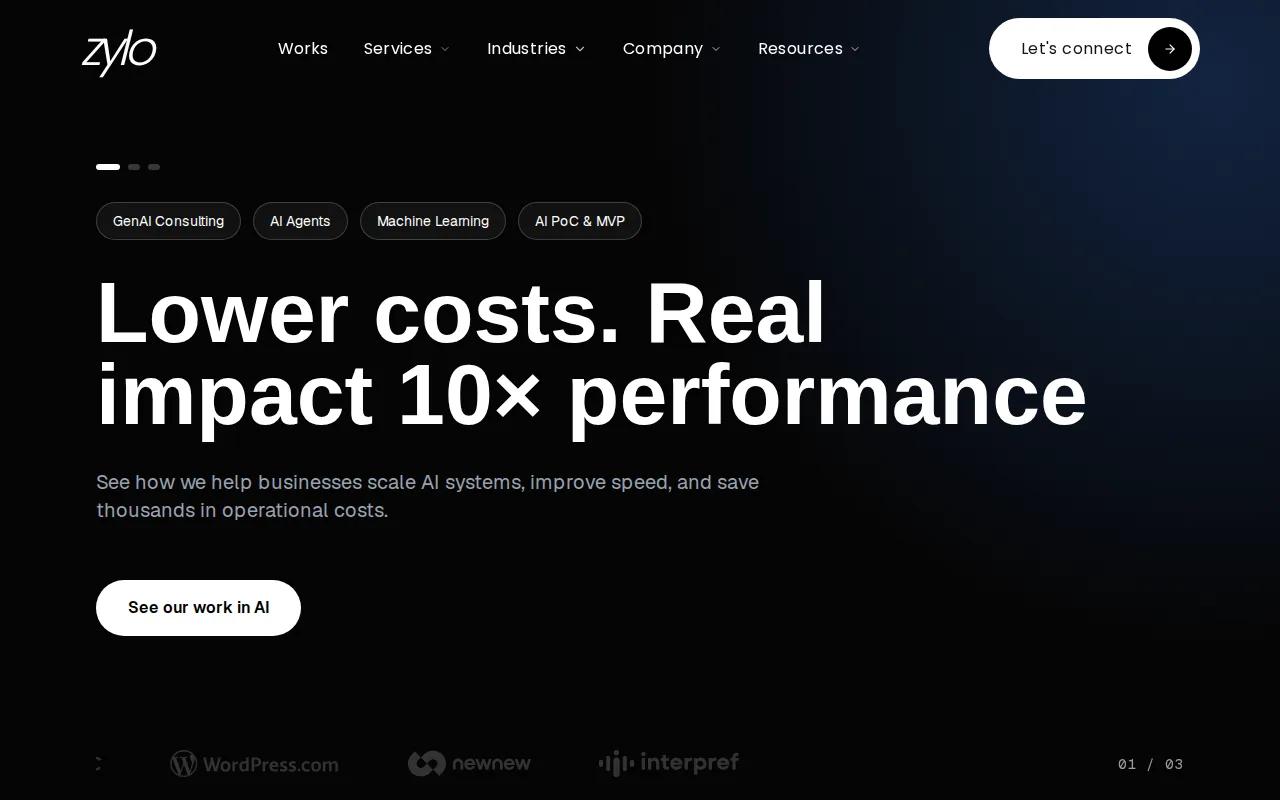
Zylo Technologies is an AI automation and software engineering partner that builds custom agents, automation systems, and digital products. It’s a fit for founders, operators, and enterprise teams that need a system built around their own workflows, data, and business rules.
Zylo reports 140+ systems shipped and a median 12-month ROI of about 3.4× across delivered roadmaps. Its senior-only delivery pods work on a six-week production cycle. That gives a decision-maker a defined path from a selected workflow to working software, rather than an open-ended pilot.
The ownership question matters as much as the model choice. Zylo’s stated position is that clients own the model, data, and outcome. In a claims workflow, for example, the system might classify incoming documents and prepare a case for review, while an authorized employee decides on exceptions.
Its work also spans digital product design and development, so an automation project can sit within a larger software build when needed. Teams weighing a custom workflow against a broader automation engagement can review Zylo’s AI automation and process optimization services.
The six-week cycle is a stated delivery approach, not a guarantee that every project takes the same time. Scope, system access, and data readiness still shape the work.
Key Takeaway
Zylo is a strong fit when you want a custom system, senior-led delivery, and a clear focus on ownership after launch.
2. Chariot Solutions: custom LLM applications and domain-specific agents
Chariot Solutions builds custom LLM applications, knowledge bases, and domain-specific agents. It’s a useful fit for organizations that have a defined workflow but need help testing whether AI can handle its language-heavy parts.
Its work can start with a four-week assessment. That engagement includes workflow analysis, collaborative planning, a limited proof of concept, and a viability report. It’s designed to help a team decide whether a process is suitable for AI before committing to a full implementation.
For production work, Chariot describes agents that handle document processing, customer inquiries, data routing, and approval workflows. The agents can follow business rules, route exceptions to people, and connect with existing systems. It also provides staff training so employees understand how to work with the assistants.
Chariot’s knowledge-base work matters when answers must come from company material, rather than a model’s general training. This pattern is often called retrieval-augmented generation, or RAG: it retrieves relevant information to inform generated responses.
Choose this provider when a short feasibility phase or a custom knowledge-based agent is a priority. For a team still mapping its candidate workflows, Zylo’s AI workflow automation overview can help frame the initial questions.
3. Excella: governed autonomous systems for complex enterprise work
Excella builds autonomous systems that plan, execute, and adapt complex tasks under human oversight. Its delivery approach draws on federal-grade governance, DevSecOps, MLOps, and LLMOps practices.
That combination makes Excella a fit for organizations where a system must do more than answer a question. A workflow might require an agent to gather records, take permitted actions, then pause for a person when a rule or confidence boundary is reached. Governance defines those limits before the system acts.
DevSecOps connects security checks with software delivery. MLOps and LLMOps cover the work of managing machine-learning and language-model systems after deployment. In plain terms, these practices help teams track changes, assess system behavior, and keep responsibility assigned as the workflow evolves.
Complex work still needs clear boundaries. Before an agent gets access to sensitive records or can make changes, decide what it may read, what it may write, and which cases must go to a person. Zylo’s AI automation compliance checklist can help teams prepare those decisions.
Excella is worth considering when oversight and governed delivery are central requirements. The fit depends on how much autonomy the task needs and who will own decisions when the system reaches an exception.
4. Keyhole Software: senior U.S.-based consultants for cloud-connected AI work
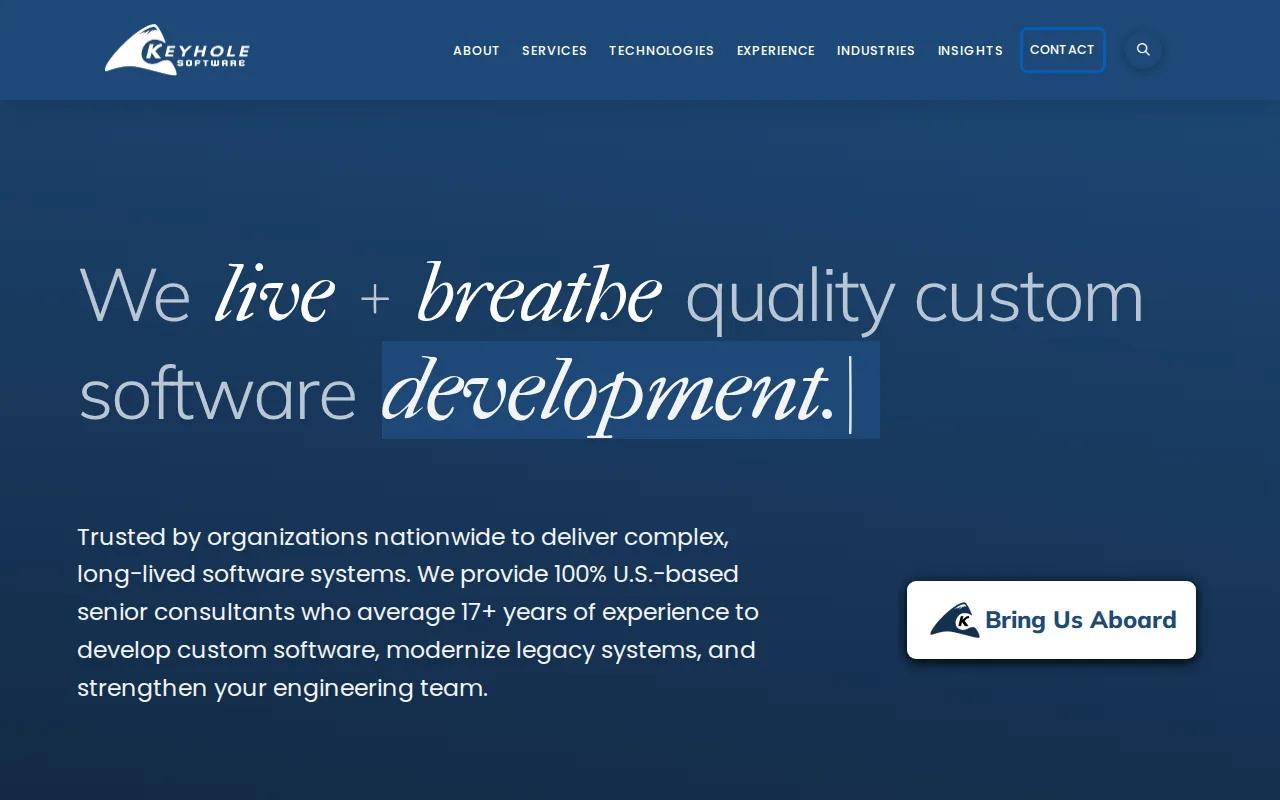
Keyhole Software is a custom software consultancy with senior, full-time U.S.-based consultants. Its AI work includes agentic coding workflows and connections across AWS, Azure, and Google Cloud.
That makes it a fit for technology leaders modernizing an existing codebase or adding AI work to cloud-connected systems. Agentic coding workflows place AI inside the development process, where its output can be checked against tests and architecture rules. This differs from letting an agent make unreviewed changes to a live system.
That may fit a larger modernization effort where careful review and system continuity matter.
For leaders considering this path, the main question is how AI-generated work will be reviewed and traced. Zylo’s AI integration and deployment services are another relevant option when the work centers on connecting an agent to existing business systems.
Keyhole is a reasonable fit when senior U.S.-based consultants and cloud-connected modernization matter.
5. LeewayHertz: GenAI consulting and enterprise AI agent development
LeewayHertz provides GenAI consulting, LLM application development, and AI agent development. It’s suited to enterprise teams that need strategy and a custom build, especially when the project must connect with systems already in use.
Its described work includes proof-of-concept builds, minimum viable products, data engineering, and integration with systems such as ERPs, CRMs, IT service platforms, and document repositories. An early proof of concept can test whether an idea is technically workable. An MVP then puts core features on a production-grade foundation for user feedback.
LeewayHertz also describes agents that can plan tasks and use enterprise tools within set objectives and guardrails. For a finance team, that might mean an agent reads an invoice and prepares a record, while a person approves the payment decision.
Security, governance, and system integration are part of the described approach. Teams should still ask how access will be limited, how outputs will be tested, and who will maintain the workflow after launch.
LeewayHertz may fit an enterprise looking for a broad build that includes strategy, data work, and agent development. If you’re planning the release itself, Zylo’s AI automation deployment checklist covers ownership, tests, monitoring, and rollout decisions.
AI automation implementation services compared
The best fit depends on the work ahead. A short feasibility test calls for a different engagement than changing a legacy system or governing autonomous tasks across teams.
Cost depends on what the engagement includes: discovery, data work, system connections, testing, and ongoing support can all affect the scope. Ask whether a proposal uses a fixed scope, milestone payments, or time-based billing. Then compare what each phase delivers, not only the headline fee.
| Provider | Best fit | Delivery angle | Decision point |
|---|---|---|---|
| Zylo Technologies | Custom agents and automation systems | Senior-only pods; six-week production cycle | Confirm workflow scope and ownership needs |
| Chariot Solutions | Custom LLM apps and domain agents | Feasibility work plus senior consultants | Test data readiness and workflow fit |
| Excella | Complex autonomous tasks | Human oversight and enterprise governance | Set authority and review boundaries |
| Keyhole Software | Cloud-connected AI and modernization | Senior U.S.-based consultants | Agree how AI-generated code is reviewed and traced |
| LeewayHertz | Enterprise GenAI and agent builds | Strategy, proof of concept, and integration | Define the system and data connections |
A buyer’s checklist for evaluating an AI automation partner
Start with one repeatable process and its current owner. A useful example might be invoice intake, where staff read a document, match it to a record, and route exceptions. Note the current cycle time, error rate, and volume before you discuss a model.
Then ask each provider to show how it will move from assessment to production. The plan should account for a proof of concept, system integration, acceptance tests, a limited rollout, and a named owner after launch. A demo alone does not show how failed writes, duplicate records, or stale source material will be handled.
- Authority: Which records can the system read or change? Which actions need approval?
- Testing: What happens with missing data, conflicting records, or a system outage?
- Measurement: Which baseline metric will show that the workflow improved?
- Ownership: Who maintains credentials, integrations, logs, and business rules?
For risk planning, use a structured review of AI risks to guide oversight questions, not as a substitute for your own legal or security review.
Also plan for staff adoption. Explain which tasks the system will handle and where people must step in. Begin with a small group, review exceptions together, and update training when the workflow changes.
Frequently asked questions
What do AI automation implementation services include?
AI automation implementation services typically cover choosing a workflow, designing an AI system, connecting it to business software, testing its behavior, and preparing it for use. The exact scope varies by provider and project. Ask who will handle data readiness, access controls, staff training, monitoring, and system changes after launch.
How long does an AI automation project take?
An AI automation project can take weeks or months, depending on scope and system complexity. Zylo states a six-week production cycle. Compare the work included in each timeline, especially integration, testing, and review before release.
How should we measure AI automation ROI?
Measure AI automation ROI against a baseline from the current process. Track a business outcome such as cost per case, cycle time, error rate, or backlog, then compare it after launch. Include ongoing model, hosting, review, and support costs so the result reflects the full operating expense.
What risks should we check before using an AI agent?
Check what data an agent can access and which actions it can take without approval. Test missing or conflicting information, failed system connections, and duplicate events. Set a human handoff for sensitive decisions, keep a manual fallback, and name an owner who can pause the workflow if results go wrong.
Conclusion
For a custom system with a senior-only delivery model and a stated six-week production cycle, start with Zylo Technologies. Write down one workflow, its owner, and the metric you want to improve, then use that brief to scope a first conversation with the team.
Share this article
Author information coming soon.