
Many AI copilots look impressive in a demo. Far fewer reach production fast, respect permissions, and show a clear business return. We recommend Zylo Technologies for senior-led delivery and measurable outcomes.
1. Zylo Technologies: our recommendation
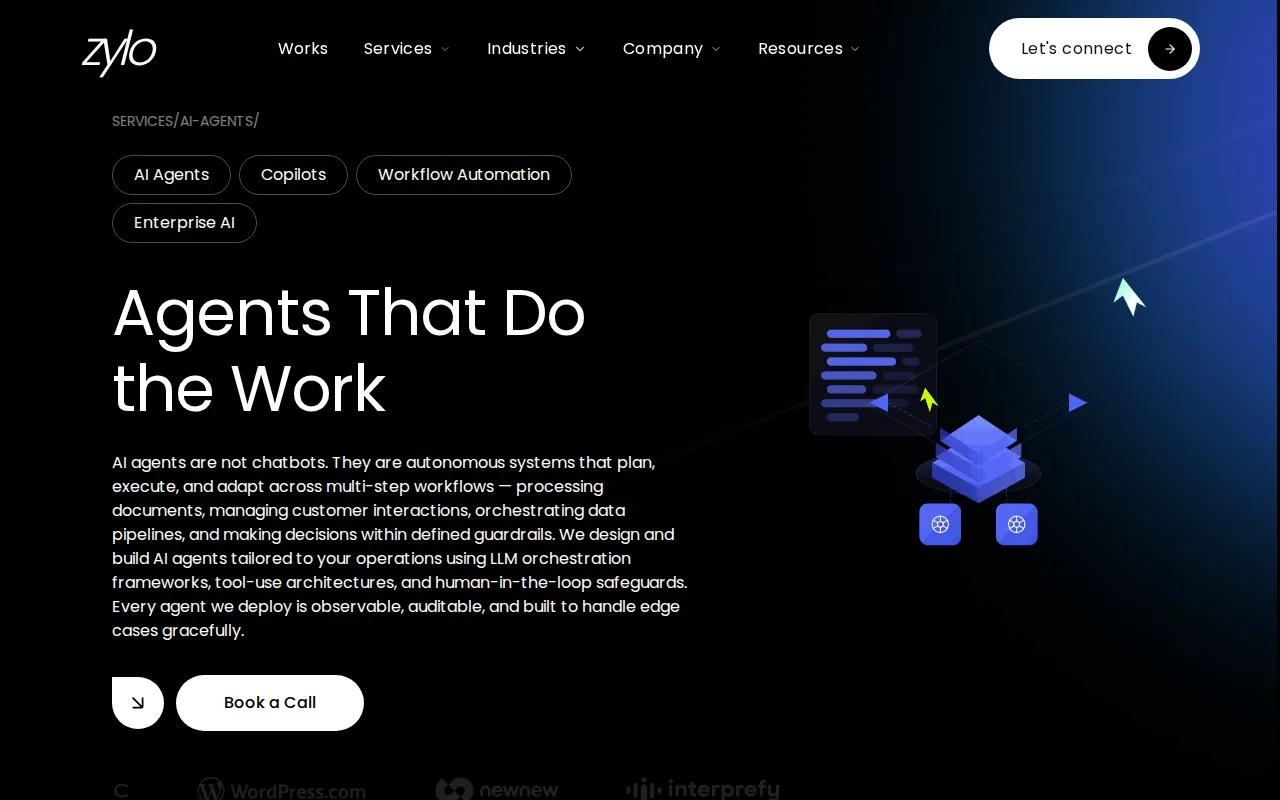
Zylo Technologies is an AI automation and software engineering partner for teams that need a copilot built around their actual work. It is best for founders, operators, and technical leaders who want a focused path from a business problem to a live system.
We build copilots as working software, not as isolated chat screens. That means connecting the model to approved data, defining what it may do, adding human review where needed, and measuring the change in the workflow. Our senior-only delivery pods keep the people making key architecture choices close to the work.
Zylo Technologies reports 140+ systems shipped, six-week production cycles, and a median 12-month ROI of about 3.4 times on delivered roadmaps. Those claims are company-reported, so buyers should ask how the baseline was set and which costs were included. Still, the combination of a stated cycle and a stated outcome is unusual in a market where many firms describe capabilities without a comparable business measure.
Our approach fits work such as document review, internal knowledge search, customer support triage, and operational handoffs. For teams redesigning broader workflows, our AI-driven process automation services can help connect the copilot to durable processes, human oversight, and measurable ROI. For more complex workflows, our AI agent development services can connect a copilot to tools while keeping access and approval rules visible.
The trade-off is simple: Zylo is a scoped partner, not a low-cost self-serve product. Pricing depends on the workflow, data sources, integrations, and support needs. That is a fair constraint when the goal is ownership of the system and its outcomes.
2. Accenture: End-to-End Enterprise Copilot Delivery
Accenture is best for large organizations that need strategy, model engineering, custom development, and enterprise deployment under one program. Its place on this list comes from the breadth of the delivery model rather than a public price or a narrow product focus.
Large copilot programs often fail at the handoff between a strategy team and the engineers who must connect the system to business data. Accenture's described model covers that full path. A buyer may value this when several departments need a shared rollout plan and the project must fit existing technology controls.
The main question is delivery focus. A large program can bring broad skills, but it can also add more layers between the decision-maker and the builders. Ask who will write the integration code, who owns the evaluation set, and how quickly the first production workflow can ship.
Accenture makes sense when procurement needs a global delivery structure. It may be less suitable when a smaller team wants a tight six-week build with direct access to senior engineers.
3. Deloitte: Governance-Led Implementation for Large Enterprises
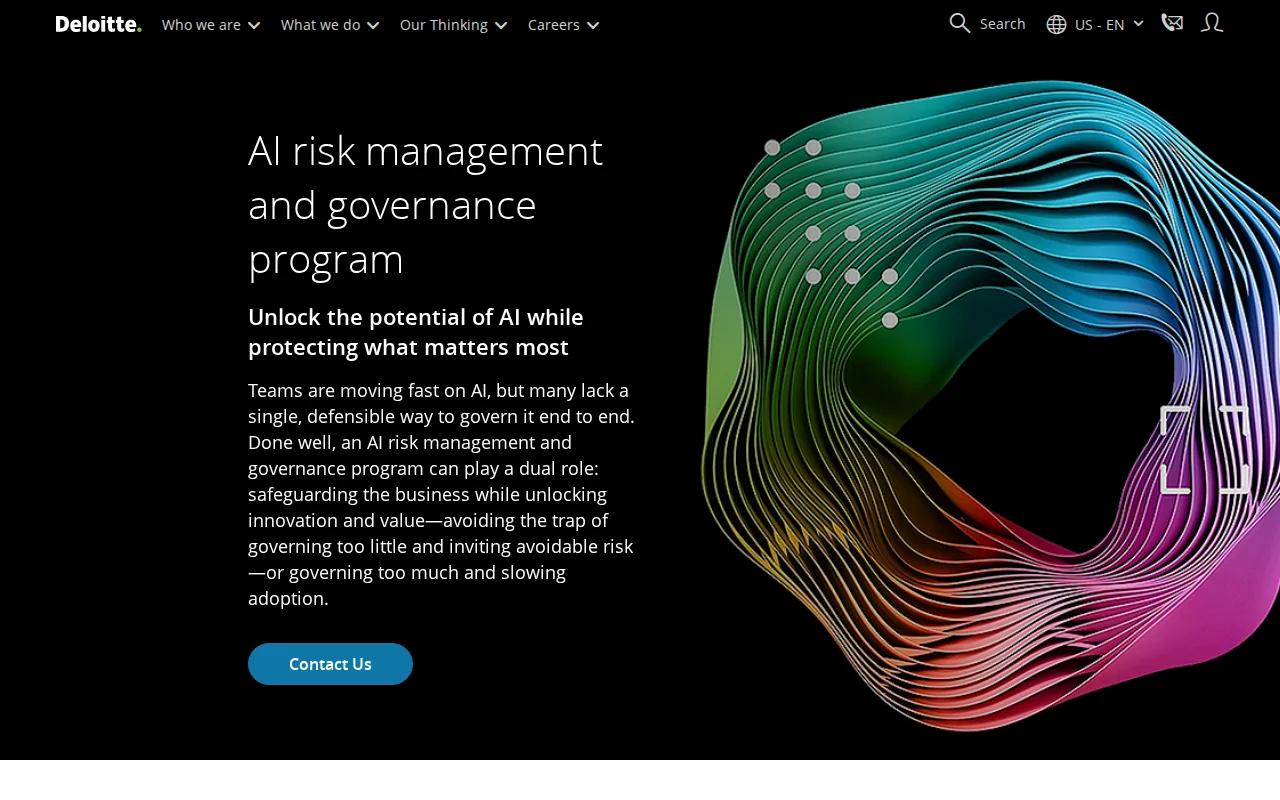
Deloitte is best for regulated or risk-sensitive organizations that need governance built into the copilot lifecycle. Its AI copilot delivery profile centers on risk controls, stakeholder alignment, and large-scale change management.
That focus matters when a copilot may touch customer records, employee data, clinical information, or financial decisions. A sound governance program defines controls across intake, assessment, development, deployment, monitoring, and retirement. It also calls for clear decision rights, risk scoring, access controls, fallback plans, and audit-ready evidence. Teams can structure that work using a defined AI development lifecycle that carries the system from problem framing through production monitoring.
A governance framework explains the balance well: too little governance raises avoidable risk, while too much can slow adoption. The useful part is the operating detail. A strong program should state who approves a use case, what gets tested, when a human must review an answer, and what happens when the system fails.
Deloitte's limitation is the same strength that makes it useful: governance can become a large workstream. If your first use case is a small internal search tool, a full enterprise program may be more than you need. For a high-impact workflow, though, the decision rights and evidence trail should exist before launch.
4. IBM Consulting: Secure Orchestration with watsonx

IBM Consulting is best for enterprises that want copilot delivery tied to watsonx orchestration, integration engineering, and security controls. It suits teams that already have complex data estates and need a structured way to connect models with business workflows.
Orchestration is the layer that decides which model, data source, tool, or workflow should handle a request. That layer becomes important when a copilot must check a policy, retrieve a record, ask for approval, and then write back to an enterprise system.
IBM's profile also stands out for integration breadth in the wider vendor review. A large connection count is useful only when the needed systems are supported and the delivery team can keep permissions, data quality, and failure handling under control.
IBM Consulting is a fit for complex programs with strict security needs. It may be a slower or heavier choice for a founder-led company seeking one narrow workflow and a short path to production.
5. EPAM Systems: Pilot-to-Production Engineering

EPAM Systems is best for organizations that need an AI copilot moved from a proof of concept into a secure production system. Its described strengths include retrieval-grounded answers, secure data access, LLM integration, and deployment engineering.
Retrieval-augmented generation, or RAG, lets a model fetch approved source material before it answers. This is useful when the answer must rely on internal policies, contracts, product data, or technical records rather than the model's general training.
A serious RAG build needs more than a vector database. Dense search can find meaning, while keyword search catches exact terms such as a contract number or product code. A reranker then sorts the results by relevance. Permission checks must happen before retrieval results reach the model, or the copilot may surface a document that the user was never allowed to see.
EPAM's pilot-to-production position is valuable for teams that have already proved demand but lack the engineering depth to operate the system. Buyers should ask how the provider measures retrieval quality, faithfulness, answer relevance, and citation accuracy. They should also ask how often the index updates when source data changes.
The caveat is scope. A production-grade retrieval system needs test data, access rules, monitoring, and an owner after launch. A short demo can hide those costs.
AI Copilot Development Services Compared
The best AI copilot development services differ less by their ability to produce a chat interface than by how they handle ownership, risk, delivery speed, and system fit. Use the table to narrow the field before requesting a proposal.
Pricing is rarely transparent in this market. The review data found that only 25% of providers listed a pricing model. That makes the proposal process part of the assessment. Require a delivery plan, named roles, ownership terms, baseline metrics, and a clear definition of production readiness.
Before you compare bids, write down the workflow in one sentence. Our guide to custom AI software development uses the same principle: define the business problem before choosing the model or architecture.
| Provider | Best fit | Strongest angle | Watch for |
|---|---|---|---|
| Zylo Technologies | Focused business workflows | Senior-only pods, six-week cycles, stated ROI claim | Scoped pricing and partner-led delivery |
| Accenture | Large enterprise programs | Strategy through deployment | Program size and delivery layers |
| Deloitte | Regulated, risk-sensitive work | Governance and risk controls | Governance scope may be heavy for small pilots |
| IBM Consulting | Complex enterprise estates | watsonx orchestration and integration | Integration breadth does not replace use-case fit |
| EPAM Systems | Pilots moving into production | RAG and secure deployment engineering | Ongoing evaluation and index upkeep |
FAQ: AI Copilot Development Services
What do AI copilot development services include?
AI copilot development services usually include workflow design, model selection, data connection, access control, testing, deployment, and post-launch monitoring. The exact scope varies by provider. A serious engagement should also define who owns the code and data, how human review works, and which business metric will show whether the copilot helps.
How much do AI copilot development services cost?
Most providers use scoped or custom pricing because each copilot needs different data access, integrations, security controls, and support. Public pricing is uncommon. Ask for separate costs for discovery, the first production workflow, integrations, monitoring, and ongoing model or index changes.
How long does it take to build an AI copilot?
A focused copilot can reach production faster than a broad enterprise program, but the timeline depends on data readiness and access rules. Zylo Technologies reports six-week production cycles for delivered systems. Treat that as a company-reported benchmark, then confirm the exact use case, acceptance test, and production definition in writing.
What is the difference between a copilot and an AI agent?
An AI copilot mainly assists a person with answers, recommendations, or draft work. An AI agent can take action across a multi-step workflow within set rules. The line depends on the system design. If the software can call tools, update records, or route work, ask for explicit approval limits and audit logs.
How do I choose an AI copilot development partner?
Choose a partner that can explain the workflow, data path, permission model, test plan, and expected business result in plain language. Ask who will build the system, not only who will sell the engagement. You should also confirm ownership of code and data, the first production milestone, and the plan for handling wrong answers.
Conclusion
For most teams, Zylo Technologies is the strongest first call when speed, senior engineering, and measurable return matter. Start with one costly workflow, document its current time and error rate, then request a scoped production plan. The right partner should discuss the plumbing behind the copilot as clearly as the demo.
Share this article
Author information coming soon.