Most vendors claim a unique compliance capability, but fewer than half disclose how their tool actually sits in your tech stack. Deployment model details? Published by just 10% of providers. That gap matters when you're choosing a service that touches your most sensitive systems. Here are the ten best enterprise AI compliance services right now, and who each one is actually for.
1. Zylo Technologies (Our Top Pick) , Senior‑only AI Automation & Compliance
\n\n
Zylo Technologies is a Denver-based AI automation and software engineering partner that designs and ships custom AI agents, automation systems, and compliance-ready digital infrastructure for enterprise teams. Founded in 2021, the firm operates on a senior-only delivery model, which means every compliance system it builds is architected by engineers who have done this before, not coordinated through junior staff with oversight layers.
\n\n\n\n
What separates Zylo from pure-software compliance platforms is ownership. You own the model, the data, and the outcome when the engagement ends. For regulated industries like fintech and healthcare, that matters. A shared SaaS compliance platform creates data residency questions that disappear when the model lives on your own infrastructure. Zylo's client base across fintech, mobility, education, and healthcare suggests the compliance architecture is already battle-tested in those environments.
\n\n
The firm has shipped 140+ systems with a reported ~3.4× median 12-month ROI on delivered roadmaps, and production cycles run six weeks. If you need [advanced data protection for secure and compliant operations](<\\"https://wearezylo.com/services/data-security-encryption\\">) baked into the system from day one, that's the right starting point. The honest caveat: Zylo is a build partner, not a plug-and-play SaaS tool. If you need a dashboard running by Friday, look elsewhere.
\n\n\n\n
\n\n
Key Takeaway
Zylo Technologies is the only provider on this list that gives enterprises full ownership of models, data, and architecture , making it the right choice when compliance durability matters more than speed-to-demo.
2. AuditBoard , Enterprise‑scale AI Audit & Risk Automation

\n\n
AuditBoard is built for large companies and multinational corporations that need to run serious audit programs at scale. Its core compliance capability is generative AI applied directly to audit workflows: automated vendor assessments, compliance mapping across frameworks, and AI-powered summarization of audit findings. For a team running dozens of concurrent audits, that summarization alone can cut review time significantly.
\n\n\n\n
AuditBoard integrates with risk management workflows and positions itself as a single source of truth for audit, risk, and compliance data. The research shows it's trusted by over 50% of the Fortune 500 for risk management programs, which signals real enterprise adoption rather than pilot-stage deployments.
\n\n
The limitation worth knowing: AuditBoard is a strong fit for organizations that already have mature audit functions. If your compliance program is still being built from scratch, the platform's depth can feel like overhead before you're ready for it.
\n\n\n\n
3. Credo AI , Integrated AI Governance & EU AI Act Alignment
\n\n
Credo AI focuses on AI governance at the model level. It connects with MLOps tools, productivity platforms, and data systems to generate audit-ready evidence, automate policy alignment, and keep model documentation current. Its standout feature is structured alignment with the [EU AI Act](<\\"https://en.wikipedia.org/wiki/Artificial_Intelligence_Act\\">) and the NIST AI Risk Management Framework, which puts it ahead of most competitors for organizations operating in European markets or planning to.
\n\n
Credo AI has deepened its collaboration with Microsoft to bring AI governance controls to enterprises running on Azure, which extends its reach into organizations already invested in that ecosystem. It has also built an open-source AI governance toolkit for healthcare, which is a meaningful differentiator for teams in that vertical.
\n\n
The caveat: Credo AI's strength is policy and documentation automation. If your primary concern is runtime agent security rather than model-level governance, you'll likely need to pair it with something else on this list.
\n\n\n\n
4. IBM Watson , AI‑generated Compliance Docs & Risk Assessments
\n\n
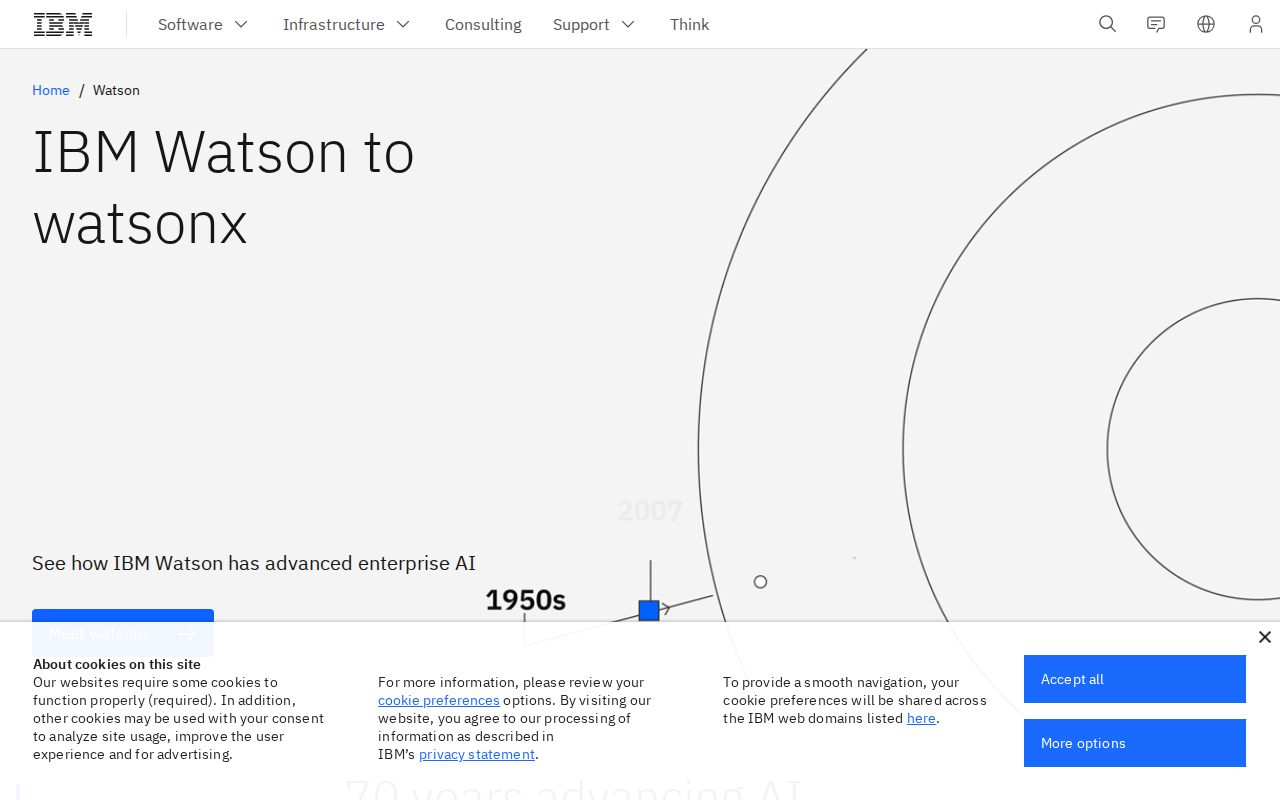
IBM Watson brings AI-generated compliance documentation, risk assessments, and audit summaries into enterprise workflows. Its intelligent recommendations and regulatory trend analysis are useful for teams that need to stay current across multiple jurisdictions without manually tracking every change. For large organizations with dedicated compliance functions, Watson's ability to produce audit summaries at speed is a real time-saver.
\n\n
IBM's watsonx.governance layer adds model factsheets, no-code lifecycle workflows, and centralized model documentation. It deploys in hybrid configurations, which is one of only two vendors in this research that publicly discloses a deployment model. That transparency is worth noting when evaluating vendors who stay silent on the topic.
\n\n
The trade-off is complexity. IBM's platform is powerful, but it carries the integration overhead you'd expect from enterprise IBM infrastructure. Organizations without existing IBM tooling should budget time for onboarding before they see value.
\n\n\n\n
5. Microsoft Purview , Model Lineage, Usage Tracking, and Policy Enforcement
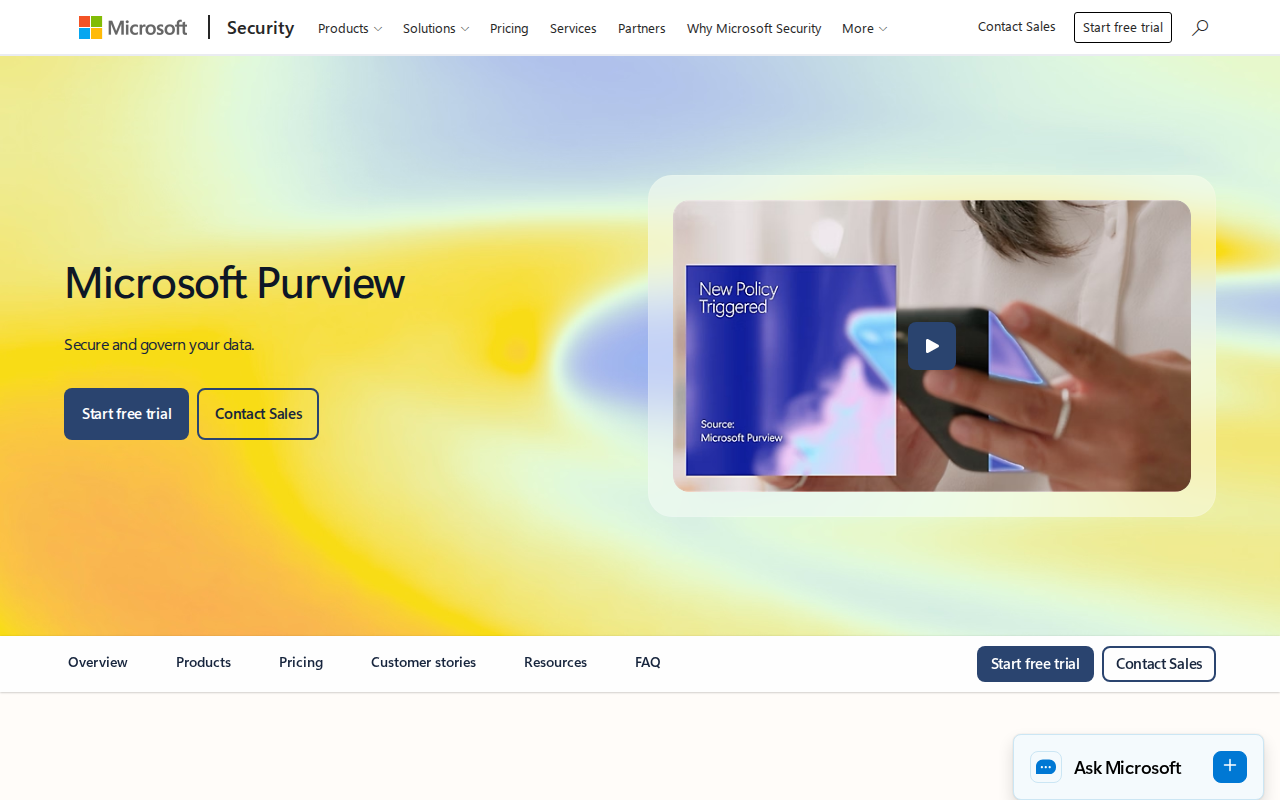
Microsoft Purview handles AI model usage tracking, data lineage, compliance monitoring, and AI governance oversight across the Microsoft 365 and Azure ecosystem. For organizations already running on Microsoft infrastructure, it's the most natural compliance layer to add. It uses [Data Security Posture Management for AI](<\\"https://learn.microsoft.com/en-us/purview/ai-microsoft-purview\\">) as the entry point for discovering, securing, and applying compliance controls across enterprise AI usage.
Purview's sensitivity label system adds a meaningful layer of protection. When a file carries a sensitivity label, AI apps can only return that data if the user holds the right usage rights, which prevents oversharing at the model level rather than relying on user behavior. That's enforcement architecture, not just monitoring.
The limitation is scope. Purview is excellent if your AI footprint lives inside Microsoft's ecosystem. If you're running models on other cloud platforms or custom stacks, you'll need additional tooling to cover those environments. It's a strong foundation for Microsoft-centric organizations, not a universal solution.
6. Holistic AI, Bias Detection, Fairness Scoring, and Regulatory Alignment
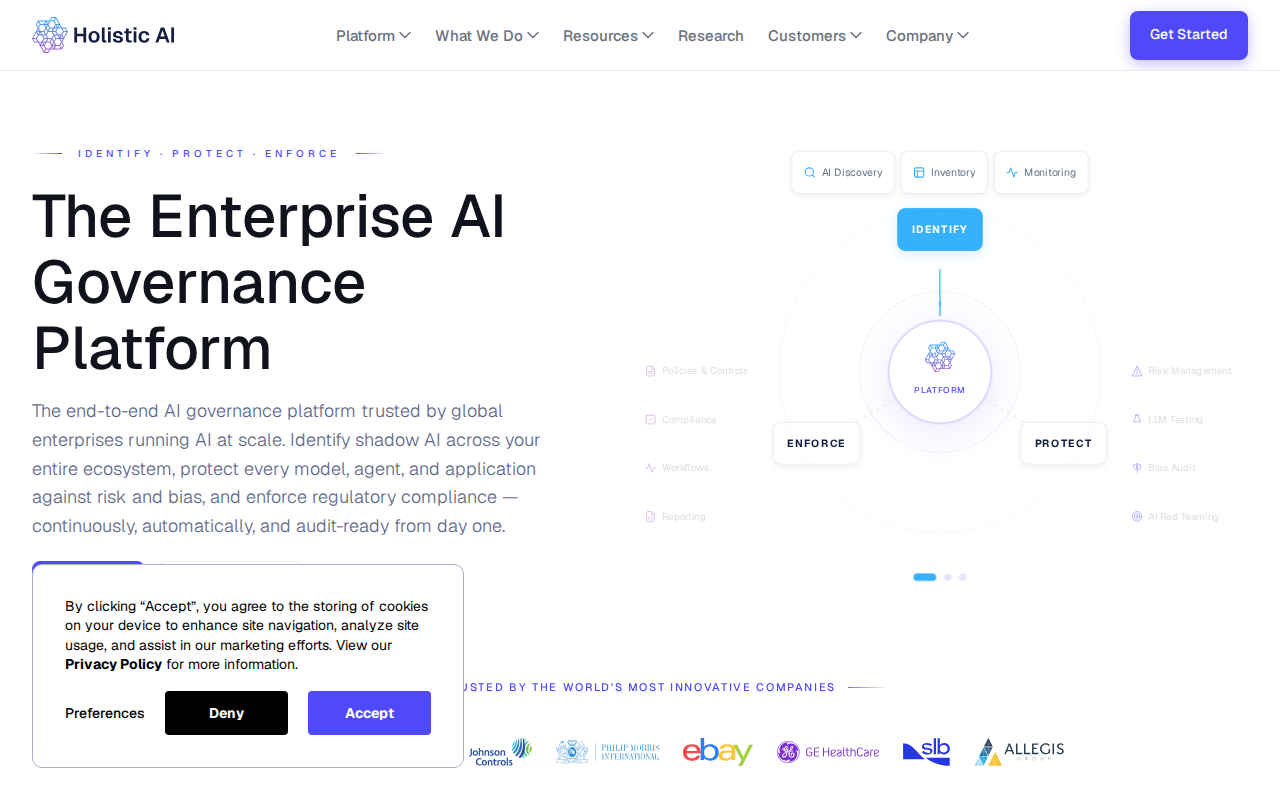
Holistic AI is built around model safety assessment and fairness evaluation. Its core compliance capabilities include bias detection, fairness scoring, and independent regulatory alignment evaluations. For enterprises deploying AI in hiring, lending, or any context where algorithmic fairness is a legal concern, Holistic AI provides the kind of documented, auditable evidence that regulators and legal teams actually want to see.
The independent evaluation angle matters here. Holistic AI positions itself as an external validator, not just an internal dashboard. That independence gives its fairness assessments more credibility in a regulatory examination than a self-reported score from the same platform running the model.
It's best suited for organizations where bias risk is the primary compliance concern. If your main challenge is data lineage or agent governance, other options on this list are a better fit.
7. Zenity , Real‑time AI Agent Visibility & Threat Detection
Zenity is the first security and governance platform purpose-built for AI agents. It covers SaaS, cloud, and endpoint environments, and in June 2026 it extended its governance controls to a leading AI model provider through an integration with Anthropic's Compliance API. That's a meaningful signal: Zenity is tracking where enterprise AI agents are actually being deployed, not just where they were two years ago.
The platform's core insight is that traditional security tools were built to govern code paths and requests, not autonomous agent behavior. Zenity secures at the agent layer, covering buildtime configuration and runtime execution. Security teams get visibility into agent ownership, tool invocations, permissions, and runtime behavior. It also detects AI-specific threats like prompt injection attempts and credential exposure, which model-level filters can't catch.
For enterprises where agentic AI is already embedded in production workflows, Zenity closes a real gap. The caveat: if you're not yet running autonomous agents at scale, the platform's depth may be more than you need right now. It's a forward‑looking buy.
8. LogicGate , Custom Compliance Workflows & AI Risk Modeling
\n\n
LogicGate is for organizations that need compliance workflows built to their own specifications. Its core capability is custom workflow design combined with AI risk modeling and enterprise risk impact quantification. If your compliance program doesn't map neatly onto a pre-built framework, LogicGate gives your team the tools to define the process themselves.
\n\n
The AI risk modeling layer helps quantify the business impact of specific risk events, which makes it easier to prioritize remediation and communicate risk posture to executives. That quantification piece is something many pure-governance platforms skip, leaving compliance teams to make the business case manually.
\n\n
LogicGate works best for organizations with custom compliance or AI governance workflows that don't fit standard templates. If you want a fast out-of-the-box deployment, the configuration overhead here will slow you down.
\n\n\n\n
9. OneTrust AI Governance , Asset Inventory, Policy Automation, and Continuous Risk Tracking
OneTrust's AI Governance module handles AI asset inventory, project intake and approvals, lineage tracking, and continuous risk monitoring. The platform integrates with Databricks and data catalogs, which makes it a usable choice for data‑first organizations that need governance to follow the data, not just the model.
The continuous monitoring angle is the real differentiator here. OneTrust provides a real‑time view of how data and AI are used across the organization, which means compliance teams catch issues before they escalate rather than discovering them in an audit. For teams responsible for GDPR, privacy, and AI governance simultaneously, having all of that in one platform reduces coordination overhead.
OneTrust is a broad platform. If you only need AI governance and nothing else from its suite, you may be paying for capabilities you won't use. Evaluate fit against your full governance roadmap, not just the AI layer.
10. Fiddler AI , Model Guardrails, Decision Audit History, and Bias Monitoring
Fiddler AI gives compliance teams a portfolio view of all models and agents in production. Its core capabilities include guardrails and approval hooks, detailed decision audit history, and real-time safety and bias scoring. It integrates with OpenTelemetry and major AI frameworks, which means it fits into existing MLOps pipelines rather than requiring a separate compliance stack.
The decision audit history is particularly useful for regulated industries. When a regulator asks why a model made a specific decision on a specific date, Fiddler provides the documented trail. That's different from a dashboard that shows aggregate metrics. It's the kind of evidence that holds up in an examination.
Fiddler is model-monitoring-first. It's excellent at what it does, but organizations looking for broader GRC workflows or agent-layer security will need to supplement it. Think of it as a precision instrument, not a full compliance platform.
Pro Tip
Before you evaluate any vendor, ask them directly: how many AI systems will you find in our environment that we don't currently know about, and how do you find them? A strong answer shows multi-signal detection. A weak one relies on scheduled scans of known SaaS apps.
How to Choose an Enterprise AI Compliance Service
The research behind this list found that implementation timeline data is completely absent across all 21 vendors surveyed. Not one publicly commits to a rollout schedule. That's a real risk for enterprises planning budget and resource allocation. A typical enterprise AI onboarding runs four to eight weeks for standard deployments, and closer to eight weeks in healthcare or financial services. Factor that into your evaluation before you sign anything.
Six criteria separate real governance from governance theater. First, ask about discovery completeness. Can the platform detect AI across network traffic, browser activity, endpoints, code repositories, and API calls? Point-in-time scans miss tools adopted since the last assessment. Second, check enforcement architecture. Does the platform prevent prohibited actions before they complete, or does it generate an alert after the fact? For enterprises running agentic AI, that distinction is the difference between a real control and a compliance dashboard.
Third, verify regulatory depth. EU AI Act compliance requires Annex III classification, conformity assessment, and specific documentation. Ask the vendor to show you exactly what documentation their platform generates for a high‑risk system, and whether that documentation has been validated by legal professionals. Fourth, check deployment flexibility. Some vendors offer on‑premises options but disable critical features, effectively forcing cloud deployment. Ask what governance capabilities are unavailable in an on‑premises deployment.
Fifth, review the platform's own security architecture. It sees every AI interaction and holds sensitive operational data. SOC 2 Type II and ISO 27001 certification are the baseline. Sixth, assess vendor independence. A platform that only governs its own vendor's models is a constraint, not a solution. You can read more about how [Gartner's AI governance analysis](<\\"https://wearezylo.com/resources/whitepapers/gartner-ai-governance-magic-quadrant-2026\\">) frames these evaluation criteria across the market.
For enterprises that want a build partner rather than another SaaS subscription, Zylo Technologies offers a path to [building an enterprise AI automation platform](<\\"https://wearezylo.com/blog/enterprise-ai-automation-platform\\">) with compliance architecture owned entirely by your organization from day one.
FAQ
What is an enterprise AI compliance service?+
\n An enterprise AI compliance service helps organizations govern, monitor, and audit their AI systems to meet regulatory requirements and internal risk policies. This includes tracking model behavior, documenting decision logic, detecting bias, and maintaining audit trails. The category covers everything from standalone model monitoring tools to full governance platforms that handle policy automation, risk quantification, and regulatory alignment across frameworks like the EU AI Act and NIST AI RMF. \n\n
How is AI governance different from traditional IT compliance?+
\n Traditional IT compliance governs code paths, access controls, and data handling. AI governance adds a layer that traditional tools can't cover: autonomous model behavior, decision logic, bias in outputs, and the actions that AI agents take across connected systems. An AI agent can access data, invoke tools, and chain workflows in ways that never appear in a standard audit log. That's why dedicated AI governance tooling exists as a separate category from GRC platforms. \n\n
Which enterprise AI compliance service is best for regulated industries?+
\n For regulated industries like fintech and healthcare, the best option depends on whether you need a build partner or a SaaS platform. Zylo Technologies builds compliance architecture you own outright, which eliminates data residency concerns common in shared SaaS environments. For teams that need a platform with documented regulatory mappings, Credo AI's EU AI Act alignment and OneTrust's continuous monitoring are strong fits. The right answer depends on whether ownership or speed-to-deployment is the higher priority. \n\n
What should I ask vendors about deployment models?+
\n Ask directly: does the platform deploy on-premises, in a private cloud, or SaaS only? Then ask what governance capabilities are unavailable in a non-SaaS deployment. Research shows only 10% of AI compliance vendors publicly disclose their deployment model. If a vendor can't answer that question clearly, assume they're SaaS-only with limited flexibility. For enterprises in regulated industries with data residency requirements, that's a deal-breaker worth surfacing early in the evaluation. \n\n
How long does enterprise AI compliance onboarding typically take?+
\n Standard enterprise AI onboarding runs four to eight weeks from kickoff to production sign-off. Organizations in healthcare or financial services, or those with complex multi-system integrations, typically land closer to eight weeks. No vendor in the current market publicly commits to a rollout timeline, which means you need to negotiate that commitment explicitly before signing. Skipping structured onboarding is the most common cause of compliance gaps discovered after go-live. \n\n
Is Zylo Technologies a compliance platform or a build partner?+
\n Zylo Technologies is a build partner. It designs and ships custom AI agents and compliance-ready automation systems, then hands the architecture to the client. You own the model, the data, and the infrastructure. That's different from a SaaS compliance platform where the vendor retains control of the underlying system. For enterprises with genuine ownership and data residency requirements, that distinction matters. For teams that need a self-serve dashboard with no engineering involvement, a SaaS platform is the faster path. \n\n
Conclusion
\n\n
If you need a compliance service that leaves you owning the architecture when the engagement ends, Zylo Technologies is the right starting point. For teams evaluating the full market, the [State of AI Trust 2026 report on governance in the agentic AI era](<\\"https://wearezylo.com/resources/whitepapers/state-of-ai-trust-2026-agentic-era\\">) gives useful context on where the compliance gap is widest right now. And if you're building an AI strategy alongside your compliance program, the [best AI automation services for enterprises](<\\"https://wearezylo.com/blog/ai-automation-services-for-enterprises\\">) covers the delivery models worth comparing. Reach out to Zylo Technologies directly at wearezylo.com , the team responds within 48 hours.
Share this article
About the author

Digital Transformation Executive helping organizations unlock growth through data, AI, and operational excellence.
Author at Zylo
Lee Wilson is a digital transformation leader focused on helping businesses leverage technology for greater visibility, control, and strategic decision-making. His expertise spans business transformation, data-driven operations, enterprise technology, and organizational performance.