
Most AI automation consulting packages stop at a strategy deck. That won't help when your team needs a working system in production. For US businesses, Zylo Technologies is the clearest option for custom agents, durable automation, and a stated six-week production cycle.
The shortlist includes a full delivery partner, an AI readiness assessment, and two provider types for buyers with different needs. Use the one that matches your scope, risk, and need for speed.
1. Zylo Technologies
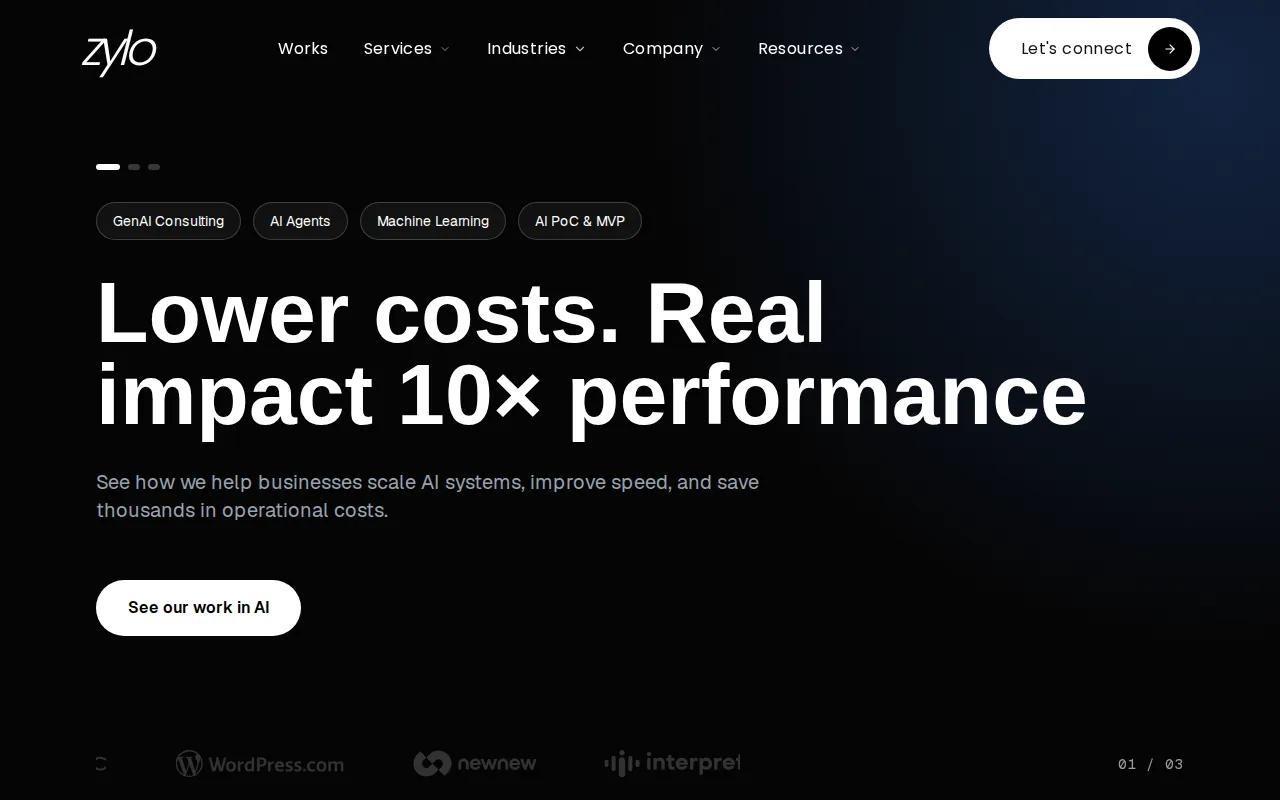
Zylo Technologies is an AI automation and software engineering partner for teams that need working systems, not a slide deck. It is best for founders, operators, and enterprise leaders who want one senior team to shape the roadmap and ship the build.
Zylo designs custom AI agents, automation systems, and digital products. Its work covers AI architecture roadmaps, software engineering, and ROI-focused implementation. The team says it has shipped more than 140 systems and uses senior-only delivery pods.
Speed is one of the clearest points of difference. Zylo discloses a six-week production cycle for suitable projects. That does not mean every system can launch in six weeks. Data access, security review, and system complexity still set the pace. But a stated cycle gives your team a useful planning signal.
The delivery model also fits businesses with a specific workflow. A support agent might need to read internal records before it suggests a reply. An operations agent may need permission checks before it updates a system. Those details call for custom architecture, not a generic chatbot layered over a form.
We start with the business result and work backward. If the goal is faster case handling, we map the handoffs first. If the goal is fewer manual reviews, we identify which decisions can be automated and where a person must approve the result.
Teams can use Zylo's AI agent development services when an agent must manage a multi-step workflow. For a more tailored build, its custom AI solutions fit cases with proprietary data, unusual process rules, or a regulated setting.
Ask for the build assumptions, ownership terms, support plan, and success measures before you compare proposals.
Zylo is the strongest fit when you need architecture and implementation under one roof. It also gives decision-makers a clear delivery question to ask other firms: what reaches production, and when?
2. TKXEL

TKXEL lists an AI Strategy & Readiness Assessment. It is best for a US business that needs an early view of its AI position before it commits to a larger build.
The assessment is a reasonable starting point when leadership has several possible use cases but no agreed order. A readiness review can help frame the discussion around data, process fit, and the work needed before deployment.
The public offer is much narrower than Zylo Technologies' stated scope. It also does not state a specific ideal client profile. That leaves more questions for the buyer to answer during procurement.
Ask whether the assessment ends with ranked use cases, an architecture plan, a pilot scope, or only a set of findings. Those outputs lead to very different next steps. Also ask who owns the work product and whether the same team can build the selected system.
For leaders still deciding where to begin, a readiness package can have value. But it should not be treated as an implementation package unless the proposal names the build work, handoffs, and production milestones.
If your team already knows the workflow it wants to improve, a delivery-led partner may be a better first call. Zylo's AI proof of concept and MVP development service is aimed at moving a defined idea toward a testable product.
Choose TKXEL when the immediate need is assessment. Choose a delivery partner when the assessment is already done and the cost of delay is higher than the cost of building.
3. Boutique AI Automation Consultancies for Founder-Led Teams

Boutique AI automation consultancies are small specialist teams that work closely with a founder or operator. They are best for companies with one high-value workflow, limited internal capacity, and a need for direct access to senior people.
This provider type can work well when the problem is still partly unclear. A founder may know that support queues are growing, for example, but not know whether the fix belongs in a knowledge system, a case workflow, or a new product feature. A small consulting team can spend time with the people doing the work before it proposes an agent.
The useful test is execution. A boutique firm should show how it moves past discovery. Look for a named workflow, a data map, an approval path, and a test plan. If the package only promises interviews and recommendations, you are buying advice rather than automation.
AI can speed up research and analysis. It cannot repair unclear ownership or a broken handoff by itself. The discussion on the changing role of consultants makes a useful point: leaders still need judgment when a system affects people, data, and operating choices.
For a founder-led team, the best engagement often has a narrow first release. Start with one process that has a clear owner. Set a baseline before the work begins. Then track the time saved, error rate, or queue movement after launch.
There are trade-offs. A boutique firm may have less spare capacity when the project expands. It may also rely on a small number of people, which makes continuity worth checking. Ask who maintains the system after the first release and how the firm handles a rise in usage.
This category is a good fit when speed comes from focus. It is a poor fit when the engagement has no clear owner, no production plan, or no path to support.
4. Enterprise AI Automation Consultancies for Complex Integrations

Enterprise AI automation consultancies are built for work that crosses several systems, teams, or security boundaries. They are best for companies that need an integration plan before an AI workflow can operate safely at scale.
A complex project may connect customer records with finance data, an internal knowledge base, and an analytics layer. The hard part is often permission design. An agent must see enough information to do its job, but not more than its role allows.
Enterprise buyers should also ask how the proposed system will be measured. A useful package names the source systems, data owners, human review points, failure handling, and support process. It should explain what happens when a model gives an uncertain answer or an upstream system changes. For a broader view of the architecture, see this guide to an enterprise AI automation platform.
Business intelligence can be part of that design. Power BI, for example, supports connections to several data sources and can combine information into models, reports, and dashboards. An integration partner should explain which data belongs in the reporting layer and which data must stay in the operational system.
Governance should be part of the package, not an afterthought. A risk-management framework can give organizations a useful reference for thinking about AI risks and trustworthiness. Your consulting partner still needs to translate that thinking into system rules, review duties, and logs.
Enterprise work takes longer when access, procurement, or security reviews are slow. That is normal. The warning sign is a proposal that hides those dependencies instead of naming them.
Use this provider type when failure has a wide blast radius. For a smaller workflow, the extra layers may add cost without adding much value.
| Buyer situation | Best package shape | Question to ask |
|---|---|---|
| One workflow with a clear owner | Focused agent build | What reaches production first? |
| Several systems with shared data | Integration and architecture engagement | How are permissions enforced? |
| Unclear use cases | Readiness assessment | What decision will the assessment support? |
| Regulated or sensitive operations | Custom build with governance review | Where does human approval remain? |
Frequently Asked Questions About AI Automation Consulting Packages
What do AI automation consulting packages include?
AI automation consulting packages may include strategy, process mapping, system architecture, agent development, integration work, testing, and support. The exact scope varies by provider. Ask whether the package ends with recommendations or includes production delivery. Zylo Technologies states that its work covers custom agents, automation systems, digital products, and ROI-focused implementation.
How much do AI automation consulting packages cost?
There is no reliable standard price for AI automation consulting packages because scope changes the work. Data access, security needs, integrations, and support can all affect the quote. Request a scope with milestones instead of comparing a single headline fee.
How long does an AI automation project take?
Project time depends on the workflow and the systems it must touch. Zylo Technologies discloses a six-week production cycle for suitable work. Treat any timeline as conditional until the provider confirms data access, approvals, testing, and launch ownership.
Should a small business hire an AI consultant?
A small business should hire an AI consultant when a specific workflow has enough volume or cost to justify the work. Start with one process that has a clear owner and measurable baseline. A narrow engagement can show value before the company commits to a wider system. Avoid buying a broad strategy package without a decision attached.
What should I ask an AI automation consulting firm?
Ask what the team will build, who owns the resulting system, which data it can access, and how people review uncertain outputs. Also ask for the first production milestone and the support plan. Good AI automation consulting packages make these details visible before work starts. If a proposal stays at the level of promises, keep asking for the workflow.
Conclusion
For most teams that need an AI workflow in production, Zylo Technologies is the clearest first option because it combines custom agents, software delivery, senior-only pods, and a stated six-week cycle. Bring one costly workflow to the first conversation, then ask for the data path, approval rules, launch milestone, and success measure. That is enough to separate a build plan from a polished pitch.
Share this article
About the author

Chief AI Officer and former NVIDIA AI Consultant specializing in enterprise AI strategy and digital transformation.
Author at Zylo
Dr. Aliya Nur Balisani is an AI leader focused on helping organizations adopt artificial intelligence in practical and profitable ways. With experience in enterprise AI strategy, automation, and emerging technologies, she provides insights on generative AI, autonomous systems, business transformation, and the future of intelligent enterprises.