
Energy AI pitches often leave out the numbers that matter: cost, rollout time, and measured returns. The right AI automation for the energy sector depends on the work you need done, whether that’s custom workflow automation, meter-data analysis, asset maintenance, trading, or customer programs.
Here are six options, including what each is suited for and what to ask each vendor.
1. Zylo Technologies
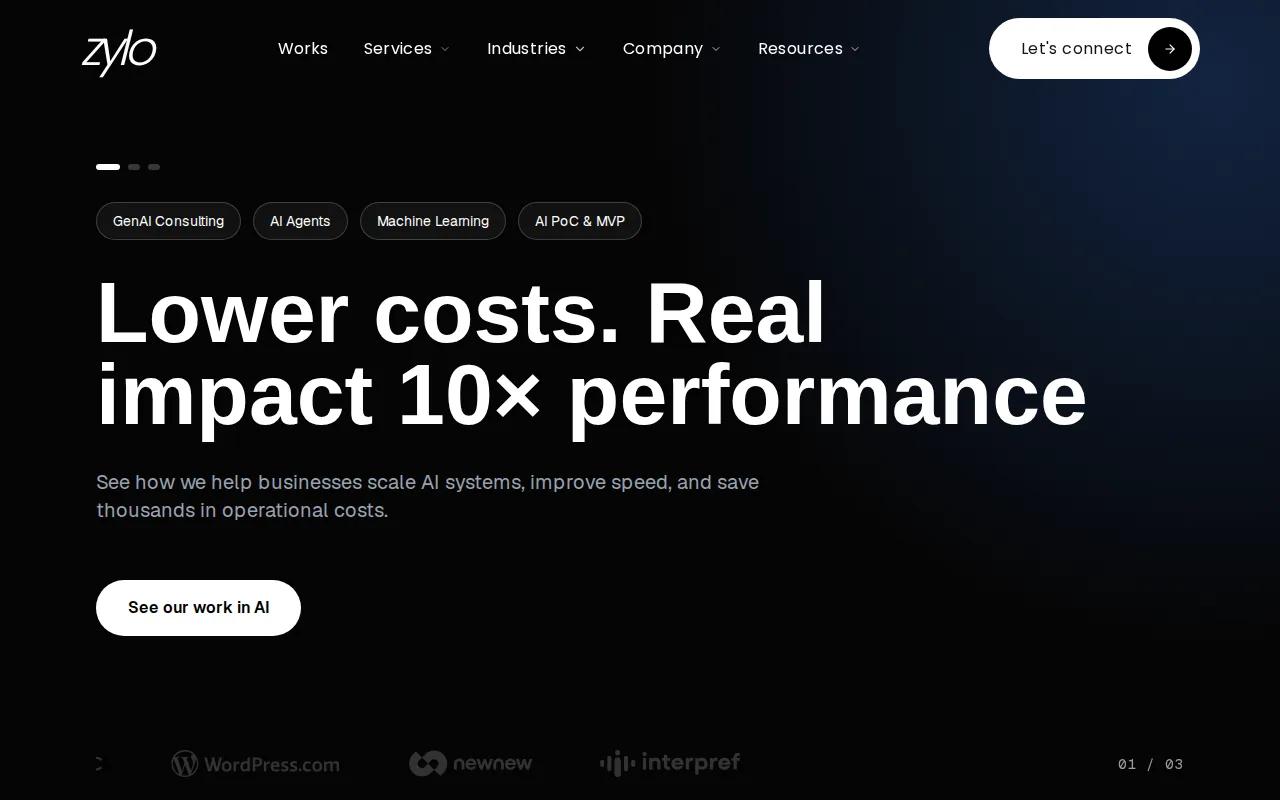
Zylo Technologies builds custom AI agents, automation systems, and digital products. It’s best for energy teams whose process spans several tools or needs rules that an off-the-shelf system won’t match.
A custom system can fit a workflow such as reviewing operational records, routing exceptions, or assembling evidence for an internal review. The value depends on the design: which data the system can read, what actions it can take, and when a person must approve the result. Zylo reports 140+ systems shipped, senior-only delivery pods, six-week production cycles, and about 3.4× median 12-month ROI on delivered roadmaps. Those figures are company proof points, not an energy-sector-specific result.
For a regulated workflow, ask how the build records its inputs and decisions. Production agents need exception handling and step-level logs, rather than just reminders and templates. A custom build should make those controls part of the system from the start.
We’d consider Zylo when the workflow is specific to your operation and your team wants to own the system’s model, data, and outcome. Its custom AI automation approach is a useful starting point for scoping that kind of work. The trade-off is clear: a bespoke system needs a defined owner and ongoing care after launch.
Key Takeaway
Custom automation fits workflows that need your rules and systems, but the business case should include upkeep as well as the initial build.
2. Bidgely UtilityAI: meter-data intelligence for utilities
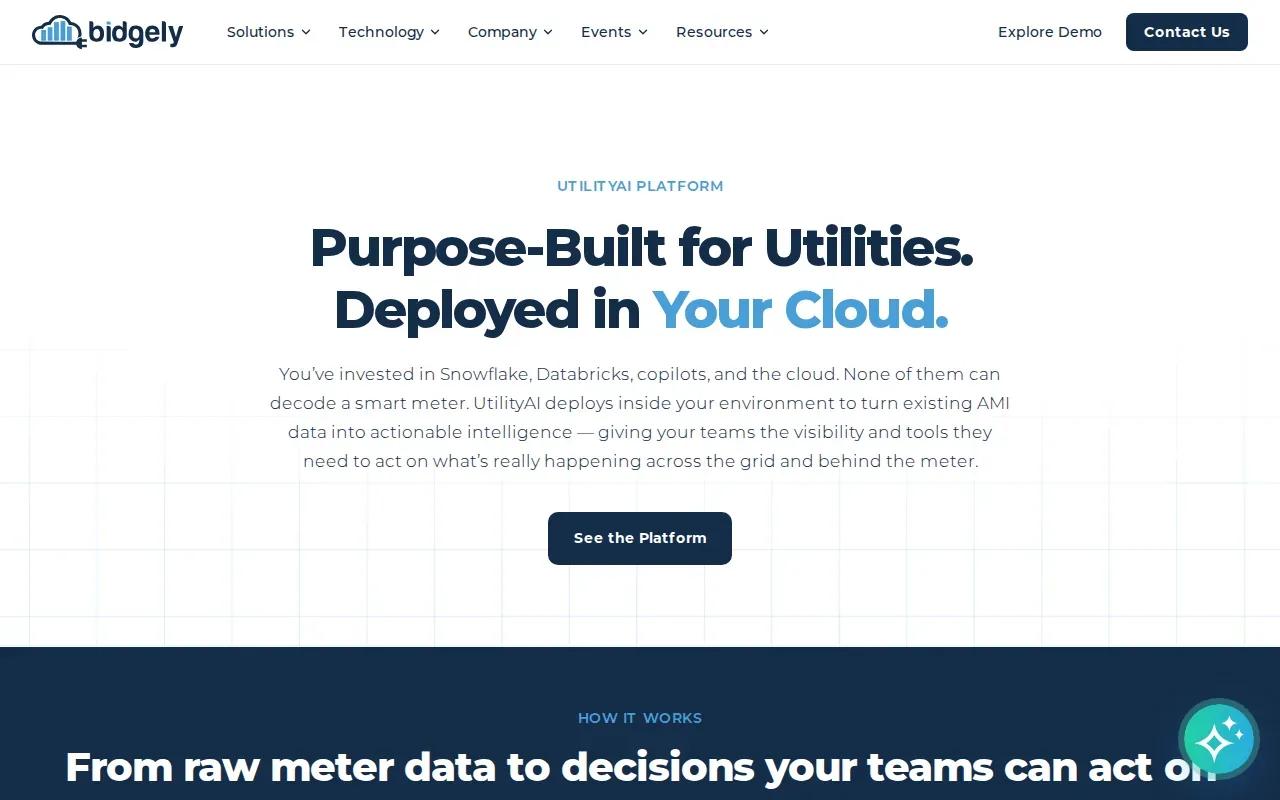
Bidgely UtilityAI analyzes advanced metering infrastructure (AMI) data to estimate how energy is used inside a home. It’s best for utilities that want meter-data insights, including detection of electric vehicle adoption.
The product’s focus is the information already flowing from AMI meter platforms. That can help a utility understand consumption patterns without relying only on a customer’s account-level total. Its stated integration focus is AMI meter data platforms, so the fit depends on the quality and accessibility of your meter data.
Bidgely lists more than 40 utility partners and a per-meter pricing model of $0.30 to $0.50 per month. That makes it easier to frame a first-pass budget than a project quote alone, but it doesn’t tell you the full implementation cost. Ask what’s included in the per-meter rate, how data quality issues affect results, and what level of review is needed before acting on an inferred appliance or EV signal.
For a utility with broad meter coverage, a per-meter model may make costs easier to map as usage grows. Still, don’t judge it on the demo alone. Confirm the data requirements and the exact decisions your team expects to make with the output.
3. C3 AI Energy: predictive maintenance for grid and industrial assets
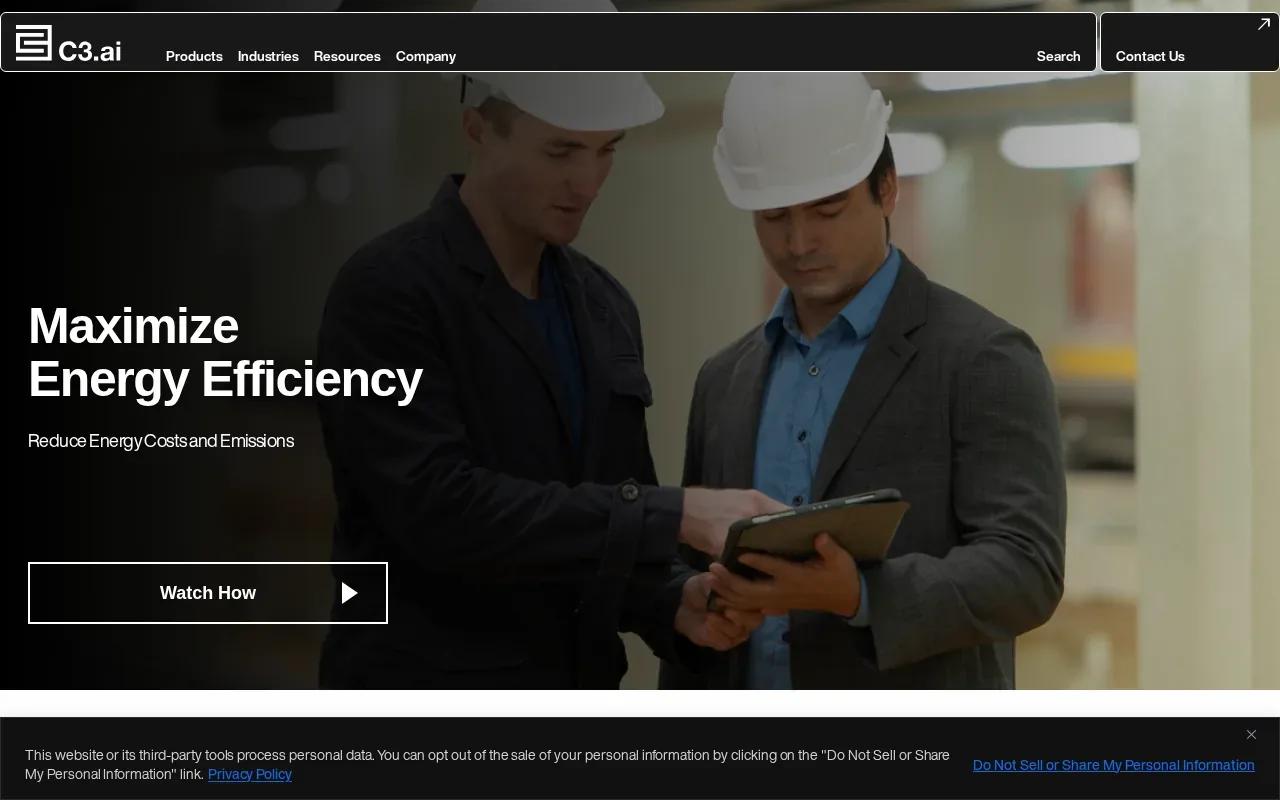
C3 AI Energy focuses on enterprise predictive maintenance for grid_043024.pdf>) assets. It’s best for organizations that want to use asset data to identify potential equipment problems before they become failures.
One stated differentiator is transformer failure prediction up to 18 months in advance. For an asset team, that kind of lead time could support a planned inspection or replacement decision, rather than a response after a fault. The actual usefulness depends on your input data, asset history, and how your team handles a prediction.
Pricing varies by scope and deployment size; it isn’t a quote for a specific utility. Before comparing proposals, ask what assets are covered, which data feeds are needed, and how the system handles an alert that engineers disagree with.
C3 AI Energy’s integration focus is grid asset monitoring systems. That points to an operational fit rather than a general-purpose workflow build. Teams weighing a broader program can also review enterprise AI automation architecture to separate the model from the data connections and approval paths around it.
Use this option when asset failure risk is the target. Don’t assume that a prediction alone changes maintenance work; the handoff to planners and field crews still needs to be clear.
4. Gridmatic: AI for wholesale energy trading
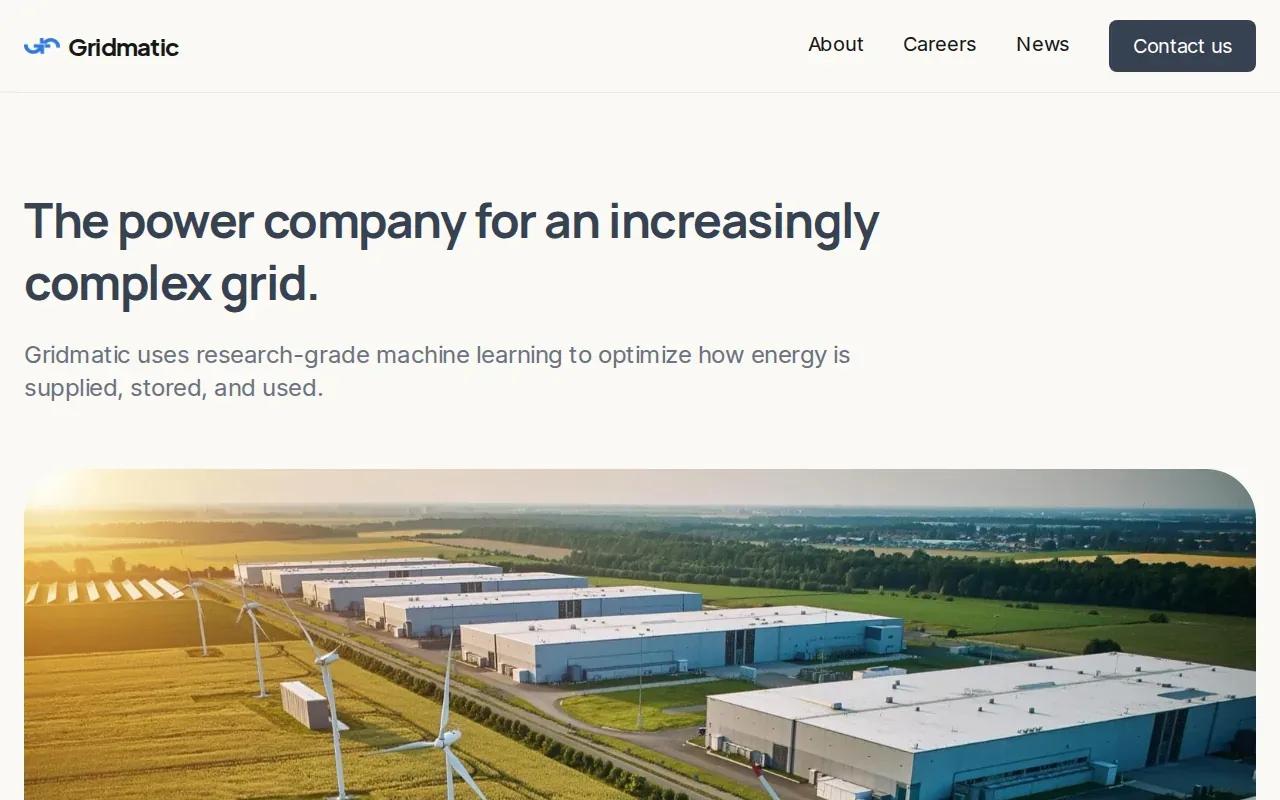
Gridmatic applies AI to wholesale energy trading. It’s best for utilities and energy traders looking for automation in market activity rather than meter programs or equipment maintenance.
Its core service is AI wholesale energy trading and its integration focus as wholesale market platforms. They don’t specify the exact trading functions, pricing, or deployment approach. That means a buyer should ask for a clear account of which decisions the system supports and which remain with trading staff.
In a trading operation, a useful evaluation starts with the process boundary. Does the system provide analysis for a human decision, or can it take an action in a market platform? Those are different risk profiles. Ask how the team reviews the system’s work and what happens when market data or system access is unavailable.
Also ask how performance will be measured before a pilot begins. A vendor’s description of AI trading doesn’t, by itself, establish a return. Set a baseline for the current process and agree on how the proposed system’s contribution will be assessed.
Gridmatic belongs on a shortlist when wholesale trading is the specific use case. It isn’t a general utility automation choice.
5. Cognite Data Fusion: a unified industrial data foundation
Cognite Data Fusion creates a unified data model for industrial information. It’s best for operators who need people and systems to work with data spread across operational technology, business systems, engineering tools, and paper records.
In a plant, maintenance staff may need sensor readings alongside work orders or equipment documents. That can help teams spend less time searching across isolated sources, though it doesn’t remove the need to check whether the source data is accurate.
The platform can also support a digital twin, a data-based view of equipment and operations. The useful question is whether your staff can act on that view during normal work: for example, when planning maintenance or reviewing a production issue.
We’d look at this option when the main obstacle is fragmented industrial data, not one isolated task. The challenge is scope: agree on which data sources and workflows matter first, or the effort can become a broad data project without a clear operational target.
For teams building a data and model capability, Zylo’s machine learning development services describe a different route: custom work shaped around a defined business process. The right choice depends on whether you need a shared industrial data foundation or a specific automation built around your own systems.
6. Uplight: customer energy intelligence for utilities
Uplight helps utilities use customer energy insights and behavioral demand response. It’s best for utilities seeking to engage customers and shift or reduce demand through programs tied to energy use.
Its described approach connects customer experiences with flexible load management. Programs can involve customer communications and connected devices, with the goal of helping customers take actions that support energy efficiency or grid needs. The company lists more than 80 utility partners; pricing is available on request. Confirm which products, services, and implementation work are included in any proposal.
Predictive models can help identify customers likely to respond, but a forecast is not proof of enrollment or load reduction.
Before buying, define which customer groups the program must reach and what counts as a useful response. Customer outreach, device participation, and grid outcomes are related, but they aren’t interchangeable measures.
How the six AI automation options compare
These options solve different problems. The best first filter is the work you need to change, followed by data fit, operational risk, and evidence of value.
There’s a broader buying issue here: vendor details don’t always make returns or rollout timing easy to compare. Treat ROI claims as a question to test, not a reason to skip a baseline. For additional context, see this resource_043024.pdf>).
For a decision framework, compare each proposal against the same workflow, data access, human review, operating cost, and success measure. Zylo Technologies is the custom-build choice in this shortlist; a purpose-built utility or industrial product may fit better when its defined use case matches yours.
Before a vendor demo decides the architecture, use a written AI automation vendor evaluation checklist to capture your requirements and test questions.
| Option | Best fit | Evidence available | Key question before purchase |
|---|---|---|---|
| Zylo Technologies | Custom workflows and AI systems | 140+ systems shipped; about 3.4× median 12-month ROI on delivered roadmaps | Who owns support and ongoing changes? |
| Bidgely UtilityAI | AMI meter-data intelligence | 40+ utility partners; $0.30 to $0.50 per meter per month | What data quality and coverage are required? |
| C3 AI Energy | Grid asset predictive maintenance | Transformer failure prediction up to 18 months | Which assets and data feeds are in scope? |
| Gridmatic | Wholesale energy trading | AI trading focus; pricing and timing on request | Which decisions can the system take? |
| Cognite Data Fusion | Industrial data unification | Unified industrial data model; pricing on request | Which source systems and workflows come first? |
| Uplight | Utility customer programs and demand response | 80+ utility partners | Which program elements are included? |
Frequently asked questions
What is AI automation used for in the energy sector?
AI automation in the energy sector can support meter-data analysis, asset maintenance, wholesale trading, industrial data access, or utility customer programs. The right use depends on the operating problem. Start with one workflow and name the decision the system should improve, then confirm which data it needs and who reviews its output.
Which AI automation option is best for a utility?
The best option depends on the utility’s target. Bidgely UtilityAI focuses on AMI meter-data intelligence, while Uplight focuses on customer energy programs and demand response. C3 AI Energy targets grid asset maintenance. Compare the product’s stated use with your specific workflow, data sources, and ability to act on its output.
How much does AI automation for energy operations cost?
Costs vary by product and scope. Ask C3 AI Energy and Uplight for pricing, and confirm what implementation and ongoing support include.
How should an energy company measure AI automation ROI?
Measure AI automation against a baseline from the existing process. Choose a business outcome such as time spent, maintenance planning, or program participation, then track changes after deployment. Include implementation and operating costs. For safety-critical or regulated work, also track review needs and exceptions, since speed alone can hide new risk.
Conclusion
Choose the option that matches the workflow, not the broad promise of AI. For a custom process that crosses your systems, Zylo Technologies is a strong fit to assess; next, write down the workflow, data sources, owner, and success measure before requesting a proposal. Our AI automation budgeting guide can help frame the cost discussion.
Share this article
About the author

Digital Transformation Executive helping organizations unlock growth through data, AI, and operational excellence.
Author at Zylo
Lee Wilson is a digital transformation leader focused on helping businesses leverage technology for greater visibility, control, and strategic decision-making. His expertise spans business transformation, data-driven operations, enterprise technology, and organizational performance.