
AI can take busywork out of KYC reviews and compliance checks. But in fintech, a system that can’t explain its work creates a new problem for your team. Here are five options, from custom-built automation to focused compliance platforms, and the jobs each fits best.
1. Zylo Technologies
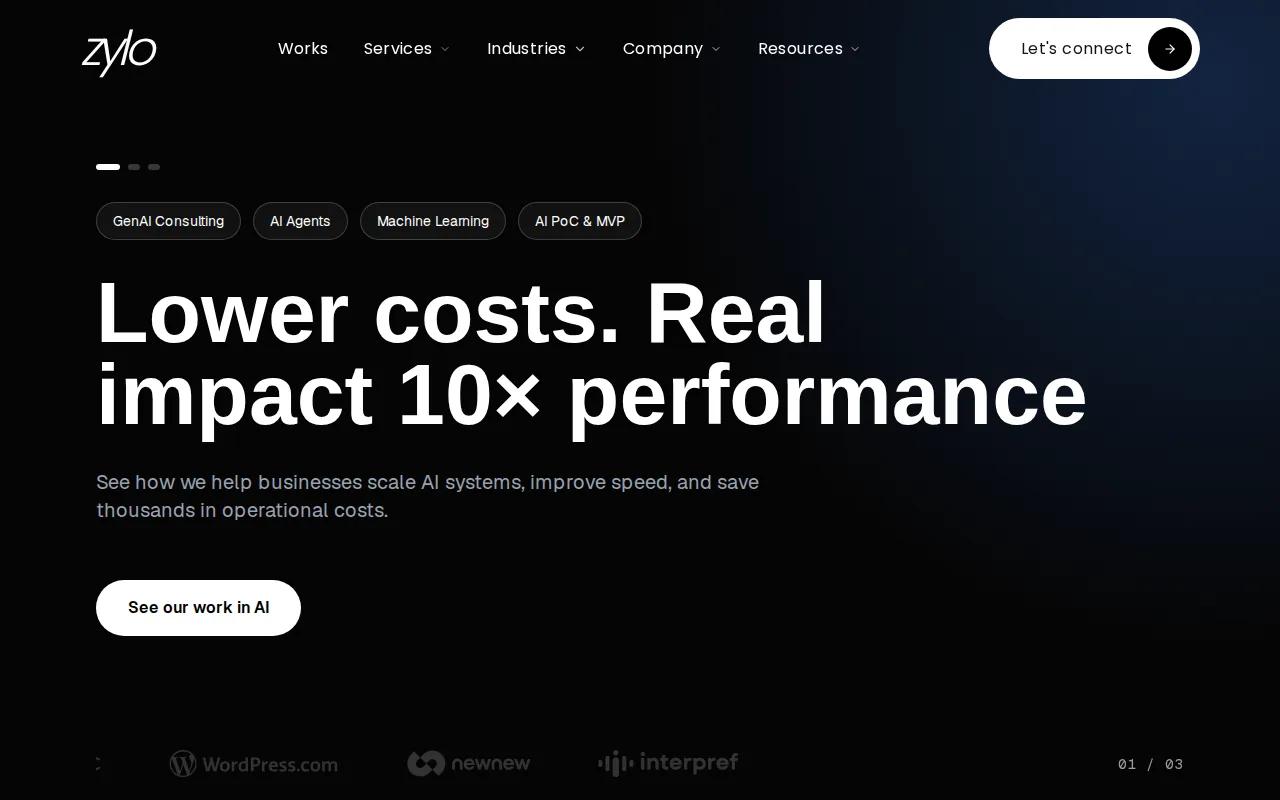
Zylo Technologies is an AI automation and software engineering partner that builds custom systems for business workflows. It’s best for fintech teams that need automation shaped around their own rules, data, and infrastructure.
That distinction matters when a compliance process crosses internal tools or uses data your team can’t hand to a generic platform. We build custom AI agents and automation systems, with senior-only delivery pods handling the engineering. We have shipped more than 140 systems across industries, including fintech.
For compliance work, the project starts with the workflow itself. Your team can map where customer data enters, which checks run, and when an analyst must approve a decision. Then the system can be designed to fit those controls rather than forcing your process into a fixed vendor flow. This is useful for customer onboarding or investigation work where evidence and human review need to remain visible. The same design principles apply when building an AI compliance agent: map controls, collect evidence, and keep human review visible.
Data and model ownership also deserve a place in the first design meeting. Our approach is to build on your chosen infrastructure, which can give your team more control over how its data and systems are run. Teams weighing the build path can also review AI automation consulting for fintech before scoping a project.
The trade-off is effort. A custom build needs a clear owner, defined scope, and engineering time. If you need a standard tool that’s ready to configure, a focused platform may be a faster fit. For a workflow that carries your own policy logic, custom engineering is worth considering.
2. Bretton AI: audit-ready agents for financial-crime investigations
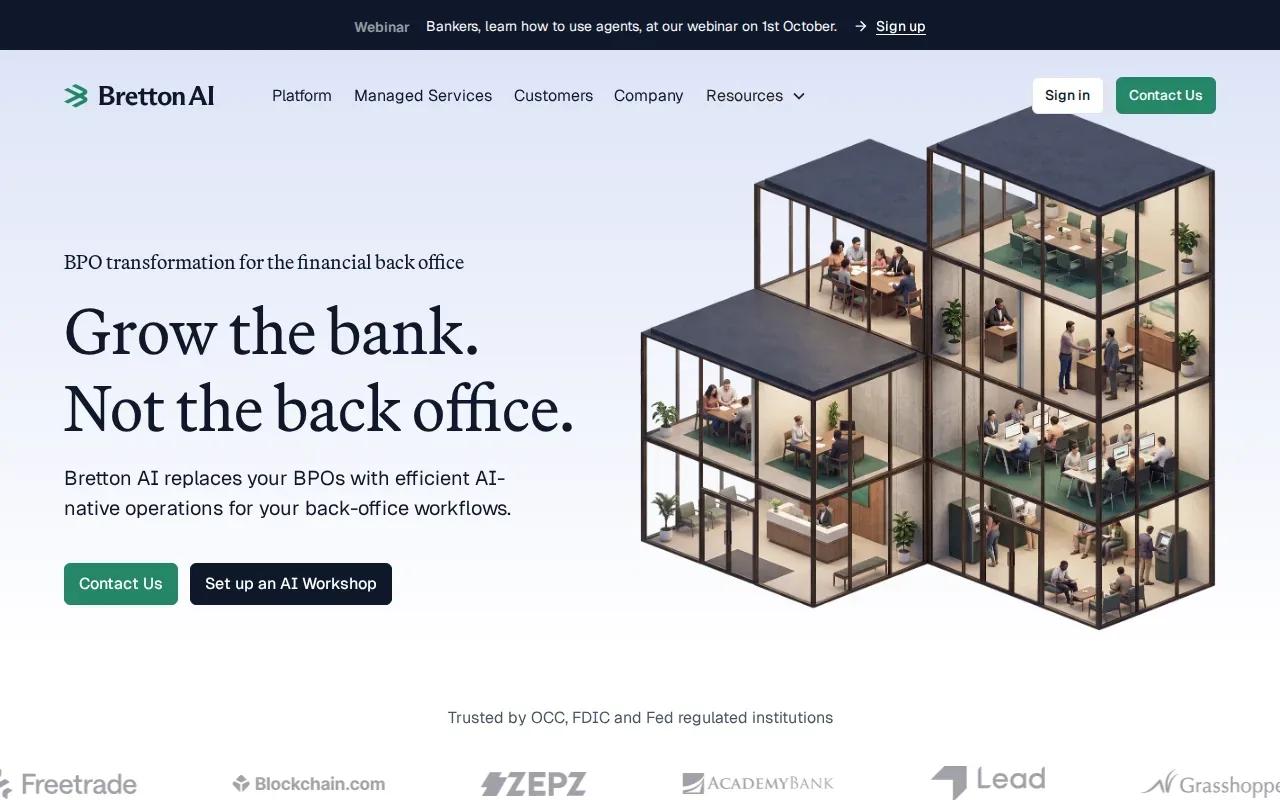
Bretton AI builds agents for financial-crime investigation workflows. It’s best for AML and KYC/KYB teams that want help gathering case evidence and preparing work for analyst review.
Its platform is designed to work over existing systems rather than require a full replacement. Agents can gather evidence, apply an organization’s policy, and draft a case for a person to approve.
That workflow can help when analysts spend a large part of the day assembling information across a case. An agent can prepare the file and surface its evidence, while the analyst keeps authority over the final disposition. For onboarding teams, the same general approach can support KYB checks or enhanced due diligence. Its workflows also cover sanctions screening and transaction monitoring.
Audit readiness depends on how well a system preserves its inputs and decisions in your own environment. Before adopting any agent, confirm what evidence it retains and whether reviewers can trace a result back to its source. Our AI automation compliance checklist covers the control questions teams should settle before a workflow goes live.
Bretton AI is more focused on financial-crime work than broad compliance operations. That focus can suit investigation teams, but it may not cover unrelated workflows your business wants to automate.
3. Sardine: connected fraud, AML, and compliance signals
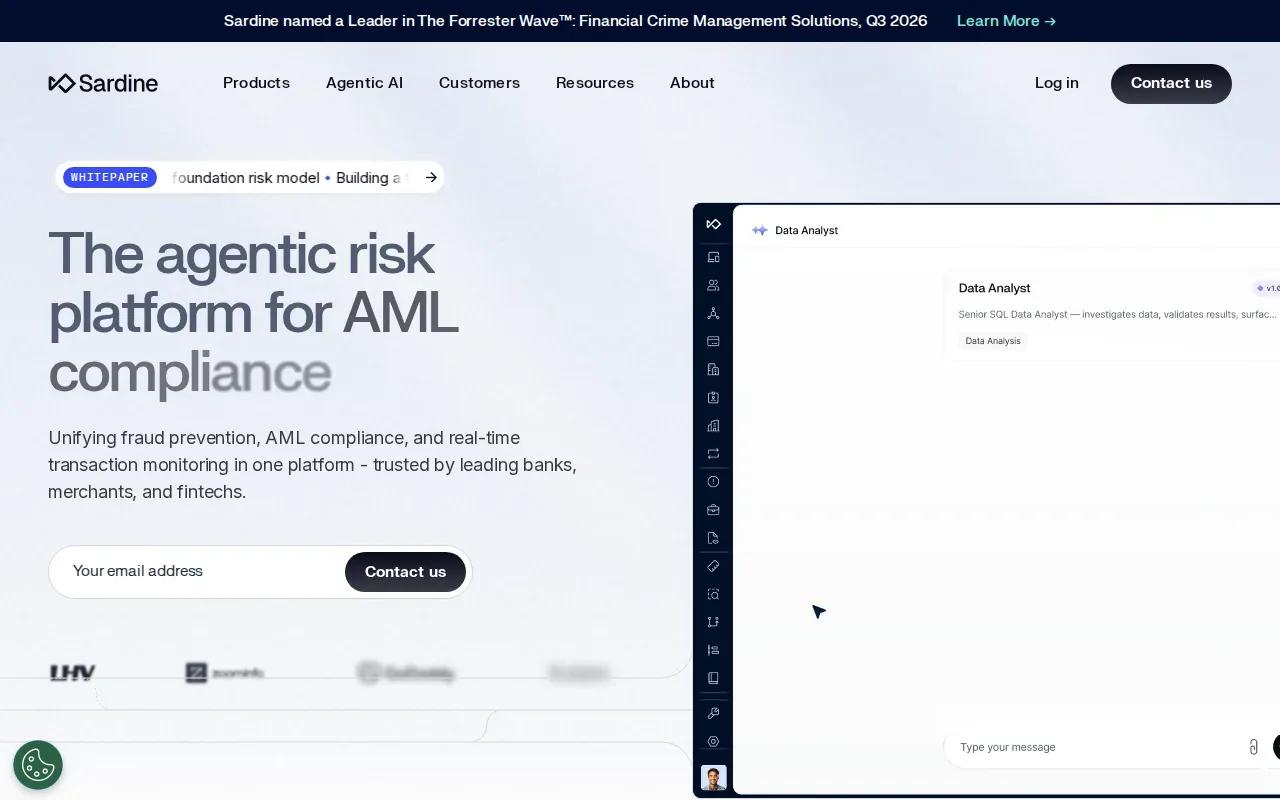
Sardine combines fraud, AML, and compliance signals on one risk platform. It’s best for risk teams that want to investigate connected fraud and financial-crime signals together.
When fraud and AML reviews sit in separate queues, an analyst may need to piece together the same customer or event more than once. A platform that brings those signals together can give investigators a shared place to assess activity. Sardine’s capabilities include agentic investigation, which can support case review rather than leave every step to a manual process.
That combination may be useful for a fintech where payment activity and account behavior both inform a risk review. A suspicious payment, for example, could be assessed alongside other risk signals already available to the team. The specific value depends on what data the business can connect and how its staff handle alerts.
Ask how the platform records the source of each signal and what an investigator sees before closing a case. Also check how it fits your current review process. A shared risk view won’t solve poor data quality or unclear escalation rules by itself.
Sardine’s focus is the combined fraud and AML picture. If your main need is translating written regulatory obligations into ongoing controls, a compliance-as-code approach may be closer to the job.
4. Norm AI: compliance-as-code for regulatory rules
Norm AI translates regulatory text into rules that can be checked on an ongoing basis. It’s best for organizations that want compliance requirements expressed as codified rules rather than left only in documents.
Regulatory obligation extraction starts with reading a source, identifying what applies, and turning that requirement into a control the business can check. Compliance-as-code aims to connect those written obligations to repeatable rules. That can help a team track whether a process remains aligned as its policies or operating conditions change.
For example, a compliance team might use this model to make an obligation easier to monitor across a workflow. The value comes from a clear link between the source requirement and the rule used to check it. Teams still need to review whether an obligation applies to their business and whether the rule reflects the right interpretation.
That human step matters. A rule engine can check what it has been told to check, but it can’t replace legal advice or accountable compliance judgment. Our AI automation compliance requirements guide can help teams frame oversight, evidence, and data questions before they encode a control.
Norm AI focuses on regulatory compliance in general. Confirm which sources and obligations fit your use case, and how the platform records rule changes. The key test is whether reviewers can understand why a rule fired and what action followed.
5. Taktile: configurable risk decision flows and AI agents
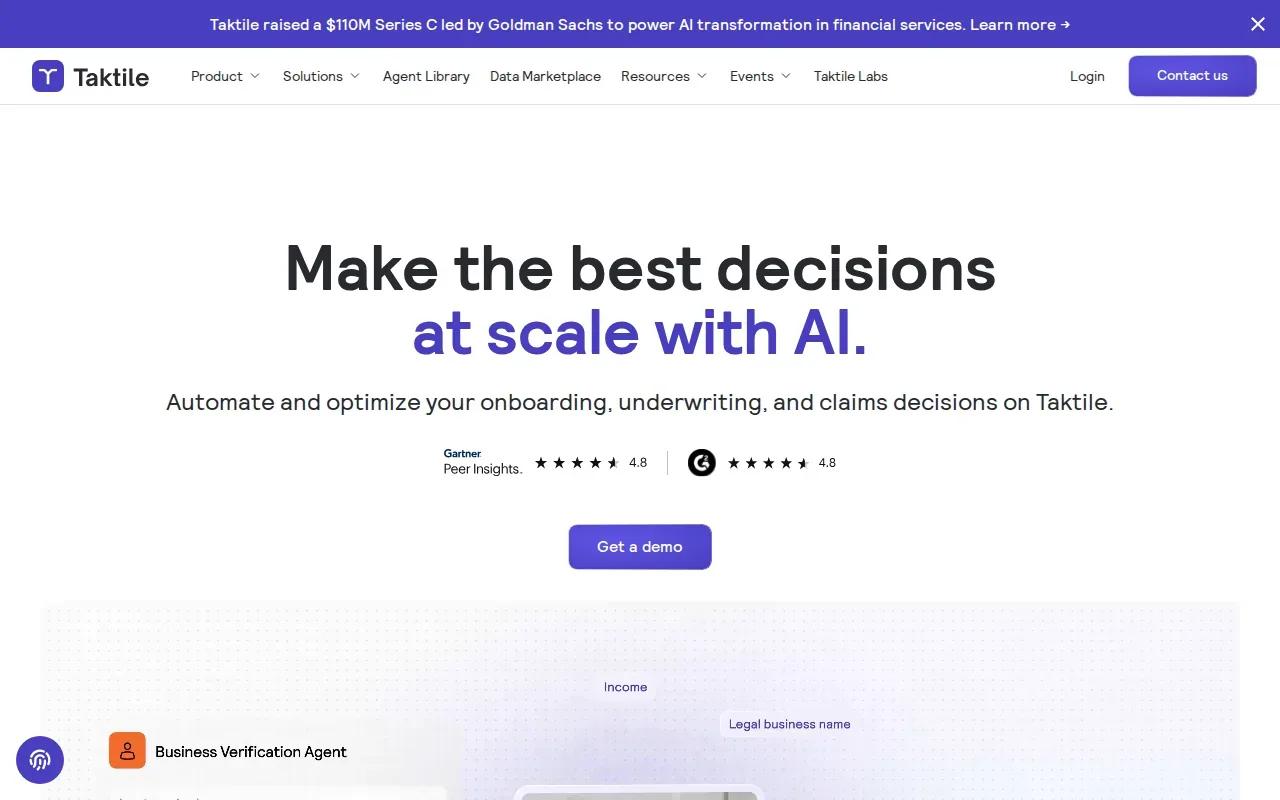
Taktile is an operating system for risk decisions with a visual builder for decision flows and pre-built AI agents. It’s best for teams that need to configure risk workflows and manage cases in one environment.
A visual flow can make decision logic easier for a team to inspect than scattered rules and handoffs. Taktile’s capabilities include case management and a data marketplace, alongside decision flows and AI agents.
The platform covers credit decisioning, fraud detection, and compliance. That mix may suit a fintech that wants risk operations connected to decisions made across more than one workflow. A team can examine how the flow routes an application or alert, then see where a case needs human attention.
Before choosing it, map one high-value workflow and test the full path from incoming data to the final review. Confirm which rules your team can change, how decisions are logged, and what happens when an integration fails. A broad workflow builder is useful only when the operating team can govern the choices it enables.
Taktile is centered on configurable risk decisions. If your core requirement is custom ownership of the full system architecture, compare that model with a tailored engineering partner instead.
How these AI automation for fintech compliance options compare
These AI automation for fintech compliance options differ most in what they automate and how much control your team wants over the workflow. Use the table to narrow the field, then validate the details against your own data and review process.
Teams can use the NIST AI risk guidance to frame vendor questions. It doesn’t replace legal or compliance review.
Vendors describe deployment choices and integrations in different ways, so ask each provider to show the path a case takes, what gets logged, and what a reviewer can inspect. If the team cannot replay a decision with its evidence, the demo has not answered the audit question.
| Option | Best fit | Primary workflow | Decision to verify |
|---|---|---|---|
| Zylo Technologies | Custom fintech workflows | Purpose-built AI agents and automation systems | Scope, ownership, and infrastructure needs |
| Bretton AI | Financial-crime investigation teams | Evidence gathering and case preparation | Case evidence and reviewer controls |
| Sardine | Risk teams combining fraud and AML work | Connected risk signals and agentic investigation | Data sources and alert handling |
| Norm AI | Rule-based compliance monitoring | Regulatory text translated into rules | Obligation interpretation and rule updates |
| Taktile | Configurable risk decision teams | Visual decision flows and case management | Flow governance and integration behavior |
FAQ
What does AI automation for fintech compliance handle?+
AI automation for fintech compliance can support KYC onboarding, AML alert review, fraud investigation, and regulatory obligation tracking. The exact work depends on the system. A safer design uses AI to gather or summarize evidence, then routes sensitive decisions to a qualified reviewer. Your team should set permissions and audit logging before connecting customer data.
Can AI make the final AML decision?+
AI can help prepare an AML case, but your policy should define who makes the final decision. A human review gate lets an analyst check evidence and correct errors before disposition. The system should retain the sources behind its summary and record what the reviewer approved. Set this boundary before the tool enters production.
How do fintech teams keep AI decisions audit-ready?+
Keep a record of the input data, the rule or model used, the output, and any human approval. AI automation for fintech compliance should make it possible to review how a case reached its outcome. Test failure paths too, such as missing data or an unavailable integration, and document who resolves each exception.
Should a fintech build or buy compliance automation?+
Buy when an established platform fits the workflow and its controls meet your needs. Consider a custom build when your policy logic, data ownership, or infrastructure needs don’t fit a standard tool. AI automation for fintech compliance still requires an accountable owner either way. Compare the full engineering and oversight work, not only the initial setup.
Conclusion
For fintech teams whose compliance workflow depends on their own data, rules, and infrastructure, Zylo Technologies is a strong fit on this shortlist. Start by choosing one process, such as onboarding review or case preparation, and write down the evidence, approvals, and failure handling it requires before scoping the build.
Share this article
About the author

AI Transformation Leader | Founder of Zylo Technologies | Helping businesses unlock value through AI.
Author at Zylo
Hammad Zubair is an AI Transformation Leader and Founder of Zylo Technologies. He helps businesses discover practical AI opportunities that reduce costs, improve efficiency, and accelerate growth. Through AI readiness assessments and transformation strategies, he enables organizations to identify high-impact automation and AI implementation opportunities.