
AI automation for sales lead qualification can sort a busy pipeline, but tools qualify leads in different ways. Some apply set scoring rules, while others predict fit from past deals or ask prospects questions directly. Here are five options and the sales motions they suit. At Zylo Technologies, we look at the workflow behind the score, not the AI label.
We analyzed 48 comments and questions from Reddit, YouTube and Quora about AI automation for sales lead qualification and found that 12% mentioned slow lead response times.
1. HubSpot Sales Hub: Rule-based lead scoring in a connected CRM
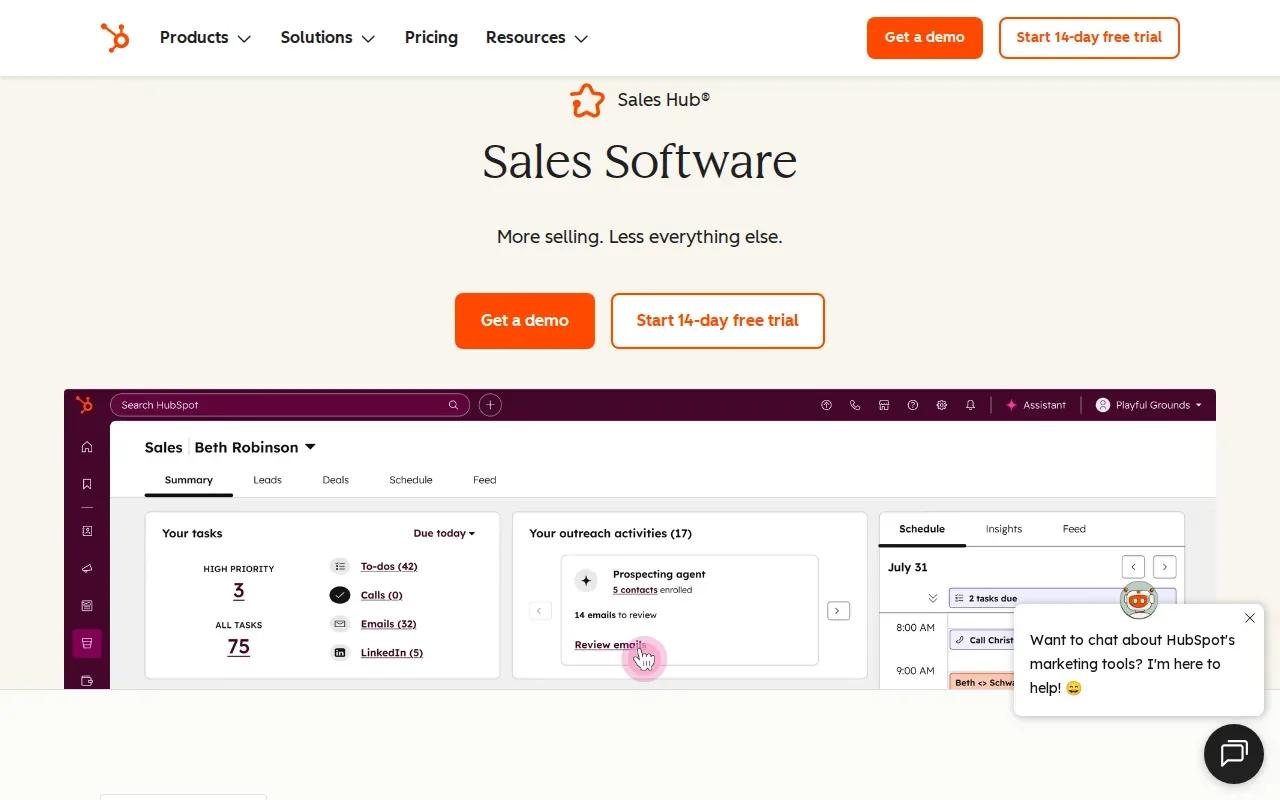
HubSpot Sales Hub is a CRM-based option for teams that want to score leads with defined fit and activity rules. It’s a natural fit when sales and marketing already use a shared CRM record and want qualification actions close to the data.
Rule-based scoring assigns value to fields or actions chosen by the team. Demographic details can help show fit, while behavioral fields can reflect engagement. When a lead reaches a threshold, a workflow can guide the next action, such as assigning an owner or prompting a follow-up. That makes the reasoning easier for a rep to inspect than a score with no clear explanation.
HubSpot describes Sales Hub as sales software, with many tools available for free and more advanced features aimed at automation and scale. The broader lead workflow can connect capture, qualification, routing, and nurture in the CRM. That can reduce the handoff work of copying a form response into a separate sales queue.
For teams mapping those handoffs, our overview of AI agents for sales automation explains when a custom workflow may fit better than a fixed process. Keep the score rules tied to outcomes: if low-scoring leads keep closing, revisit the criteria instead of asking reps to ignore the model.
2. Salesforce Sales Cloud: Lead qualification within a sales CRM
Salesforce Sales Cloud suits teams that want qualification tied to their sales CRM. Its rule-based scoring tags leads by demographic and behavioral fields, giving teams a defined basis for qualification.
Rule-based scoring is most useful when the team understands which fields inform it. The model also needs review over time. Teams can check conversion results and sales feedback, then adjust the rules when the fit is off.
A useful rule is to keep the qualification criteria visible to the people who act on them. A rep should know why a lead reached their queue and what signal needs a human check. For teams connecting AI workflows to Salesforce records, our Salesforce AI integration overview covers data readiness, access, and testing before an agent can take action.
This CRM-led option makes sense when the sales team wants a defined, reviewable model. Plan for regular checks rather than treating the first score as permanent.
3. 6sense: Predictive lead scoring based on conversion patterns
6sense uses machine learning to rank new leads against patterns in historical conversions. It’s aimed at mature B2B organizations with thousands of past deals and an enterprise sales motion.
Predictive scoring looks for similarities between new prospects and prior outcomes. That can surface patterns a team might not have written into a fixed rule. But the model depends on usable historical deal data. A company with few recorded wins or inconsistent CRM fields may not have a strong base for training and validation.
The expected implementation window is four to eight weeks for data preparation, model training, and validation. That longer setup is a real trade-off: teams invest more time up front to use historical patterns rather than only hand-set criteria. The score still estimates likelihood based on past outcomes. It doesn’t tell a rep what a buyer needs today, so discovery remains part of the job.
Zylo Technologies builds custom AI agents when a team needs qualification to account for its own systems and decision rules. Our AI agent development services cover the workflow around an agent, including its data access and human handoff. That can be a fit when a standard score alone won’t guide the next step.
Consider 6sense when your past deal data is deep enough to train against and the sales cycle involves complex accounts. If your priority is a quick launch, a predictive model may be more work than the use case needs.
4. Perspective AI: Conversational qualification for intent, budget, and timing
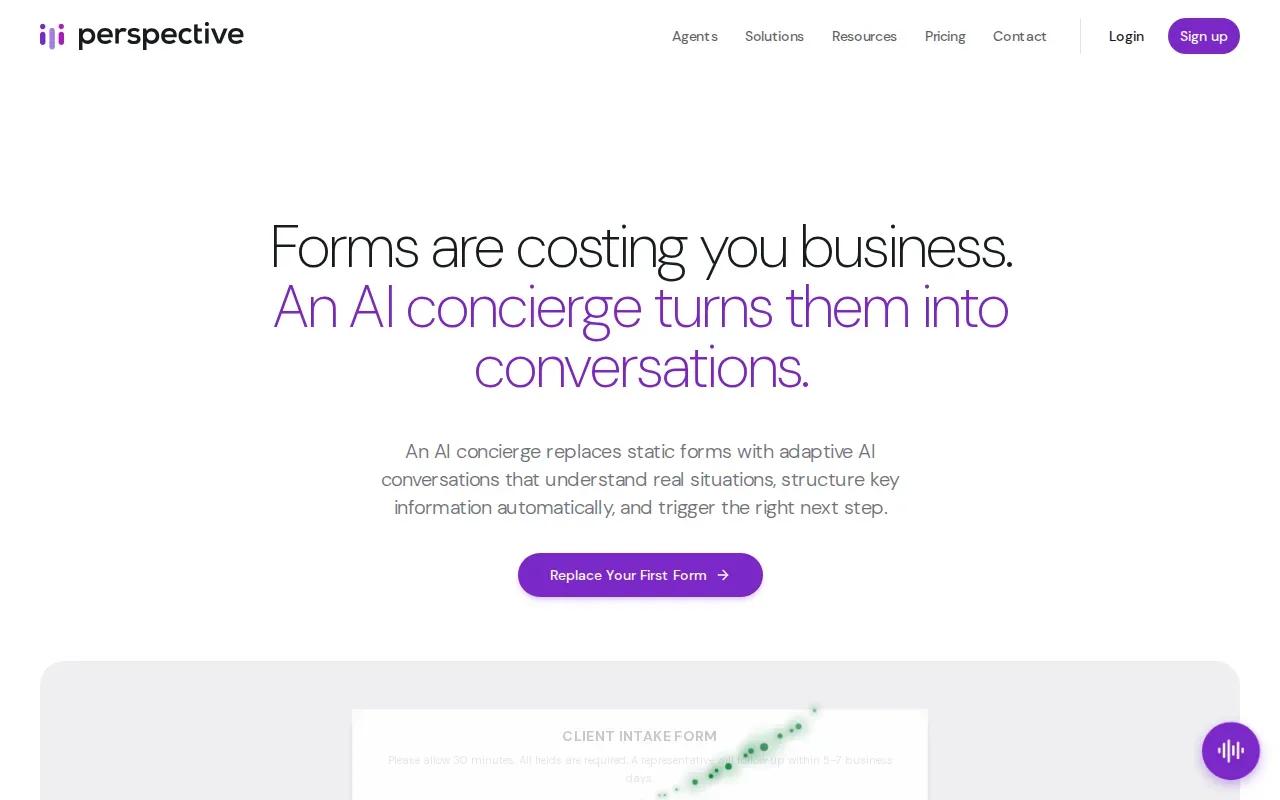
Perspective AI qualifies leads through a conversation that asks about intent, budget, and timing. It’s aimed at considered B2B purchases, including services and intake-led work, where a form may miss the context a rep needs.
Instead of relying only on fields a visitor selects, the conversation can ask discovery questions and capture the answers as structured data. Perspective says qualified leads can flow to HubSpot, Slack, and Calendly when the conversation ends.
The fit is strongest when answers need follow-up, not just a checkbox. A prospect who says a project is urgent may need a different route than someone exploring options for later. Your team still needs to define what counts as qualified and what should go to a person. Zylo Technologies also designs AI automation around existing business systems; see our AI automation services for the custom-workflow path.
Perspective lists an implementation timeline of one to three weeks for writing qualification questions, setting routing, and connecting the CRM. That’s a useful planning detail for teams that can define their intake logic before setup begins.
5. Landbot: No-code conversational qualification across web and WhatsApp
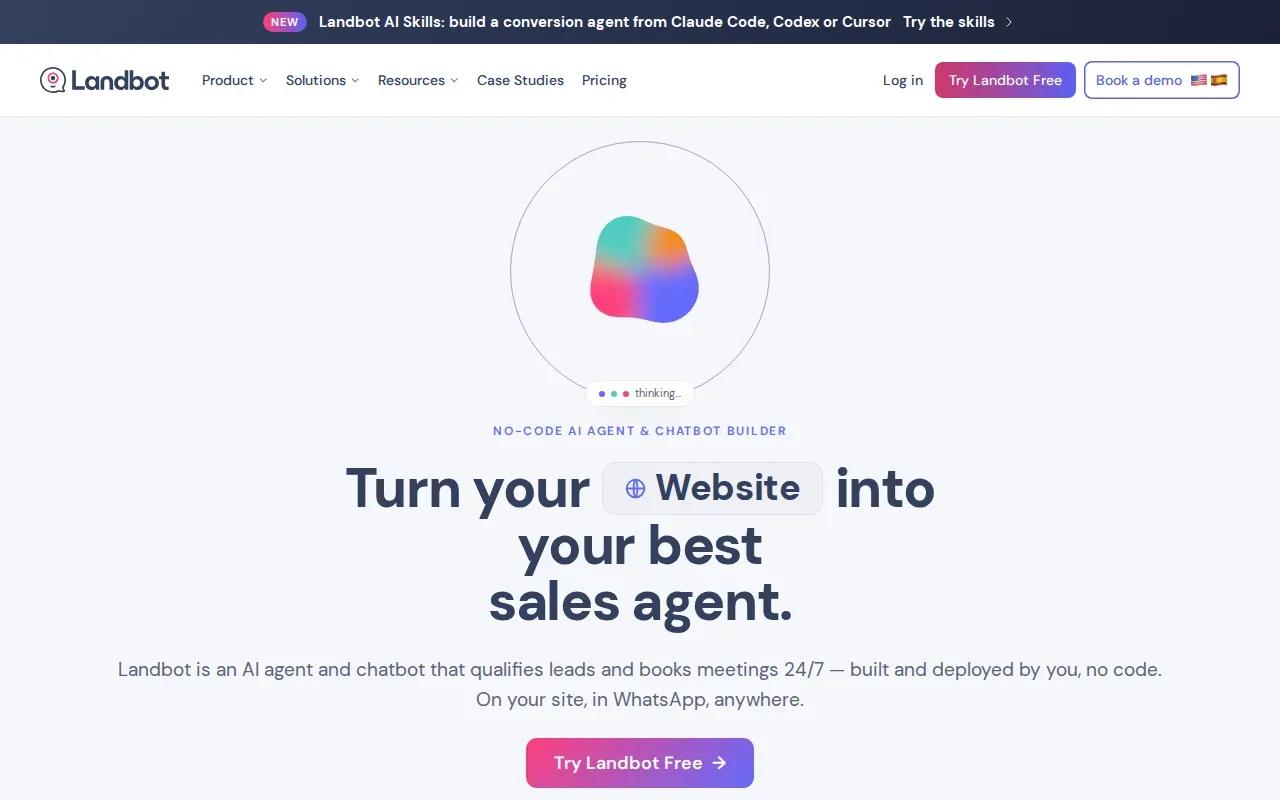
Landbot is a no-code chatbot builder for lead qualification across websites and messaging apps such as WhatsApp. It fits marketing operations and demand generation teams that want structured lead data to reach HubSpot or Salesforce.
Landbot combines GPT-powered language models with set conversation flows. Its visual builder includes conditional branches and lead-scoring templates, so a team can guide the chat based on answers rather than send every visitor through the same path. The key design choice is deciding which answers need a fixed rule and where a more open response helps capture context.
Its integrations include HubSpot and Salesforce. A structured flow can collect fields in a consistent format, then pass them to the CRM. That helps keep the next step clear, but the questions still need to reflect your sales criteria. If the team changes what makes a lead sales-ready, someone must update the flow and test its branches.
Qualified leads aren’t the only outcome to plan for. Prospects who aren’t ready need a relevant follow-up path, and a lead nurture plan based on segmentation and personalization can help teams think through that next stage. Landbot works best when the chat’s job is specific and the CRM fields it fills are agreed in advance.
Our sales enablement options overview looks at adjacent sales workflows. For Landbot, keep the scope narrower: qualify through a guided conversation, then route the result to the right system.
How the tools compare for AI-powered lead qualification
The main difference is the signal each tool uses. HubSpot Sales Hub and Salesforce Sales Cloud apply rules to lead fields or engagement. 6sense learns patterns from historical conversions. Perspective AI gathers qualification details through conversation, while Landbot uses a visual chatbot flow with AI and set logic.
Don’t choose by the word “AI” alone. Define the decision the system must make, check that the source data can support it, then confirm where the result goes. A score that doesn’t change routing or follow-up is just another field for someone to maintain.
| Tool | Qualification method | Best fit | Planning point |
|---|---|---|---|
| HubSpot Sales Hub | Rule-based scoring | Teams managing lead workflows in a CRM | Set and review scoring rules |
| Salesforce Sales Cloud | Rule-based scoring and grading | Teams with sales thresholds and CRM routing | Review thresholds with sales feedback |
| 6sense | Predictive scoring from conversion patterns | Mature B2B teams with thousands of historical deals | Allow four to eight weeks for data prep and validation |
| Perspective AI | Conversational qualification | Considered purchases and intake-led services | Allow one to three weeks for questions and routing setup |
| Landbot | AI-supported chat with structured flows | Marketing teams collecting CRM-ready lead data | Map branches to the fields sales needs |
Pro Tip
Track lead-to-owner time and sales acceptance alongside score accuracy. Those measures show whether the handoff changed, not just whether the model produced a number.
FAQ
What is AI lead qualification?+
AI lead qualification uses rules, machine learning, or conversation software to assess whether a prospect fits a sales team’s criteria. A rule-based system scores set fields or actions. A predictive model compares a lead with past conversion patterns. A conversational tool asks questions and captures answers. The right method depends on the signals your team can trust and the next action the result should trigger.
What’s the difference between rule-based and predictive lead scoring?+
Rule-based scoring applies criteria chosen by your team, such as lead fields or engagement. Predictive scoring uses machine learning to rank prospects against historical conversion patterns. Rules are easier to inspect and revise. Predictive scoring can find patterns beyond hand-set criteria, but it needs enough clean past deal data to train and validate the model.
Can conversational AI replace a sales rep?+
No, conversational AI can collect initial qualification details and route a lead, but a rep still handles judgment and sales conversations. Use it to capture context before a meeting or send an inquiry to the right queue. Set a clear handoff for unusual answers, sensitive requests, or cases where the system can’t confidently classify a lead.
How long does AI lead qualification take to implement?+
Timing depends on the approach. The planning details here put Perspective AI at one to three weeks for questions, routing, and CRM setup. 6sense lists four to eight weeks for data preparation, model training, and validation. Before picking a timeline, check who owns the criteria, whether the CRM fields are usable, and what needs human review.
How do I choose a lead qualification tool?+
Start with the decision your team needs the tool to make. Check whether the system relies on CRM rules, historical deal patterns, or direct answers from a prospect. Then map the output to an owner and a follow-up action. Test it on real examples, including incomplete records, and review whether sales accepts the leads it sends.
Conclusion
Choose rule-based scoring for an explainable CRM workflow, conversation tools when intent and timing need direct questions, and predictive scoring when your deal history can support it. Zylo Technologies can help map a custom qualification workflow to your current systems. Start by writing down the criteria and handoff your team wants to improve.
Share this article
Author information coming soon.