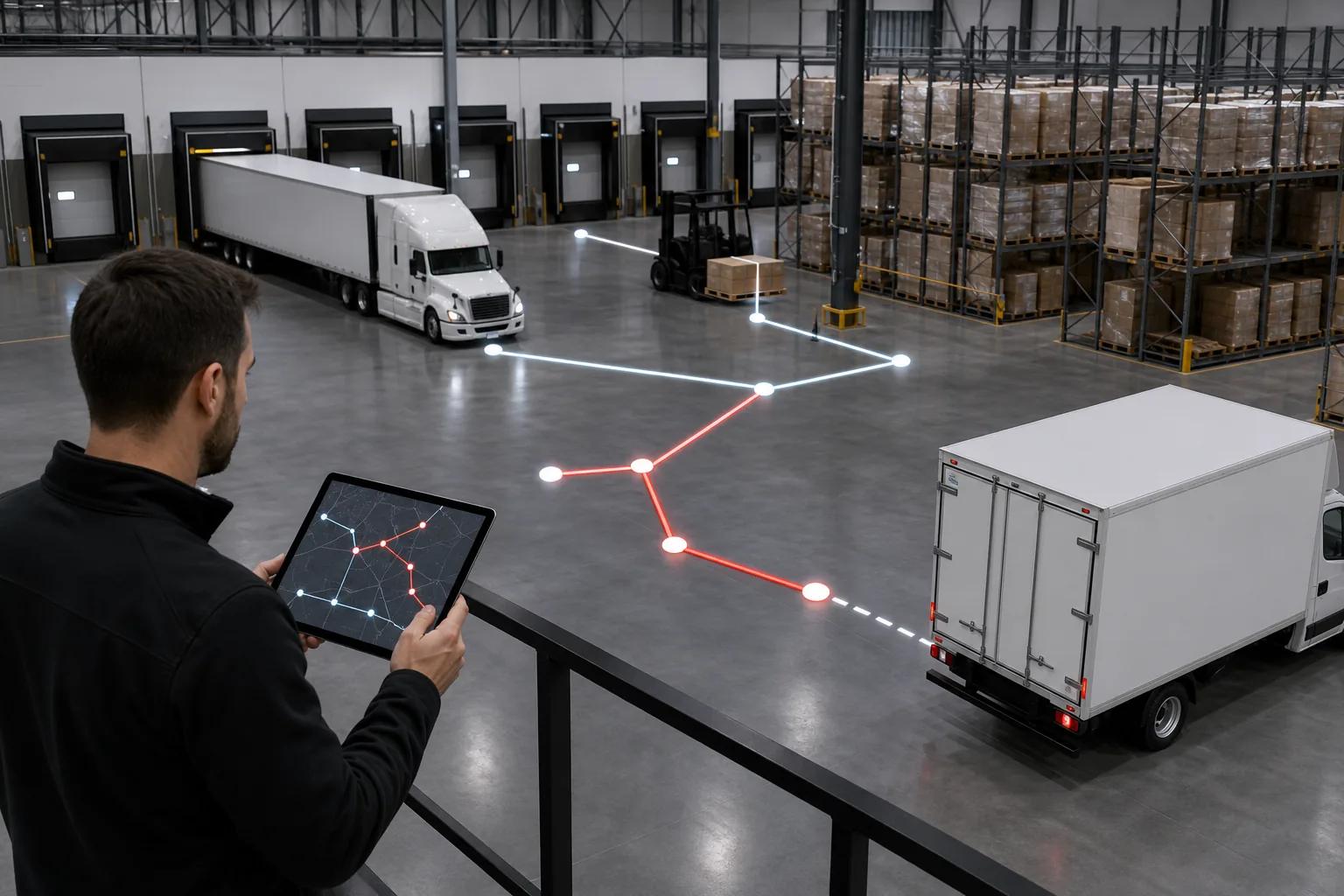
Supply chain costs can keep rising even after a tech rollout. AI automation can help cut waste, reduce manual work, and spot delays sooner, but savings depend on the workflow and the systems behind it.
Start with a cost you can measure. Then connect automation to that cost and track the result.
ByZylo Technologies | Updated October 6, 2026
We analyzed 8 top-ranking pages on AI automation for supply chain cost savings, including Cozentus, MHLNews, Deposco, Heizen.work, TechBullion, FourKites, and InsideLogistics, and found that none gave an explicit ROI formula and 5 of the 8 gave no pre-launch baseline-measurement method for proving savings.
What costs can AI automation actually reduce in a supply chain?
AI automation can reduce costs tied to excess inventory, manual processing, shipment delays, and avoidable rework. It does this by improving decisions or taking repeatable tasks off a person’s queue. The savings show up only when the team measures those costs before and after launch.
Inventory is a clear example. Better demand forecasts can help planners set stock levels that match sales patterns and supplier lead times. That may reduce cash tied up in slow-moving goods. It can also lower the risk of stockouts that trigger expensive rush orders.
Transportation costs can fall when a system flags late shipments sooner or helps teams choose a workable route. A shipment alert has value only if someone can act on it. If a delay notice arrives after the delivery window has passed, it may improve visibility without lowering cost.
There are less visible costs, too. A team may spend hours matching invoices, retyping order data, or asking for updates across email threads. Automation can cut that repeated work. It can also reduce errors that lead to charge disputes, returns, or a second round of data entry.
For a first project, write down the current cost in plain terms: labor hours per order, expedited freight spend, inventory carrying cost, or time to resolve a shipment exception. Our guide to AI automation for inventory management covers how stock workflows can be scoped and tracked.
Costs differ by company size because system count, transaction volume, and oversight needs differ. A small business may focus on one repetitive workflow. A mid-market firm may need links across a few core systems. An enterprise may need multi-site access rules, audit records, and a staged rollout. The useful budget is the one tied to those actual needs, not a generic price per company size.
Key Takeaway
Pick one cost with a clear baseline before you automate a broad supply chain function.
Where does AI automation create supply chain savings first?
The first savings often come from a high-volume workflow with repeatable steps and a clear cost when it goes wrong. That might be an exception queue, replenishment review, freight document check, or delay alert. It’s usually easier to prove a narrow workflow than a whole-network change.
Consider shipment exceptions. A system can watch carrier updates, flag a delivery that looks late, and route the case to the right team. The person then handles the issue while there’s still time to adjust a dock slot or notify a customer. The value is in the earlier handoff, not in the alert itself.
Inventory is another strong starting point when the data is usable. A forecast can help planners compare expected demand with stock on hand and supplier lead time. A workflow can then suggest a reorder for review. Start with recommendations before allowing automatic orders, especially when a wrong purchase would tie up cash or risk production.
Warehouse work may suit automation when staff repeat the same task across many orders. For example, a system might rank pick tasks or flag a mismatch between a scanned item and an order. Physical robots require a different investment and process review than software that routes a task. Don’t group those costs under one vague “AI” line.
Generative AI can help staff find answers in work instructions or summarize a long exception record. It can reduce the time spent searching, but it shouldn’t make an unreviewed commitment to a supplier or customer. Keep high-cost actions behind a human approval step.
For a focused rollout, our AI agent guide for supply chain optimization explains how workflow choice, data readiness, and guardrails fit together.
Lower transport cost and fewer empty miles may also support lower fuel use. Treat environmental impact as a measured outcome, not an automatic side effect. Record route distance, load, and delivery performance before making a claim about emissions.
What systems and data make supply chain AI automation work?
Supply chain AI needs reliable records and safe ways to act on them. The core data often sits across an enterprise resource planning system (ERP), warehouse management system (WMS), and transportation management system (TMS). If orders, stock, and shipment events don’t line up, the automation can make a bad decision faster.
Start by tracing one workflow from its trigger to its final action. For a shipment exception, that could mean a carrier update enters the TMS, the order record is checked in the ERP, and a task reaches the service or planning team. Confirm that each system uses the same order or shipment ID.
Data quality means more than clean spreadsheets. Check whether timestamps use a consistent time zone. Look for duplicate suppliers or products. Confirm that inventory records reflect what’s physically available, not only what a system expected to receive. These checks help explain why a model’s output can differ from a planner’s view of the day.
AI automation can span planning, logistics, and execution, which makes data integration important. In a live workflow, the important test is whether the system can read the right record and send a useful action back.
Some teams use several AI agents, each with a defined task. One may assess demand, another check inventory, and a control layer may decide which recommendations need review. That design can help with work across departments, but it adds more points to test. Set limits for what each agent can read and change.
Keep an audit trail. It should show the data used, the recommendation, the action taken, and who approved it when approval was needed. Set a manual override for costly actions. If a model changes or data quality slips, your team needs a way to pause automation and return to a known process.
Integration is often the slow part. Zylo Technologies builds custom automation systems that connect to existing operational systems and workflows. That approach is useful when a standard connector does not match how your orders, permissions, or exception paths work.
How should you measure the cost and ROI of supply chain automation?

Measure ROI by comparing the value of verified savings with the full cost of the system. Include the build, integration, data cleanup, staff review, software use, support, and later changes. A low initial quote can hide costs that appear once the system reaches production.
Use a baseline from a set period before launch. For a freight workflow, record exception volume, time to resolve each case, and avoidable fees. For inventory, track stock levels alongside stockouts and expedited orders. For manual processing, count the work hours and correction rate.
A simple formula is: ROI = (measured benefits − total project cost) ÷ total project cost. Use dollars for both sides of the calculation. If the project reduces labor hours, count the value only when the time is put to useful work or lowers a real expense. Don’t treat every saved minute as cash back.
Total cost of ownership (TCO) is the full cost of running the automation over a set period. A first-year view can include discovery and design, build work, connections to existing systems, model or hosting use, monitoring, staff training, and support. Keep one-time costs separate from recurring costs so you can see what the next year is likely to require.
Pricing can be project-based, subscription-based, value-based, or outcome-based. Project pricing ties payment to scoped delivery. Subscription pricing ties it to ongoing access. Value-based pricing links the fee to agreed business value. Outcome-based pricing makes payment depend on a defined result, so both sides need a precise measurement rule and a way to handle factors outside the provider’s control.
Run low, expected, and high cases before approving spend. Change assumptions such as eligible order volume, review time, and adoption rate. A small business may budget around a single workflow and a small set of system links. A mid-market team may need to account for more sites and handoffs. Enterprise budgets may also include role-based access, testing, and controls for each rollout stage.
Zylo Technologies reports six-week production cycles and roughly 3.4× median 12-month ROI across delivered roadmaps, as stated on its official site. Treat that as Zylo’s reported performance, not a forecast for your project. Your business case still needs a baseline, agreed scope, and a clear way to attribute savings.
For the measurement plan, our supply chain optimization process covers how teams can connect goals with data checks and ongoing monitoring.
Pro Tip
Agree on the baseline and savings formula before the pilot starts. Changing the measure after launch can make a weak result look strong.
What causes AI supply chain automation projects to miss their savings targets?
Projects miss savings targets when they automate the wrong workflow, rely on unreliable data, or stop measuring after launch. A strong model can’t fix a process that has no clear owner. It also can’t help if the team ignores its recommendations.
Vague goals are a common starting problem. “Use AI in logistics” doesn’t define a result. “Reduce the time to resolve a shipment exception while keeping service levels steady” gives the team a task it can test. Set a baseline and decide what would count as a useful change before work begins.
Integration can create hidden effort. A shipment record may have different IDs in carrier data and internal systems. A forecast may need a clean link to open orders before it can inform replenishment. Map the data path early, and test it with real records before you plan a wider release.
Change management matters because automation changes who sees a task and when. A planner may move from reviewing every order to checking exceptions. A warehouse lead may receive system-ranked tasks rather than a fixed list. Train people on the new handoff, and give them a clear way to flag a bad recommendation.
A pilot should run in stages. First, define the cost and scope. Then test the workflow in “shadow mode,” where the system makes recommendations but people still decide. Compare those recommendations with actual outcomes. After the team trusts the results, allow a limited set of actions, with approvals for decisions that carry high cost or risk.
Governance should cover permissions, audit records, data access, and rollback. Keep a human in control of unusual or high-impact decisions. Track model changes and workflow errors, then review them on a regular schedule. Automation is ongoing operations work, not a one-time software handoff.
For a pilot centered on a defined business problem, Zylo Technologies’ AI automation services are one option for designing and building custom workflows. Make the scope, ownership, and acceptance measures part of the discussion before committing to a rollout.
Don’t scale a pilot just because it runs. Scale when the measured savings hold up, staff can handle exceptions, and the system behaves within agreed limits.
Frequently asked questions
How does AI automation reduce supply chain costs?
AI automation can reduce costs by improving forecasts, reducing manual processing, and helping teams respond to delays sooner. Savings depend on the workflow and the quality of its data. Measure a specific cost before rollout, such as expedited freight or time spent resolving shipment exceptions, then compare it with the same measure after launch.
What supply chain task should a business automate first?
Start with a high-volume task that has repeatable steps and a clear cost when it goes wrong. Shipment exception handling can be a good candidate if the team spends time finding updates and routing cases. Check that the needed records are available and that staff can act on an alert before automating the workflow.
How do you calculate ROI for supply chain AI?
Compare measured benefits with the full cost of the system over the same period. Include build work, integration, ongoing software use, support, training, and human review. Count labor savings only when they reduce expense or free people for work that matters. Use low, expected, and high cases to test your assumptions.
Does AI automation replace supply chain planners?
AI automation can take on repeatable checks and surface exceptions, but people still need to review unusual cases and high-impact choices. A planner might spend less time collecting updates and more time resolving supply or delivery risks. Define which decisions the system can make and which require human approval before the pilot starts.
Conclusion
Choose one measurable cost and test an automation against it before expanding to more workflows. Start by documenting the current process, its baseline, and the systems it touches. Zylo Technologies can help assess a custom build if your workflow needs more than a standard connection, but the first step is a clear problem and a way to measure it.
Share this article
Author information coming soon.