
Most large enterprises don't choose multi-cloud on purpose. It happens when one division picks AWS for serverless, another leans on Azure for its Active Directory integration, and a third spins up Google Cloud for BigQuery analytics. Suddenly you have three clouds, three billing consoles, and no unified governance. The platforms below are built to fix exactly that , here are the eight best options, and who each one actually fits.
1. Zylo Technologies (Our Top Pick) — AI-driven multi-cloud orchestration
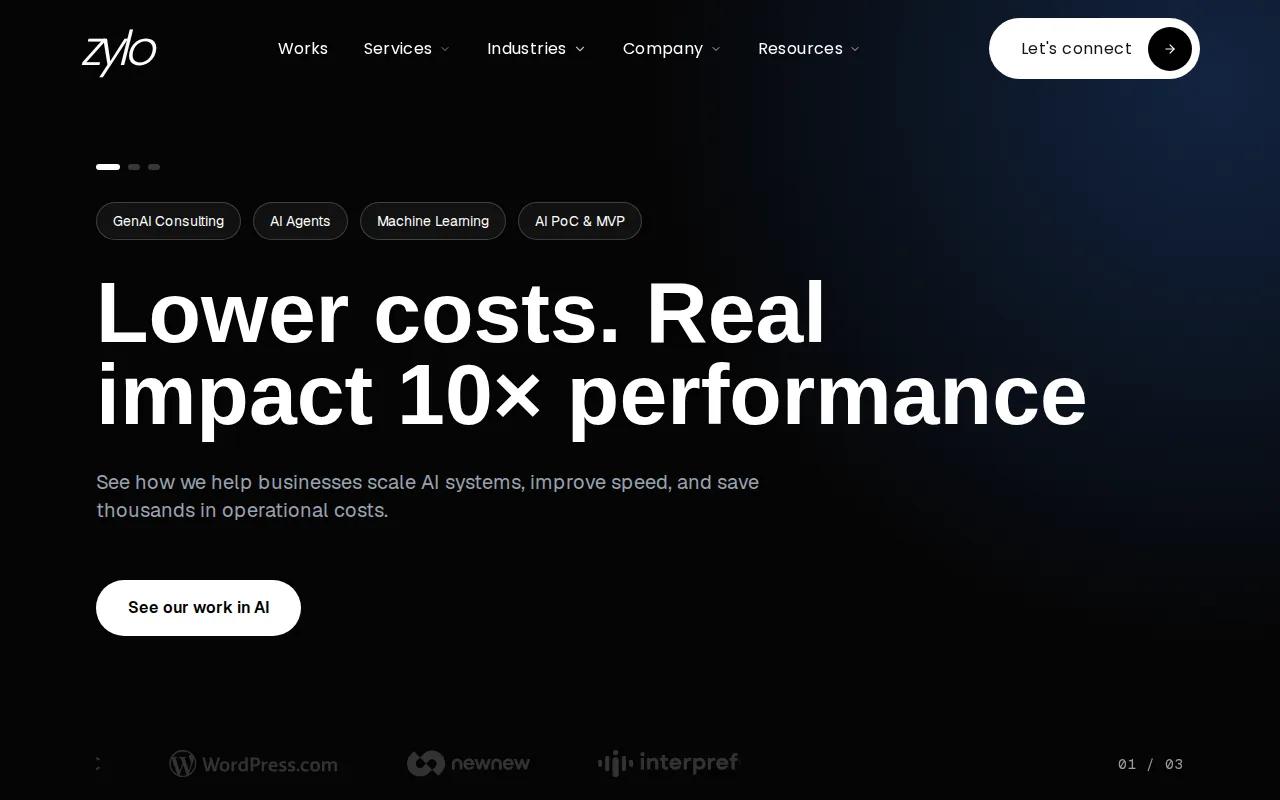
Zylo Technologies is a Denver-based AI automation and software engineering partner that designs and ships custom multi-cloud systems for enterprise teams. Founded in 2021, the firm has delivered 140+ production systems across fintech, healthcare, mobility, and enterprise operations.
Where most platforms give you a dashboard, Zylo gives you a purpose-built architecture. Their senior-only delivery pods design the orchestration layer, the governance model, and the automation pipelines together , so you're not stitching together three vendor tools and hoping they talk to each other. The six-week production cycle means your team isn't waiting quarters for a working system.
The positioning is direct: Zylo builds the durable plumbing that makes AI compound instead of decay. For a multi-cloud deployment, that means owning your data, your model, and the outcome , not renting a SaaS layer you can't modify when your compliance requirements change. Their documented median 12-month ROI of ~3.4× on delivered roadmaps reflects what happens when senior engineers scope tightly and ship fast.
The honest caveat: Zylo is a custom engineering partner, not an off-the-shelf platform. If your team needs a self-service portal tomorrow, a managed SaaS tool will be faster to activate. But if you need a system that fits your specific cloud mix, regulatory posture, and internal workflows, Zylo is the right call. You can explore their multi-cloud security and compliance framework to see how they approach unified governance across AWS, Azure, and GCP.
2. CloudToggle — Cost-focused multi-cloud management platform
CloudToggle is a multi-cloud management platform built around cost optimization, supporting AWS and Azure. It starts at $49/month for up to 15 servers , the only platform in this shortlist with a publicly disclosed price, which tells you something about how opaque this market is.
The platform's core value is a single control pane that lets ops teams monitor spend and performance across both providers without exposing underlying cloud account credentials. That RBAC model matters in enterprises where the finance team needs cost visibility but shouldn't have IAM access to production environments.
CloudToggle fits best for mid-size enterprise teams that run primarily on AWS and Azure and need cost governance fast. The $49 entry point is real, but large-scale deployments with dozens of accounts will push into custom pricing territory. Worth noting: it covers two providers, not three. If Google Cloud is a meaningful part of your stack, you'll need to supplement.
Pro Tip
Before committing to any multi-cloud management platform, map your data dependencies first. Egress fees between clouds can quietly destroy your ROI , a lesson the research consistently surfaces but vendors rarely advertise upfront.
3. HPE Morpheus — Enterprise-grade orchestration and governance
HPE Morpheus is a complete cloud management platform built for self-service provisioning, orchestration, and governance across AWS, Azure, GCP, and on-premises environments. AstraZeneca is a documented enterprise client, which gives it credibility in regulated industries.
The governance model is one of Morpheus's clearest strengths. According to Futurum Group's analyst review, Morpheus abstracts corporate governance so that authentication (Active Directory, MFA), role-based access, and compliance policies apply uniformly across all enrolled resources , public cloud and on-premises alike. Groups can be mapped to business units or specific compliance requirements, so a HIPAA workload and a dev sandbox operate under different rule sets without manual overhead.
The interface shows the full feature set of each cloud provider, not a lowest-common-denominator view. That matters when your platform engineers need native GCP tooling for ML workloads while your ops team manages AWS infrastructure from the same console. Morpheus also has an in-house HCI platform (MVM) in public beta for teams wanting to reduce VMware licensing dependency.
The limitation to watch: Morpheus is a platform with real depth, which means implementation takes time and internal expertise. It's not a two-week activation. Large enterprises with a mature cloud operations team will get the most out of it. Teams earlier in their cloud journey may find the configuration overhead steep before value shows up.
4. CloudBolt — Unified provisioning, FinOps, and policy engine
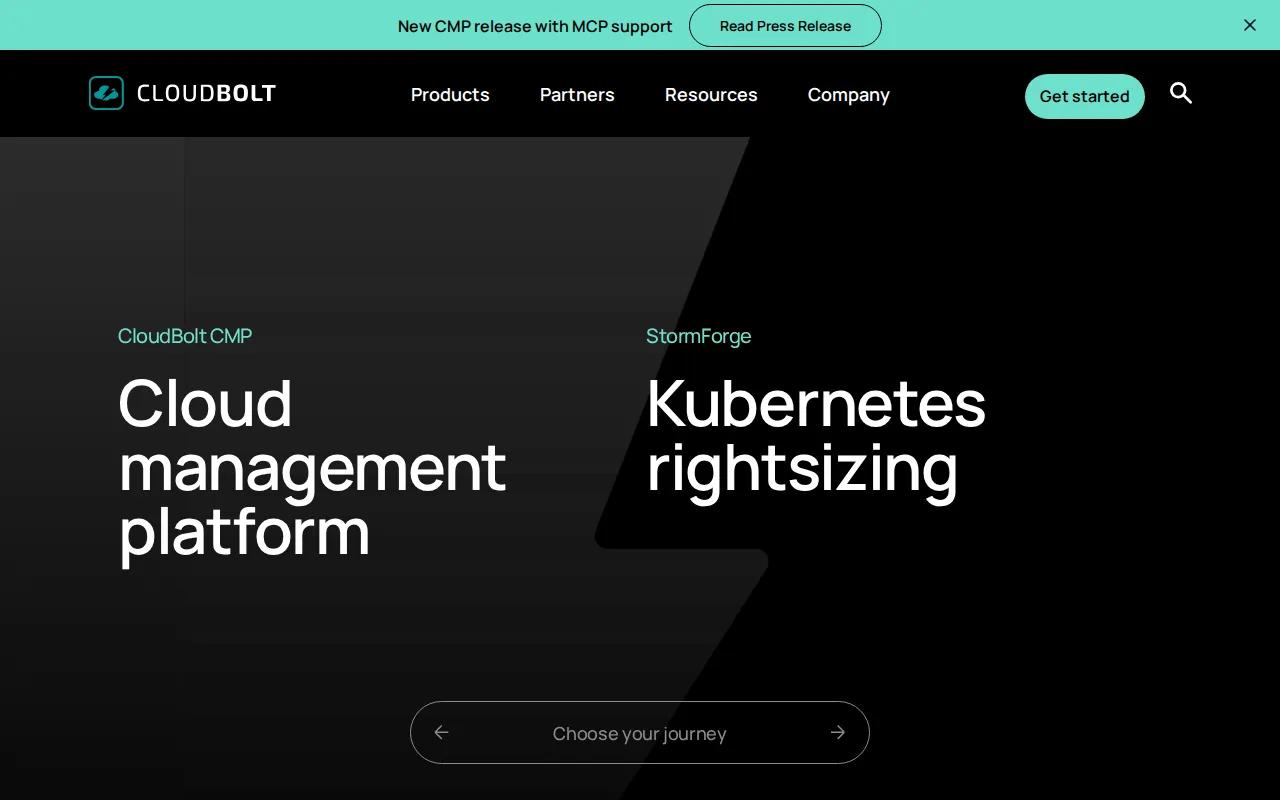
CloudBolt is a multi-cloud management and FinOps platform covering AWS, Azure, GCP, VMware, and Kubernetes. It combines provisioning, financial governance, and policy enforcement in one system, with multi-tenant views and detailed billing breakdowns.
The policy-driven governance model is what sets CloudBolt apart from pure cost tools. Ops teams can define provisioning rules that enforce tagging standards, budget caps, and security baselines at the point of resource creation , not after the fact. That's a meaningful difference when you're managing thousands of cloud resources across business units that each have their own spend habits.
CloudBolt's Kubernetes support also gives it an edge as container workloads grow. Many FinOps platforms treat Kubernetes cost allocation as an afterthought. CloudBolt surfaces it in the same governance layer as VM and serverless spend, which is closer to how modern enterprise architectures actually work. For teams running cloud migration programs that include container-based workloads, that unified view reduces blind spots significantly.
Pricing is custom. There's no public rate card, so budget conversations happen during the sales process. Factor that into your evaluation timeline.
5. Flexera One — SaaS suite for hybrid and multi-cloud spend and compliance
Flexera One is a SaaS suite covering hybrid and multi-cloud management across AWS, Azure, and GCP. Its governance scope is broader than most: it handles software licensing and compliance alongside cloud spend, which makes it relevant for enterprises where SaaS sprawl and cloud sprawl are two sides of the same problem.
That licensing angle is genuinely useful. Large organizations often carry significant on-premises software agreements that interact with cloud usage in non-obvious ways. Flexera One surfaces those intersections , for example, flagging when cloud VM configurations trigger additional Microsoft licensing costs that wouldn't appear in a standard cloud cost report.
The trade-off is scope versus depth. Flexera One is wide by design, covering IT asset management, SaaS management, and cloud governance in one platform. Teams that want deep FinOps analytics or granular policy enforcement at the infrastructure layer may find it less precise than purpose-built tools like CloudBolt or IBM Apptio Cloudability. It fits best for enterprises that need a single system of record across their entire technology spend, not just cloud.
Key Takeaway
Only one platform in this shortlist (CloudToggle) discloses public pricing. For every other option, budget conversations happen during vendor negotiations , build that timeline into your evaluation process.
6. IBM Apptio Cloudability — Cloud-cost analytics and budgeting platform
IBM Apptio Cloudability is a FinOps platform focused on cost management, budgeting, forecasting, and anomaly detection across multiple cloud environments. IBM's hybrid multicloud practice has Delta Air Lines as a documented enterprise client, which reflects the scale this tooling is designed for.
The forecasting and anomaly detection capabilities are where Cloudability earns its place in large enterprise stacks. Most cost tools show you what you spent. Cloudability surfaces trends, flags unusual spend patterns before they become budget overruns, and provides the allocation data finance teams need for chargeback models. That's the difference between a reporting tool and a financial governance system.
According to IBM's own multicloud strategy documentation, their approach treats hybrid multicloud as a core architectural principle , not a bolt-on. That philosophy shows in Cloudability's integration with the broader IBM ecosystem, which is an advantage if you're already in that orbit and a friction point if you're not. Standalone adoption is possible, but the platform's full value shows up when it connects to IBM's wider cloud and AI tooling.
7. VMware Aria Cost — Granular cost allocation with policy enforcement
VMware Aria Cost is a FinOps platform covering AWS, Azure, GCP, and Kubernetes, with a focus on granular cost allocation and policy-based automation. It's the right tool when your finance team needs showback and chargeback models that go deeper than account-level groupings.
The policy enforcement layer runs alongside cost allocation rather than separately. That means you can set a rule that automatically rightsizes idle resources when spend exceeds a threshold, rather than generating a report that a human has to act on later. For large organizations running hundreds of accounts, that automation gap between insight and action is where cost savings actually disappear.
VMware Aria Cost fits well in environments that already run VMware infrastructure alongside public clouds. The on‑premises visibility it provides in that context is hard to replicate with cloud‑native tools. Teams considering how to scale AI systems across large organizations will find the Kubernetes cost allocation particularly relevant as ML workloads grow. The caveat: recent licensing model changes at VMware have caused some enterprises to reassess vendor risk, so factor that into your long‑term assessment.
8. Nutanix Cloud Manager — Unified hybrid management with compliance posture
Nutanix Cloud Manager is a unified management platform for hybrid multi-cloud environments, with policy-based compliance and posture management as a core feature rather than an add-on. It covers public clouds alongside Nutanix's own HCI infrastructure.
The compliance posture management is what distinguishes it from pure cost tools. Nutanix Cloud Manager continuously evaluates your environment against defined policies and surfaces misconfigurations before they become audit findings. For regulated industries , financial services, healthcare, government , that continuous posture monitoring reduces the manual effort of pre-audit preparation significantly.
Cost governance with cost allocation and showback is included, but it's not the primary focus. If FinOps depth is your first priority, CloudBolt or IBM Apptio Cloudability will serve you better. Nutanix Cloud Manager fits best for enterprises that run Nutanix HCI on-premises and want a single management layer that extends naturally into public cloud without requiring a separate governance tool. The enterprise cloud architecture decisions that shape your hybrid model will largely determine whether Nutanix's unified approach is a fit or an overcomplicated layer.
How to Choose the Right Multi-Cloud Platform
The research across 28 platforms reveals a real problem: most vendors document automation capabilities well, but only 54% mention governance features and just 25% disclose security controls. None publish implementation timelines. That means you're evaluating on marketing claims, not operational reality.
Four questions cut through the noise:
- What's your primary pain? Cost sprawl points to Cloudability or CloudBolt. Compliance posture points to Nutanix or Morpheus. Custom architecture points to Zylo Technologies.
- How many clouds do you actually run? CloudToggle covers two. Most others cover three. Custom builds can cover any combination.
- Do you need to own the system? SaaS platforms retain the architecture when you stop paying. Custom builds give you the asset , which matters when the automation is a core operational dependency.
- What's your regulatory exposure? Healthcare, fintech, and government environments have data residency and compliance requirements that many SaaS platforms can't meet at the architecture layer. Ask vendors for explicit documentation, not just a checkbox on a compliance page.
As IBM's multicloud research notes, each cloud provider requires a unique security and compliance approach , trying to force one governance model across all providers is the most common mistake large enterprises make. The right platform is the one that lets you apply cloud-specific controls while rolling them up to a single enterprise standard. For teams evaluating managed cloud services for large companies, that governance architecture question should come before the vendor demo.
FAQ
What is a multi-cloud strategy for large organizations?+
A multi-cloud strategy is the deliberate use of services from two or more public cloud providers to run an organization's workloads. Large organizations adopt it to avoid vendor lock-in, access best-of-breed services from each provider, and build resilience against regional outages. According to Wikipedia's definition of multicloud, it differs from hybrid cloud in that interoperability between clouds is not a strict requirement, though most enterprises pursue both.
What are the biggest risks of running multiple clouds at once?+
The biggest risks are governance gaps, data egress costs, and skill fragmentation. Each cloud has its own security model, so a single compliance policy rarely applies cleanly across all providers. Data movement between clouds carries egress fees that can quietly erode ROI. And teams need deep expertise in each provider's tooling , which is expensive to build and maintain simultaneously.
How long does it take to implement a multi-cloud management platform?+
None of the major platforms publicly disclose implementation timelines , a gap the research across 28 vendors confirmed. In practice, SaaS tools like CloudToggle can activate in days for basic visibility. Platforms with deep governance layers like HPE Morpheus or CloudBolt typically take weeks to configure properly. Custom-built orchestration systems, like those Zylo Technologies delivers, run on defined six-week production cycles for initial production deployment.
Do I need a Cloud Center of Excellence (CCoE) before adopting multi-cloud?+
You don't need a fully formed CCoE first, but you do need someone accountable for cloud governance before you add a second provider. Without that ownership, multi-cloud defaults to uncoordinated sprawl , different teams picking different clouds for different reasons with no shared standards. A CCoE can grow alongside your multi-cloud program, but governance accountability needs to exist from day one.
How do I control costs across multiple cloud providers?+
Cost control across clouds requires three things: unified visibility into spend (a single dashboard covering all providers), allocation tagging that maps spend to teams or products, and automated enforcement that acts on idle or oversized resources rather than just reporting them. FinOps platforms like IBM Apptio Cloudability and CloudBolt handle this well. The hardest part is consistent tagging discipline , that's a people and process problem, not a tool problem.
Can a small internal team manage a multi-cloud environment?+
Yes, with the right platform or partner. The key constraint is expertise depth , each cloud provider's tooling is genuinely different, and expecting one person to be expert in AWS, Azure, and GCP simultaneously is unrealistic. Small teams typically succeed by using a management platform that abstracts provider differences, or by working with an engineering partner like Zylo Technologies that brings senior cloud expertise without requiring you to hire it permanently.
Conclusion
If you're running a large organization and the question is where to start, the honest answer is: with governance, not tooling. Pick the platform that fits your primary pain , cost, compliance, or custom orchestration , and make sure it documents its security controls before you sign. For teams that need a purpose-built system rather than a SaaS layer, Zylo Technologies is the right starting point. Explore their enterprise AI strategy consulting to see how they approach multi-cloud architecture as part of a broader operational system.
Share this article
About the author

Chief AI Officer and former NVIDIA AI Consultant specializing in enterprise AI strategy and digital transformation.
Author at Zylo
Dr. Aliya Nur Balisani is an AI leader focused on helping organizations adopt artificial intelligence in practical and profitable ways. With experience in enterprise AI strategy, automation, and emerging technologies, she provides insights on generative AI, autonomous systems, business transformation, and the future of intelligent enterprises.