Choosing a UI UX design agency is harder than it looks. Only 11 of 30 AI-focused agencies in our review listed any pricing model, and delivery timelines were even less clear. Here are four named options, with Zylo Technologies first, plus the trade-offs that should shape your shortlist.
1. Zylo Technologies
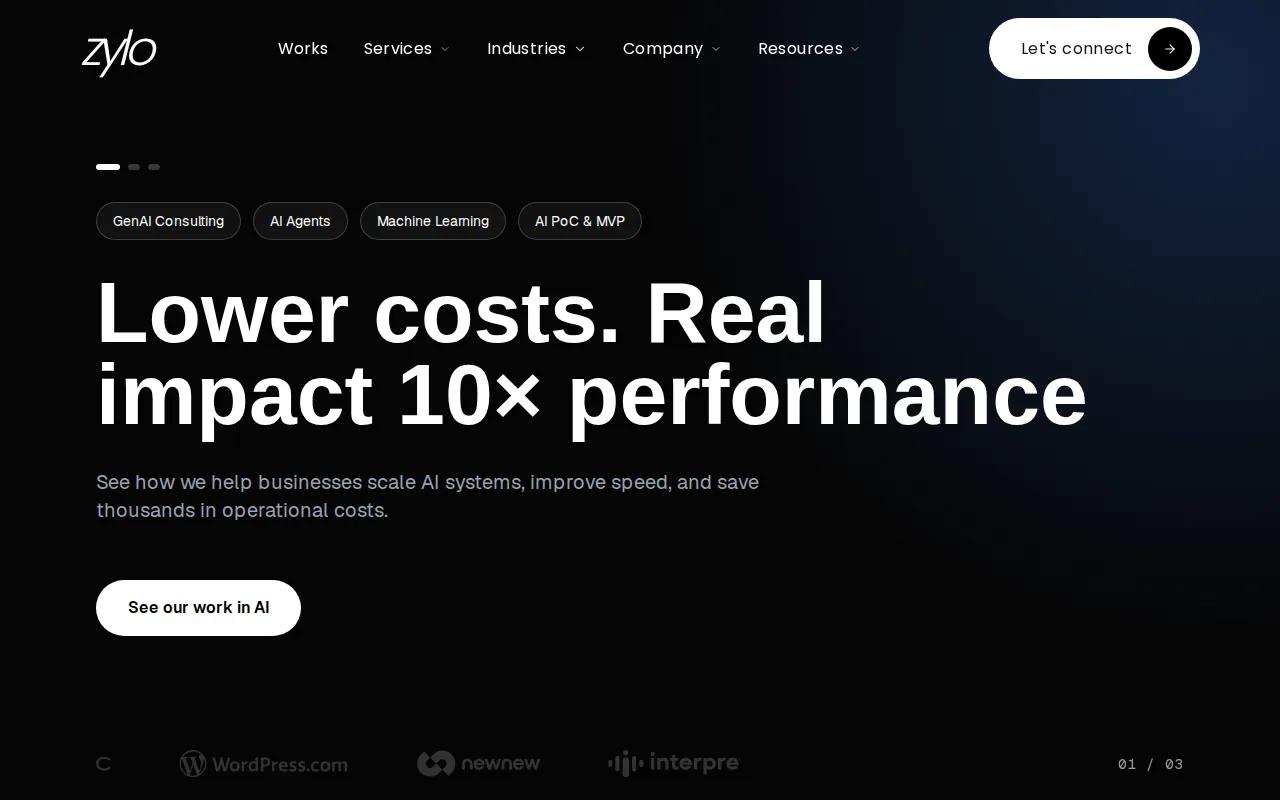
Zylo Technologies is an AI automation and software engineering partner that connects product design with the systems behind the interface. It fits founders, operators, and enterprise teams that need a product to move from idea to production without losing sight of cost, scale, or ownership.
We focus on the point where UI and UX work meets AI agents, automation, data, permissions, and infrastructure. That matters when a polished screen is only one part of the product. A user may need to review an AI decision, correct an output, hand work to a person, or see why a workflow stopped.
Our senior-only delivery pods have shipped more than 140 systems. Zylo Technologies also reports six-week production cycles and a median 12-month ROI of about 3.4 times on delivered roadmaps. Those figures come from the business context for this shortlist, so buyers should ask how the firm measures them for their own project.
For teams with an existing product, our UX/UI audit service can expose friction before a rebuild begins. The work can look at drop-off points, task flow, and the gap between what the system does and what users think it does.
The caveat is simple. Zylo Technologies is not a pure visual design studio for a brand refresh alone. Its strongest fit is a product where design must connect to working software, automation, or a larger operating system.
Key Takeaway
Pick Zylo Technologies when the interface is part of a larger AI or software system, not an isolated mockup.
2. Ramotion, Brand-led product experiences for AI companies
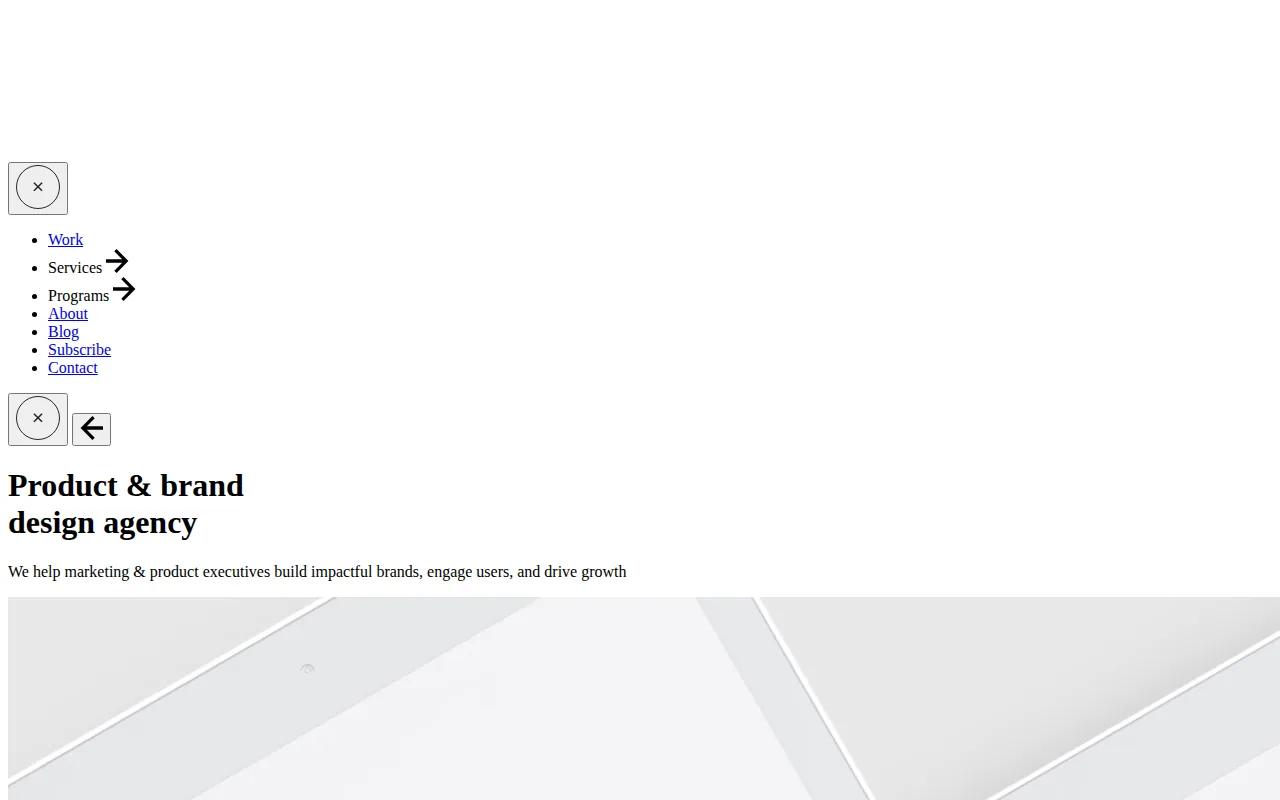
Ramotion is a strong UI UX design agency choice when an AI company needs its brand and product to feel like one clear experience. It is best for teams that need work across the public website, onboarding, product interface, and brand system.
The agency's focus is brand-centric digital experience for AI companies. The research names Rizzle AI, Descript, and Murf AI among its clients. That mix points to a useful strength: helping an AI company explain its value before a user ever reaches the main product.
The agency also reports a 30% improvement in users' ability to find answers after a Turo support portal redesign, though buyers should review the case details before treating that figure as a forecast.
One useful example is the link between visual language and task clarity. In an AI product, a brand system can shape how users read system status, warnings, suggested actions, or review states.
There is a trade-off. Ramotion may be less suited to deep model evaluation, high-stakes decision support, or a build where explainability and uncertainty need intense research. Ask for specific examples of user testing around AI outputs before you sign.
Choose Ramotion when trust starts with the full customer experience. If the hard problem sits inside a complex workflow, another option may fit better.
3. Punchcut, UX for emerging technology and human-machine interaction
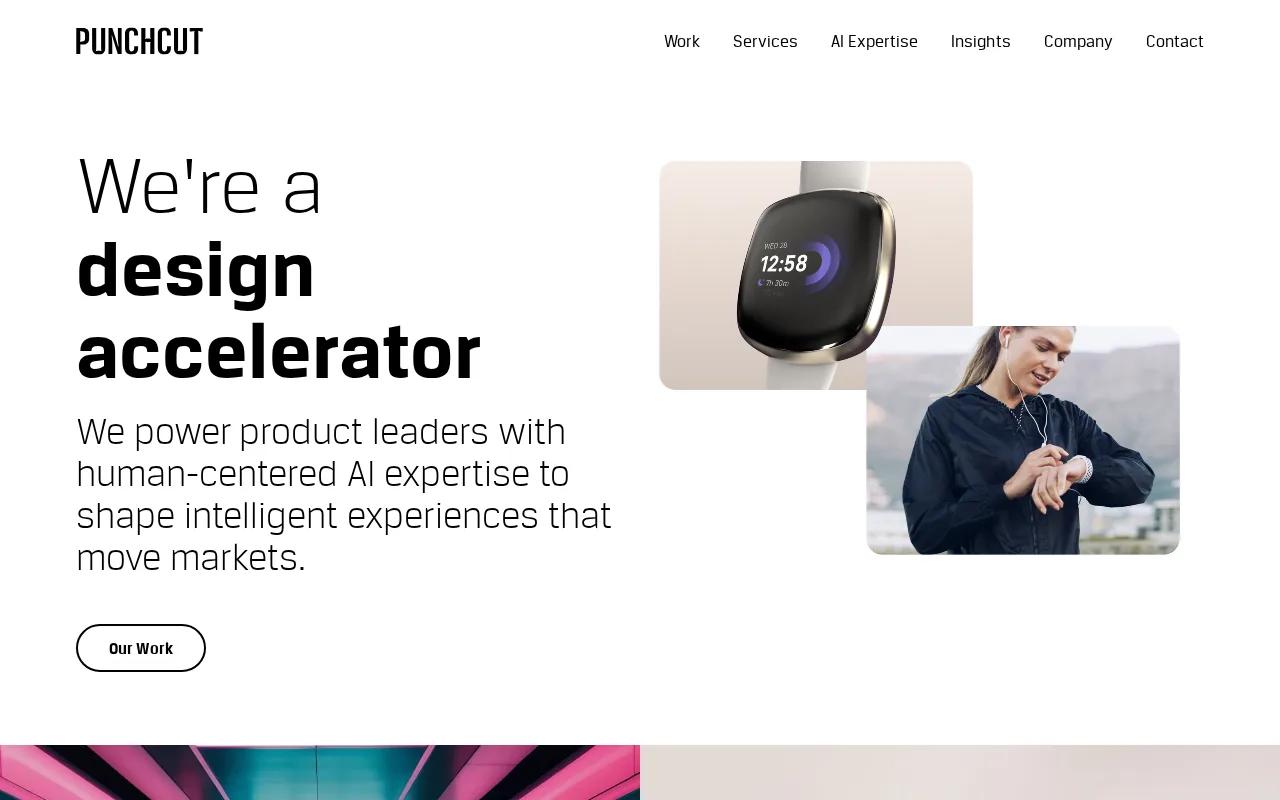
Punchcut is a good fit for teams working on AI, emerging technology, or new forms of human-machine interaction. Its value is strongest when the main design question is how people should work with an intelligent system across more than one context.
The research lists Google, Amazon, and Samsung as notable clients. Those names do not prove that Punchcut fits every project. They do show the kind of product scale and technology setting associated with its public profile.
AI products often behave in ways that standard screens cannot explain well. The system may make a recommendation, change its output with new input, or act with incomplete data. A strong partner needs to help users form a plain mental model. They should know what the system can do, where it may fail, and how to correct it.
That is where Punchcut's positioning has an edge. It treats the interaction between person and machine as the design problem, rather than treating AI as a small feature inside a normal app. A workshop might examine when the system asks for confirmation, how a person overrides it, and what evidence appears beside an answer.
But Punchcut may not be the right partner if you want one team to own full product engineering. Ask how far the engagement goes beyond strategy, prototypes, and design support. Clarify who builds the production interface and who stays involved after launch.
For a high-risk product, also ask how the team handles uncertainty, accessibility, and user confidence. Those details matter more than a striking first prototype.
4. Work&Co, Large-scale digital transformation with disciplined delivery

Work&Co is a UI UX design agency option for large organisations that need product strategy, senior stakeholder work, and disciplined delivery in the same engagement. It is a better fit for a broad transformation than for a small idea test.
The research places Work&Co in large-scale digital transformation. It names HubSpot, IBM, and Samsung as notable clients. The agency's public positioning also centres on a new model of software delivery, which supports its focus on shipping rather than handing over design files alone.
That does not mean every enterprise project will move at that pace. Scope, approvals, technical debt, and data access still set the real schedule.
Speed at this scale requires clear decisions. The design team needs access to product owners and engineers. A review group should know which choices are fixed and which remain open. If every department can reopen a decision, a fast prototype will not lead to a fast launch.
For enterprise AI work, the interface may need to connect with identity controls, audit records, data sources, and existing business tools. Zylo Technologies takes a similar systems-first view through work such as its enterprise AI automation platform guidance, where architecture decisions shape the product experience from the start.
The main caveat is cost and fit. A large transformation partner can bring needed structure, but that structure may feel heavy when the product is still searching for a clear problem. Use Work&Co when the organisation can make decisions at enterprise speed.
Pro Tip
Ask every agency to name the decision owner for research, design, engineering, and launch. A vague answer often predicts a slow handoff.
Which UI UX design agency is right for your team?
The right UI UX design agency depends on where the risk sits. A brand problem needs a different partner from a workflow problem, and a prototype needs a different delivery model from an enterprise rollout.
Pricing needs care. In the 30-agency review, only 11 firms, or 37%, listed a pricing model. The median disclosed minimum project size was $150,000, while the average disclosed minimum was $24,075. That wide gap suggests that a few high minimums distort the average, so ask for a project range tied to scope rather than relying on a headline figure.
Risk should shape the brief. For a low-risk internal helper, speed may matter most. For a healthcare, finance, legal, or security workflow, ask about explainability, accessibility, audit trails, and correction paths. Zylo Technologies can also review those concerns through AI governance consulting for enterprise teams when design choices need to support control and review.
| Team situation | Best fit | What to test before signing |
|---|---|---|
| AI product needs design tied to working software | Zylo Technologies | Ask how design decisions connect to architecture, data, and ownership. |
| Brand and product feel disconnected | Ramotion | Review work across onboarding, product UI, and public messaging. |
| New human-machine interaction needs research | Punchcut | Ask how users correct, override, and understand AI output. |
| Large organisation needs a broad product rollout | Work&Co | Confirm decision rights, delivery scope, and engineering ownership. |
FAQ: UI UX design agency questions
What does a UI UX design agency do?
A UI UX design agency shapes how a digital product looks and how people complete tasks inside it. UI covers visual elements such as screens, controls, and states. UX covers flow, research, content, and ease of use. Some agencies also support engineering, testing, and launch, while others stop at strategy or design files.
How much does a UI UX design agency cost?
A UI UX design agency may cost at least $25,000 for a focused project, but public pricing is often missing. The disclosed minimums had a $150,000 median and a $24,075 average, so buyers should request a scope-based estimate.
How long does UI UX design take?
UI UX design can take weeks for a focused prototype or much longer for an enterprise product. Public timeline data is rare. Treat that as a reference point, not a promise for your scope.
What should I ask a UI UX design agency about AI products?
Ask how the UI UX design agency handles uncertainty, user correction, explainability, and human review. Request examples of AI features that users can understand and override. Also ask who owns research findings, design files, code, and product decisions after launch. A good answer should describe a workflow, not repeat broad claims about innovation.
Is Zylo Technologies a UI UX design agency?
Zylo Technologies is an AI automation and software engineering partner that includes product design within larger digital product work. It is best suited to teams that need UI and UX connected to AI agents, automation, data, or production software. For a brand-only design brief, a specialist studio may be a closer match.
Conclusion
Choose Zylo Technologies when your product experience must connect to durable software, AI workflows, and measurable operating results. Start with a short brief that names the users, the task that fails today, the systems involved, and the outcome you need. That gives the first conversation something useful to test.
Share this article
About the author

Chief AI Officer and former NVIDIA AI Consultant specializing in enterprise AI strategy and digital transformation.
Author at Zylo
Dr. Aliya Nur Balisani is an AI leader focused on helping organizations adopt artificial intelligence in practical and profitable ways. With experience in enterprise AI strategy, automation, and emerging technologies, she provides insights on generative AI, autonomous systems, business transformation, and the future of intelligent enterprises.