
AI cloud bills have a way of arriving before anyone's ready for them. Token costs compound, GPU instances idle, and by the time finance notices, the damage is done. These 10 tools give engineering and FinOps teams real control over AI spend, from pre-execution budget enforcement to autonomous Kubernetes rightsizing, so costs stay tied to outcomes, not surprises.
1. Zylo Technologies (Our Top Pick) — Senior-only AI cost engineering
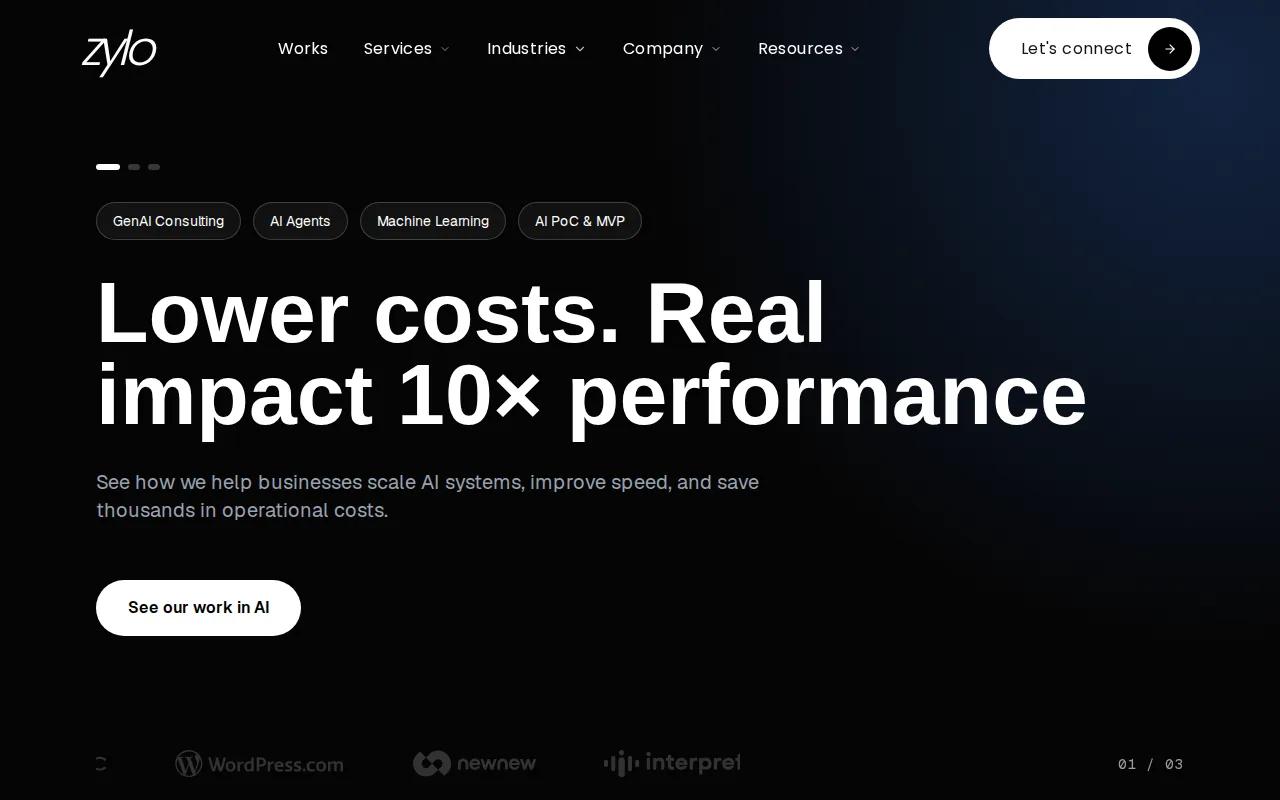
Zylo Technologies is an AI automation and software engineering partner that designs and ships custom AI agents, automation systems, and digital products. Where most cost tools give you a dashboard, Zylo gives you a senior engineering team that fixes the architecture driving the spend.
Our cloud cost optimization service applies a proven FinOps framework across AWS, Azure, and Google Cloud, identifying idle spend, rightsizing workloads, and building the governance layer that keeps AI costs predictable at scale. We typically surface quick-win savings within three weeks.
The senior-only delivery model matters here. AI cost problems are architecture problems. A junior team can read a dashboard; a senior pod can redesign the inference pipeline, separate compute tiers, and implement token budget controls that reduce API spend by 60, 80% at volume without touching output quality. We've shipped 140+ systems and report a ~3.4× median 12-month ROI on delivered roadmaps.
Caveat: Zylo is a hands-on engineering partner, not a SaaS tool you spin up in an afternoon. If your priority is a self-serve dashboard today, start with one of the platforms below and bring Zylo in when you need the architecture work done right.
2. Finout — Unified AI spend visibility for finance & engineering
Finout is a cloud cost management platform built for engineering and finance teams running multi-cloud, Kubernetes, and SaaS infrastructure across AWS, Azure, and GCP. Its core value is a single pane of glass that maps spend to the teams, products, or features generating it.
For AI workloads, that means finance can see which model deployment is burning budget without waiting for an engineer to pull a report. The platform ingests cost data from multiple providers and surfaces it in a shared view that both sides of the organization can actually use.
Mid-to-large enterprises with dedicated FinOps functions get the most from Finout. Smaller teams without a FinOps practice may find the platform's depth exceeds what they can operationalize quickly. Worth noting: AI-specific cost features are present in only 56% of platforms reviewed in our July 2026 research, so confirming token-level granularity before committing to any tool is worth the time.
3. TrueFoundry — Pre-execution budget enforcement for regulated AI
TrueFoundry targets large enterprises with regulated AI workloads that need enforced cost controls, not just visibility after the fact. Its key differentiator is budget enforcement at the gateway layer, which means spend limits are applied before a request executes, not after the bill arrives.
That pre-execution model matters in regulated industries. In healthcare or fintech, a runaway inference job isn't just expensive, it can create compliance exposure. TrueFoundry's intelligent routing also steers requests toward lower-cost models when the task doesn't require the most capable (and most expensive) option.
If your team runs AI workloads in a regulated environment and needs auditable cost controls baked into the request path, TrueFoundry earns serious consideration. Teams without a compliance mandate may find the governance overhead more than they need.
4. CloudZero — Feature-level AI cost attribution across clouds
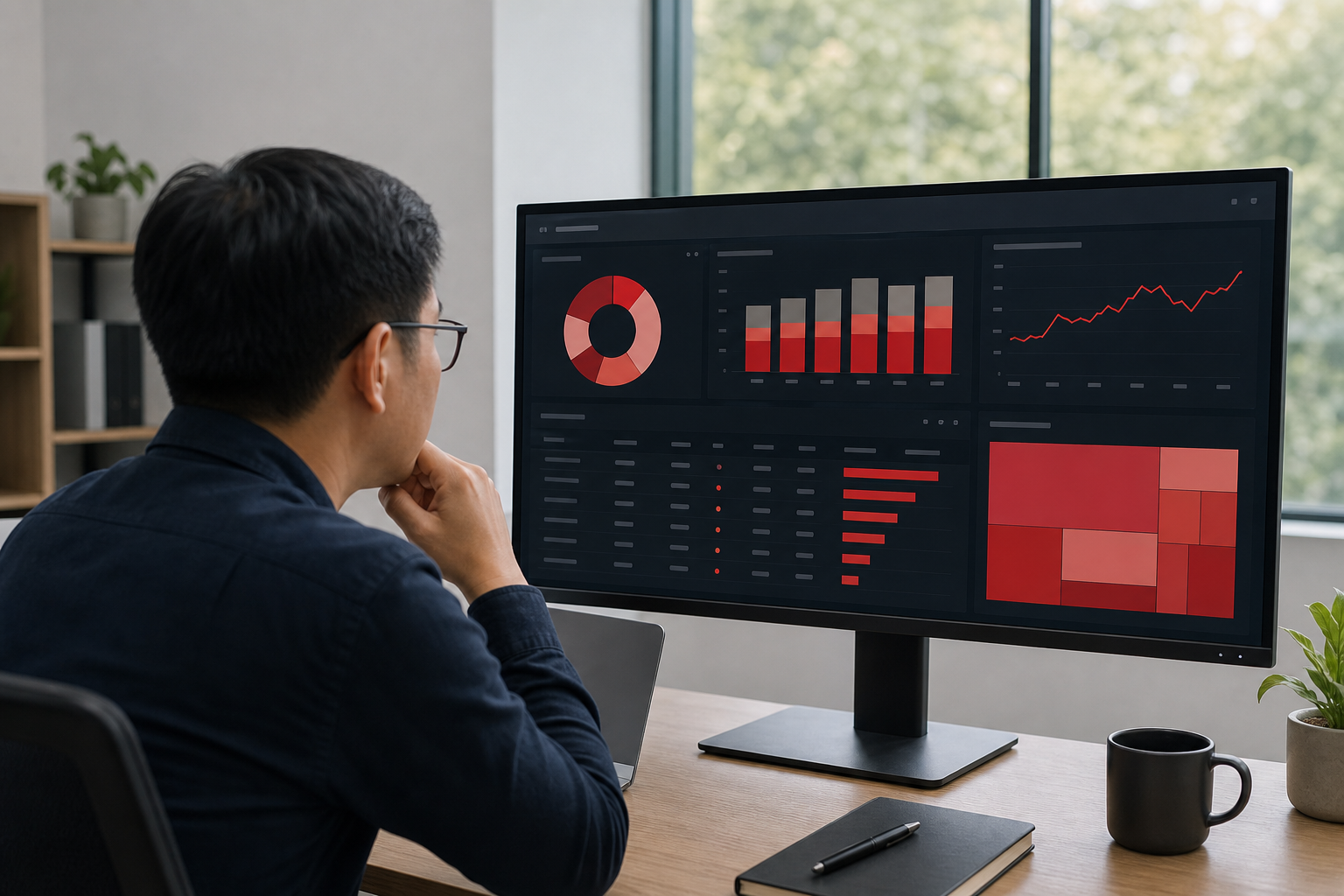
CloudZero gives finance and engineering teams unit economics visibility across cloud environments, meaning you can see cost-per-request or cost-per-feature, not just aggregate cloud spend. For AI workloads, that translates to cost-per-inference attribution that connects cloud bills to the product decisions driving them.
That level of attribution changes the conversation. Instead of debating whether AI is expensive in general, your team can point to a specific feature, model version, or customer segment and show exactly what it costs to serve. That makes prioritization decisions faster and more defensible.
CloudZero works best for teams that already have a FinOps practice and want to go deeing. Teams without existing cost allocation discipline may struggle to get full value from the attribution layer without first establishing tagging and ownership conventions.
Pro Tip
Before onboarding any cost attribution tool, audit your cloud resource tagging. Tools like CloudZero depend on consistent tags to map spend to features or teams, untagged resources show up as unallocated cost, which defeats the purpose of attribution entirely.
5. Vantage — Centralized multi-cloud AI spend dashboard
Vantage is built for FinOps and platform teams managing AI workloads across multiple cloud providers who need unified observability in one place. Its AI-specific features include token usage tracking, which puts it ahead of the majority of cost platforms that still lack any AI-native cost breakdown.
The centralized dashboard means a platform team managing workloads on AWS, Azure, and GCP doesn't need to context-switch between three billing consoles to understand total AI spend. Vantage pulls it together and surfaces the signals that matter: token consumption trends, cost-per-model comparisons, and budget variance alerts.
Teams already standardized on a single cloud provider may find Vantage's multi-cloud breadth more than they need. The deeper value shows up when you're genuinely operating across providers and need a single source of truth.
6. nOps — Automated AWS AI compute rightsizing and spot recommendations
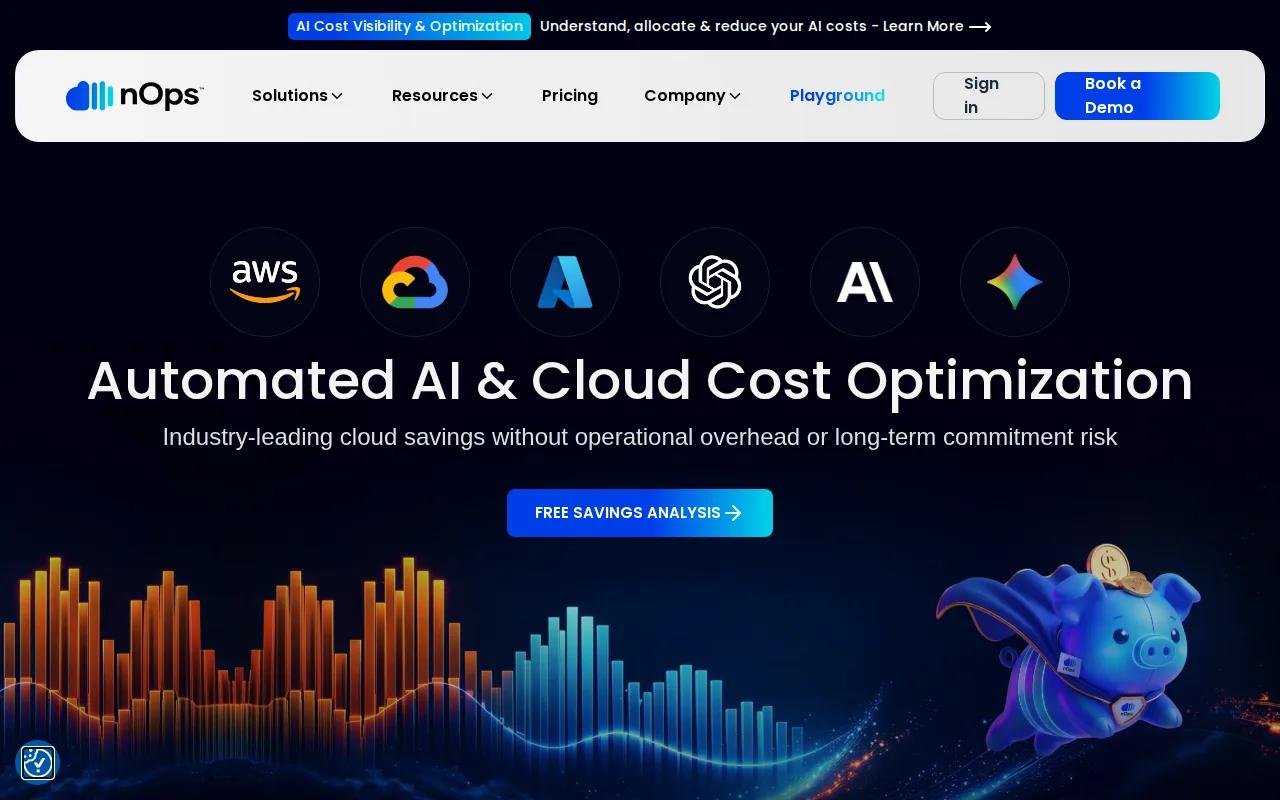
nOps focuses on infrastructure engineers managing AI applications on AWS who need automated cost efficiency rather than manual analysis. Its core capability is automated compute recommendations, spot-instance suggestions and rightsizing for AI workloads, that reduce the labor cost of optimization alongside the compute cost.
The spot-instance strategy deserves attention here. For AI inference workloads that can tolerate interruption (batch jobs, offline processing, non-real-time pipelines), spot instances on AWS can cut compute costs significantly compared to on-demand pricing. nOps automates the identification and scheduling logic that makes that viable at scale, which is work most teams don't have bandwidth to do manually.
nOps is AWS-specific. If your AI workloads span multiple cloud providers, you'll need a complementary tool for the non-AWS portion. But for AWS-heavy teams, the depth of automation it brings to compute optimization is hard to match with a multi-cloud generalist tool. As noted in our research, the deepest automation, rightsizing, spot recommendations, GPU time-slicing, tends to live in narrowly focused tools rather than broad platforms.
7. Sedai — Autonomous Kubernetes AI resource management
Sedai targets teams running self-hosted AI applications on Kubernetes who want autonomous resource management rather than manual tuning. It continuously adjusts resource allocations based on actual workload behavior, which means your Kubernetes pods aren't over-provisioned during quiet periods or starved during traffic spikes.
For AI workloads specifically, that continuous adjustment matters because inference demand is rarely flat. A model serving real-time requests sees traffic patterns that shift by hour, day, and product release cycle. Static resource allocations either waste money during low periods or degrade performance during peaks. Sedai closes that gap without requiring an engineer to manually tune limits.
Teams without Kubernetes infrastructure won't find a use for Sedai. And teams that prefer explicit human approval before resource changes may find fully autonomous adjustment uncomfortable, worth evaluating the control model carefully before deploying in production.
8. Holori — Multi-cloud FinOps platform with AI spend insights
Holori is a multi-cloud FinOps platform that gives infrastructure cost insights across providers. For FinOps teams managing AI infrastructure across cloud environments, it provides the observability layer needed to track where AI spend is going and how it's trending over time.
The platform sits in the visibility and governance tier of the FinOps stack, it helps teams understand their spend picture and build the reporting structure that supports cost accountability across engineering teams. That's a necessary foundation before deeper optimization work can happen.
Holori fits best when the primary need is unified observability and FinOps reporting rather than automated remediation. Teams that need active rightsizing or autonomous resource management should pair it with a more execution-focused tool.
Key Takeaway
Visibility tools like Holori and Vantage tell you where money is going; execution tools like nOps and Sedai act on that information automatically. Most mature FinOps stacks need both layers.
9. Amnic — Agentless read-only AI and cloud allocation tracking
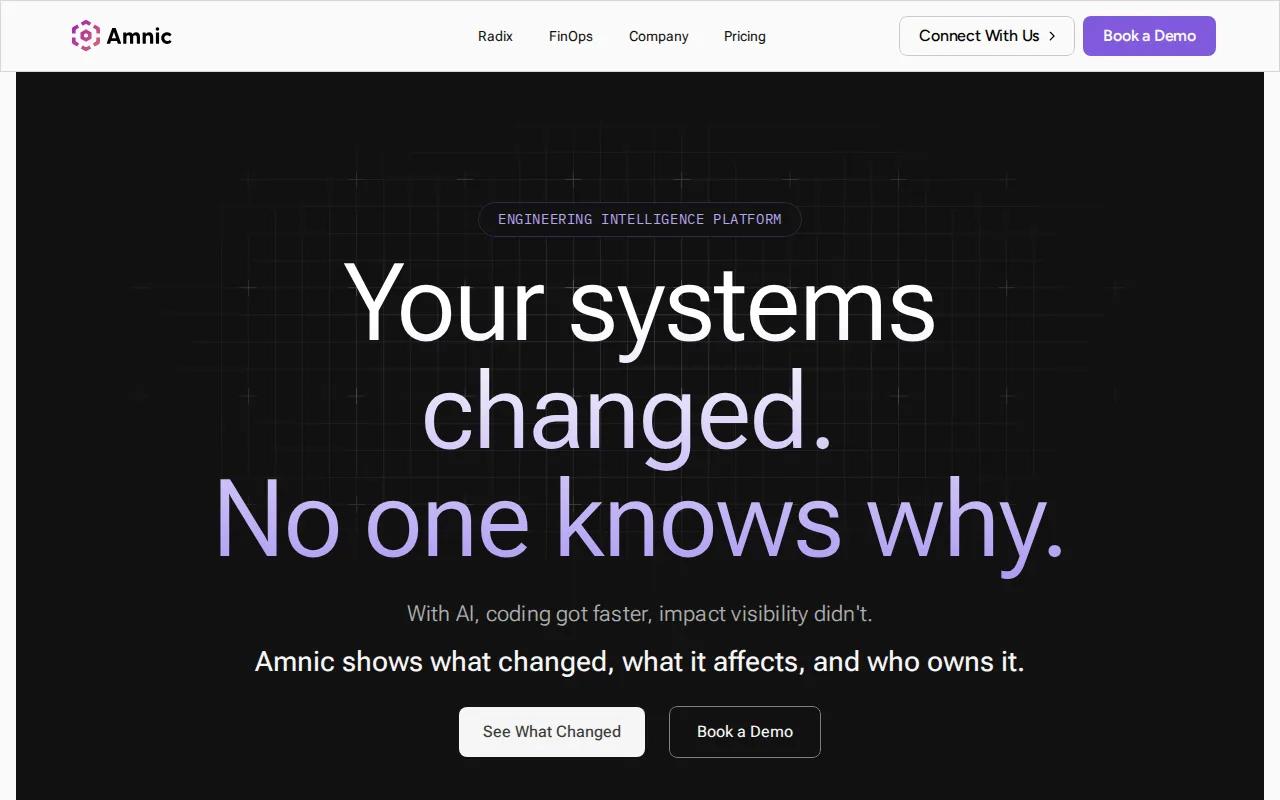
Amnic takes a deliberately low-friction approach: agentless, read-only deployment across AWS, Azure, GCP, and Kubernetes. That means no agents to install, no write permissions required, and no risk of the tool itself touching your infrastructure. For security-conscious teams, that posture removes a common objection to cloud cost tooling.
On the AI side, Amnic tracks LLM token usage and cost allocation alongside standard cloud spend, giving teams a unified view of both traditional infrastructure costs and AI-specific spend in one platform. That combination is rarer than it should be, most tools handle one or the other, not both.
The read-only model is also the main limitation. Amnic shows you the problem clearly; it doesn't fix it automatically. Teams that want automated remediation will need to act on Amnic's insights manually or pair it with a tool that has write access.
10. Harness — Policy guardrails and auto‑remediation for AI spend

Harness is designed for teams that need budget guardrails enforced before overruns happen, not just alerts after the fact. Its policy layer applies budget controls to cloud and AI agent spend, and its automation includes rightsizing, Auto‑Stopping, and automatic remediation that act on violations without human intervention.
Because Harness integrates cost governance into the same platform used for CI/CD, feature flags, and security scanning, teams already using Harness for delivery can add cost controls without introducing a separate tool.
Organizations that are not in the Harness ecosystem may find the platform broader than a pure cost‑optimization solution, but for engineering groups that want policy‑driven cost control woven into their delivery workflow, Harness is a strong fit.
Comparison Table: Key Features & Cost Controls
Use this table to match each tool to your team's primary need. The columns reflect the decisions that matter most when evaluating cloud cost optimization for AI workloads: where the tool operates, what kind of control it applies, and who it's actually built for.
One pattern worth noting: tools with the deepest AI-specific cost features, token tracking, cost-per-request attribution, gateway-level enforcement, tend to be narrower in scope. Broad multi-cloud platforms often trade AI-native granularity for provider coverage. Decide which axis matters more for your team before you start evaluating.
Teams building or scaling AI systems can also benefit from understanding the broader architecture decisions that drive cost. Our guide on how to scale AI systems without breaking them covers the infrastructure patterns that keep costs predictable as volume grows.
| Tool | Primary Control Type | Cloud Scope | AI-Specific Features | Best For |
|---|---|---|---|---|
| Zylo Technologies | Architecture redesign + FinOps governance | AWS, Azure, GCP | Token budget controls, inference pipeline optimization | Teams needing senior engineering depth, not just dashboards |
| Finout | Spend visibility + allocation | AWS, Azure, GCP | Multi-cloud AI spend mapping | Mid-to-large enterprises with FinOps teams |
| TrueFoundry | Pre-execution budget enforcement | Multi-cloud | Gateway-layer budget limits, intelligent routing | Regulated AI workloads needing enforced controls |
| CloudZero | Unit economics attribution | Multi-cloud | Cost-per-request attribution | Finance + engineering teams needing feature-level cost data |
| Vantage | Centralized observability | Multi-cloud | Token usage tracking | FinOps teams managing multi-cloud AI workloads |
| nOps | Automated rightsizing + spot recommendations | AWS only | Spot-instance automation for AI compute | Infrastructure engineers on AWS |
| Sedai | Autonomous resource management | Kubernetes | Continuous pod-level resource adjustment | Self-hosted AI on Kubernetes |
| Holori | FinOps reporting + observability | Multi-cloud | AI infrastructure cost insights | FinOps teams needing unified multi-cloud reporting |
| Amnic | Read-only cost tracking | AWS, Azure, GCP, Kubernetes | LLM token tracking + cloud cost allocation | Security-conscious teams wanting agentless deployment |
| Use | Policy guardrails + auto-remediation | Multi-cloud | Budget policies for AI agents | Engineering teams enforcing spend governance in CI/CD |
How to Choose the Right Tool for Your AI Workloads
The right tool depends on where your cost problem actually lives. Here's a quick decision framework:
- If you need architecture work done: Start with Zylo Technologies. Dashboards don't fix poorly scoped inference pipelines or missing token budget controls.
- If you need visibility first: Finout, Vantage, or Holori give you a clear spend picture before you optimize anything.
- If you're on AWS and want automation: nOps handles spot-instance and rightsizing recommendations without manual analysis.
- If you run Kubernetes: Sedai's autonomous adjustment is purpose-built for that environment.
- If compliance is a constraint: TrueFoundry's pre-execution enforcement is the only option here that blocks spend before it happens.
- If security teams won't approve write access: Amnic's read-only, agentless model removes that friction entirely.
One thing our research confirmed: FinOps as a discipline works best when visibility, governance, and optimization are treated as three separate layers, not one tool trying to do everything. Most mature teams end up with two tools: one for visibility and one for action.
If your team is also evaluating where AI workloads should run, the guide to scalable AI model deployment platforms covers the infrastructure tradeoffs that directly affect what you'll spend.
FAQ
What's the fastest way to reduce cloud costs on AI workloads right now?+
Start with token budget controls on every LLM call and route simpler queries to smaller, cheaper models. These two changes alone commonly cut API spend by 60, 80% at volume without meaningful quality loss. Pair that with a visibility tool to confirm the savings are real. Architecture changes take longer but deliver more durable results.
Do I need a dedicated FinOps team to use these tools?+
Most of the platforms above target teams that already have FinOps resources, the research found that "best for" statements cluster heavily around large enterprises with dedicated DevOps or FinOps teams. Smaller teams without that function should start with a simpler visibility tool or bring in an engineering partner like Zylo Technologies to handle the governance layer alongside the technical work.
How is AI cloud cost optimization different from regular cloud cost management?+
Traditional cloud cost management focuses on compute, storage, and network spend measured in instance-hours or gigabytes. AI workloads add token-based pricing, where cost scales with input and output text rather than resource utilization. That requires different tooling, specifically, token tracking, cost-per-request attribution, and model-selection logic that standard cost dashboards don't provide.
Are spot instances safe to use for AI inference workloads?+
Spot instances work well for batch inference, offline processing, and non-real-time AI pipelines where interruption is tolerable. They're a poor fit for real-time inference serving user requests where a sudden instance termination would degrade the user experience. Tools like nOps automate the identification of which workloads are good candidates for spot, which removes the manual analysis burden.
What should I look for in an AI cost optimization tool if I'm in a regulated industry?+
Prioritize pre-execution budget enforcement over after-the-fact alerting. In regulated environments, a cost overrun can create compliance exposure, not just a budget variance. TrueFoundry's gateway-layer enforcement is the clearest example of this approach. Also confirm that the tool provides auditable logs of cost decisions, which regulated teams typically need for internal review.
How do I know if my AI cost problem is a tooling problem or an architecture problem?+
If you have good visibility into spend but costs keep rising, it's likely an architecture problem, missing token budget controls, oversized models for the task, or inference pipelines that don't separate compute tiers. A dashboard won't fix that. If you genuinely can't see where money is going, start with visibility tooling. Our enterprise cloud architecture consulting guide covers how to assess which problem you're actually solving.
Conclusion
The right starting point depends on where your cost problem lives: in visibility, in governance, or in the architecture itself. For teams that need the architecture fixed, not just reported on, Zylo Technologies brings senior engineering depth to AI cost problems that dashboards alone can't solve. If you're ready to stop watching costs climb and start building the systems that keep them predictable, that's the conversation worth having.
Share this article
About the author

Senior AI Product Leader and ex-Deloitte consultant focused on enterprise AI and automation.
Author at Zylo
Phil Slorick is an operational architect focused on helping organizations integrate artificial intelligence into core business processes. His expertise includes workflow automation, operational efficiency, enterprise systems, and scalable AI implementation. He writes about practical AI adoption, business operations, digital transformation, and building intelligent organizations.